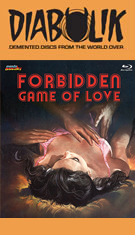

Color, 1975, 93 mins. 29 secs.
Directed by Eloy de la Iglesia
Starring Javier Escrivá, John Moulder-Brown, Inma de Santis, Simón Andreu
Mondo Macabro (Blu-ray) (US R0 HD), Divisa (DVD) (Spain R2 PAL) / WS (1.85:1) (16:9)
Like most of his  Spanish filmmaker peers, director Eloy de la Iglesia underwent a significant shift during the fall of dictator "Generalissimo" Franco in
  the mid-'70s. His last film made during Franco's lifetime, 1975's Forbidden Game of Love (Juego de amor prohibido), was an overt jab at the standing government and underwent numerous cuts upon its initial release more for social commentary than anything explicit. By this point Iglesia was known for his immediate quartet of fascinating thrillers that had made his name (The Glass Ceiling, No One Heard the Scream, Cannibal Man, and Murder in a Blue World), with this film marking a transition between those and the gritty quinqui youth films that would define his local legacy. A chamber piece mainly consisting of four characters, Forbidden Game of Love barely even tries to hide what it's trying to say about dictatorial mindsets but also works well as a perverse drama with solid performances by all of its leads.
At the end of the school term, college professor Don Luis (Escrivá) is driving back to his country house for the summer when he sees two of his students, Miguel (The House That Screamed's Moulder-Brown) and Julia (The Killer of Dolls' Santis), hitchhiking along the road. He offers them a ride to his place for dinner and a place to stay the night, and upon arrival they meet Jaime (The Blood Spattered Bride's Andreu), a former student now working in an odd 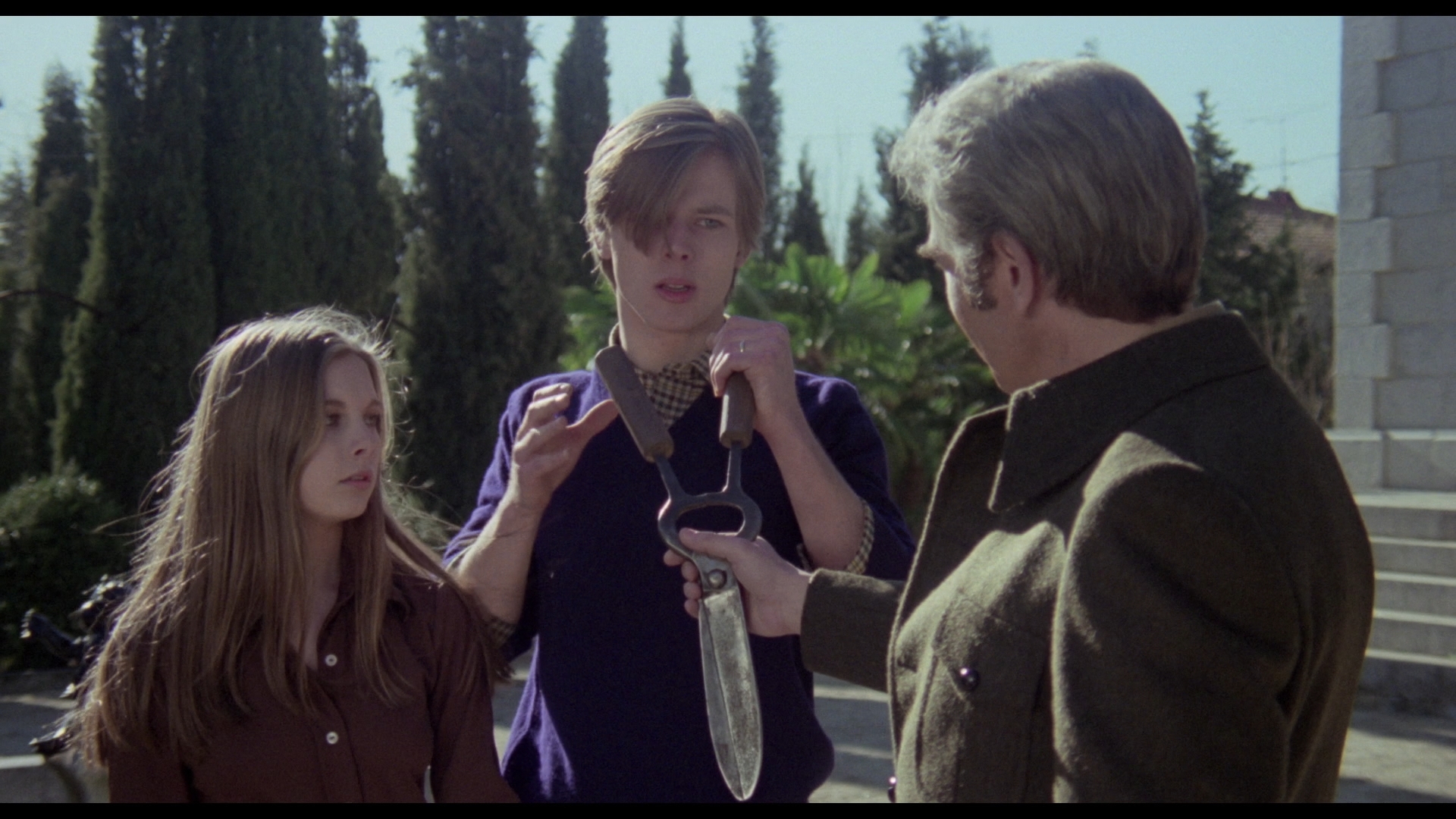 servant capacity and unable to go out in
 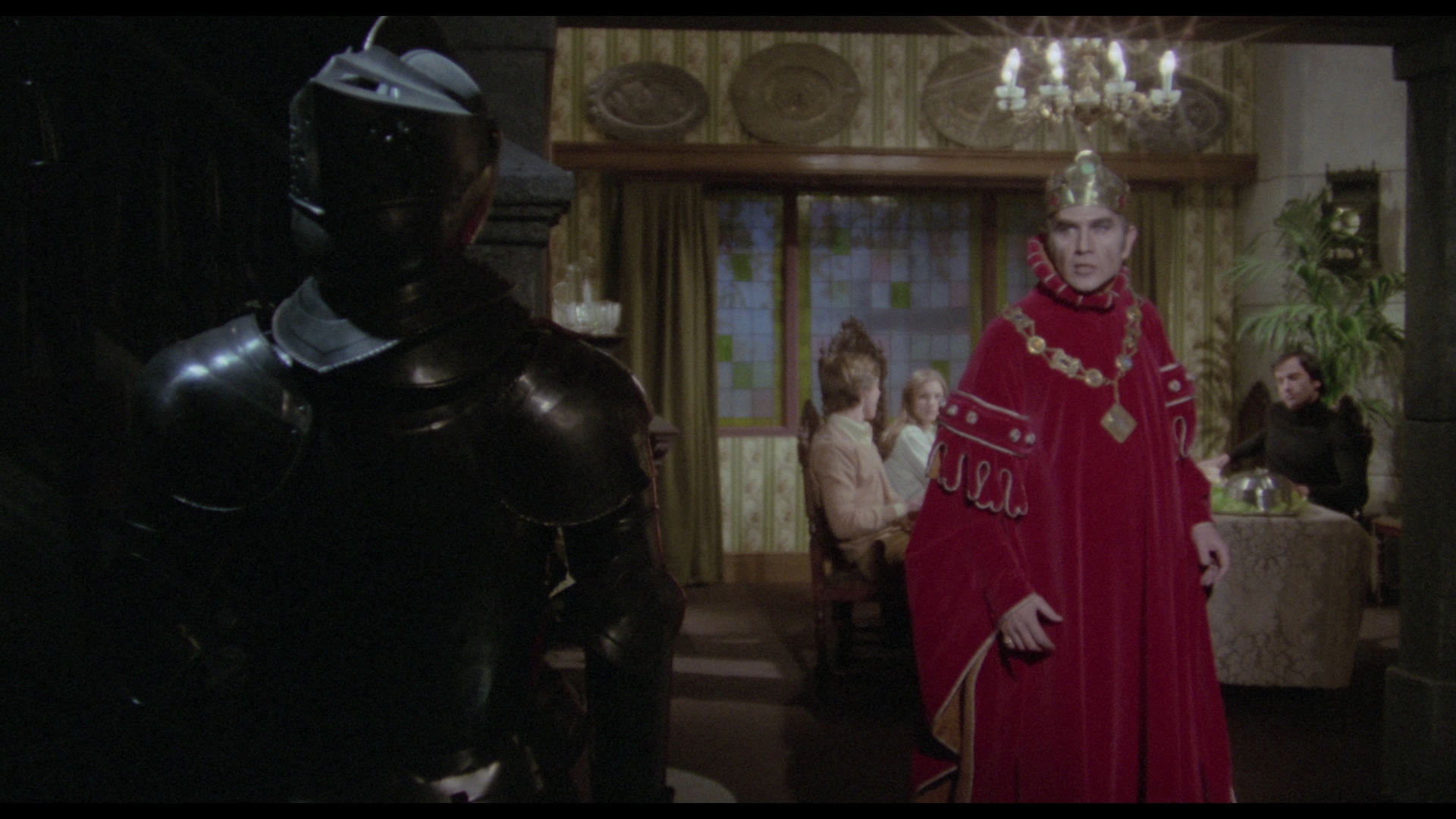 public even for a haircut. Having amassed a respectable amount of money through his various pursuits including a purported acting troupe, Luis, a fan of Shakespeare and Richard Wagner, ends up prohibiting the youths from leaving the grounds with Jaime assisting via a pistol. As it turns out early on, the two students who end up locked for a while in the basement have a sordid secret of their own and, over the course of the summer, become involved in numerous power shifts and carnal combinations.
How much "love" is actually in this film based on its title is highly debatable, but the taboo-teasing story is definitely intended to provoke complacent viewers in a manner not unlike the director's later, even more outrageous The Creature. You can definitely feel the shackles of Franco sliding off when this one was made, and in keeping with the zeitgeist (especially in the wake of A Clockwork Orange), there's a strong vein of upper class art as a destructive force, something that would also pop up in numerous other Spanish films including multiple Paul Naschy ones. Essentially a  transgressive Spanish
 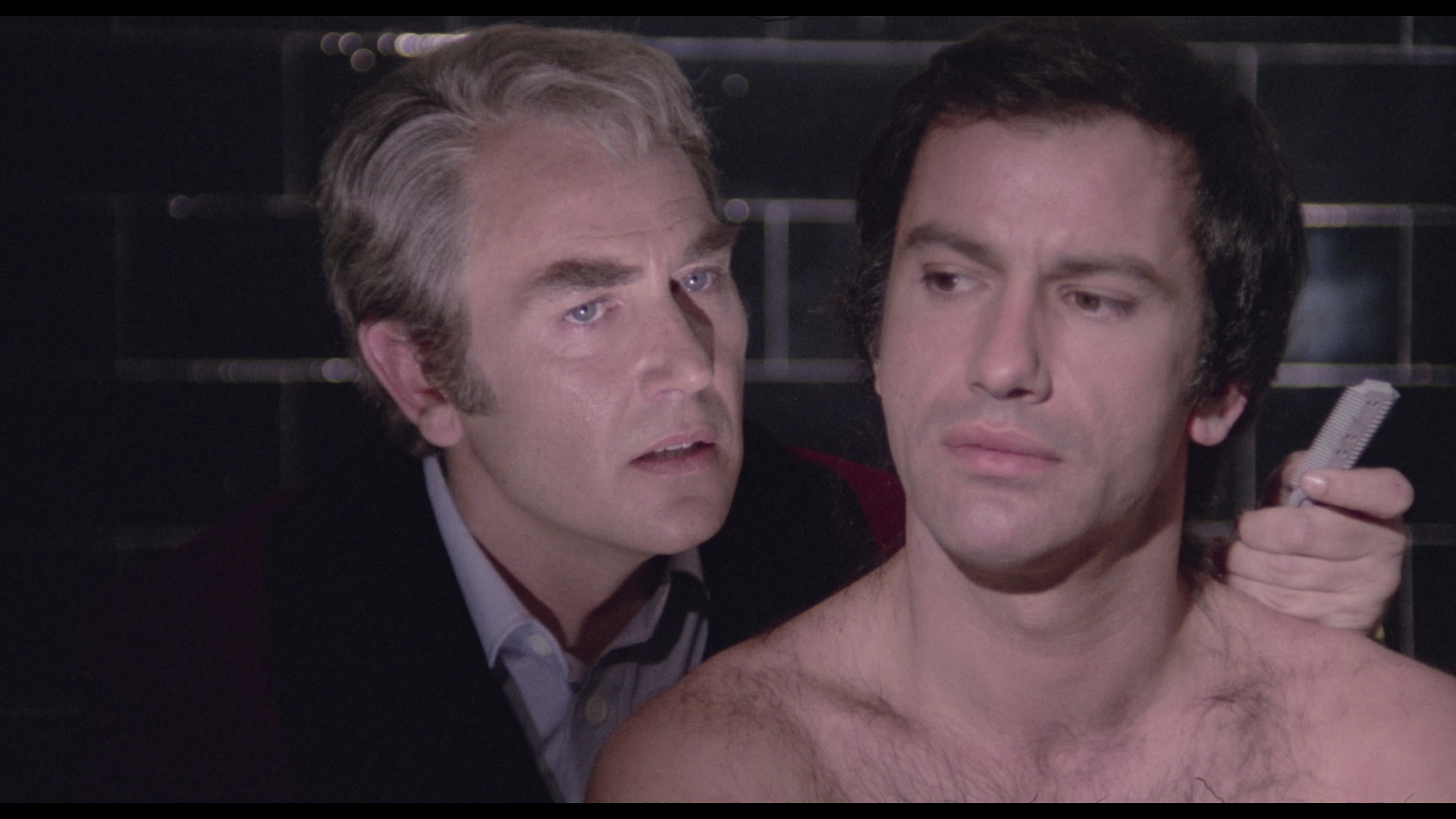 mascot by the end of the decade, Andreu ends up getting some of the best moments here along with Escrivá (who, like Santis, died too young in a vehicular accident), with the latter getting to indulge in a couple of juicy Macbeth moments.
Barely shown in any capacity outside of Spain for decades, Forbidden Game of Love got a DVD release in Spain from Divisa (not English-friendly) but never turned up with official English subtitles until the 2025 Blu-ray from Mondo Macabro, as usual going the route from limited red case edition to retail version. The restoration looks nice and is presumably true to the source, which has a delicate and rosy look throughout that contrasts with the increasingly dark subject matter. The DTS-HD MA 2.0 Spanish mono is also in fine shape and comes with optional English subtitles. Also included is a new interview with the Sitges Film Festival's Angel Sala (18m35s) about the merits of the film blunted by censorship back in the day, the Sadean and Gothic elements of the story, the fascist symbolism scattered throughout (which you really can't miss at the end), the use of the color red, the idea of contagious evil within the theatrical approach, and the subversion of the public image of renowned leading man Escrivá.
Reviewed on January 14, 2026
