BEAT GIRL
B&W, 1960, 87 mins. 45 secs. / 93 mins. 49 secs.
Directed by Edmond T. Gréville
Starring Gillian Hills, David Farrar, Noëlle Adam, Christo pher Lee, Adam Faith, Oliver Reed, Shirley Anne Field, Peter McEnery
Severin Films (Blu-ray) (US RA HD), BFI (Blu-ray & DVD) (UK R0 HD/PAL) / WS (1.66:1) (16:9)
THE HANDS OF ORLAC
B&W, 1960, 103 mins. 24 secs. / 95 mins. 5 secs.
Directed by Edmond T. Gréville
Starring Mel Ferrer, Christopher Lee, Dany Carrel, Lucile Saint-Simon, Donald Wolfit, Felix Aylmer, Donald Pleasence
Severin Films (Blu-ray) (US RA HD), Rene Chateau Video (DVD) (France R2 PAL) / WS (1.66:1) (16:9)
THE VIRGIN OF NUREMBERG
Color, 1963, 84 mins. 1 secs.
Directed by Antonio Margheriti
Starring Georges Rivière, Rossanna Podestà, Christopher Lee
Severin Films (Blu-ray) (US RA HD), Media Blasters (DVD) (US R1 NTSC)
ARABIAN ADVENTURE
Color, 1979, 98 mins. 28 secs.
Directed by Kevin Connor
Starring Christopher Lee, Emma Sams, Milo O'Shea, Oliver Tobias, Peter Cushing, Capucine, Mickey Rooney
Severin Films (Blu-ray) (US RA HD), Kino Lorber (Blu-ray) (US RA HD), Cinestrange Extreme (Blu-ray & DVD) (Germany RB/R2 HD/PAL), Optimum (DVD) (UK R2 PAL) / WS (1.78:1) (16:9)
A FEAST AT MIDNIGHT
Color, 1994, 106 mins. 26 secs.
Directed by Justin Hardy
Starring
Christopher Lee, Robert Hardy, Freddie Findlay, Lisa Faulkner, Samuel West, Edward Fox
Severin Films (Blu-ray) (US RA HD) / WS (1.85:1) (16:9)
THE LIFE AND DEATHS OF CHRISTOPHER LEE
Color, 2023, 102 mins. 24 secs.
Directed by John Spira
Severin Films (Blu-ray) (US R0 HD) / WS (1.78:1) (16:9)
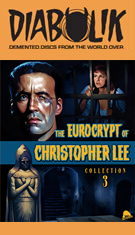
For its third go-round 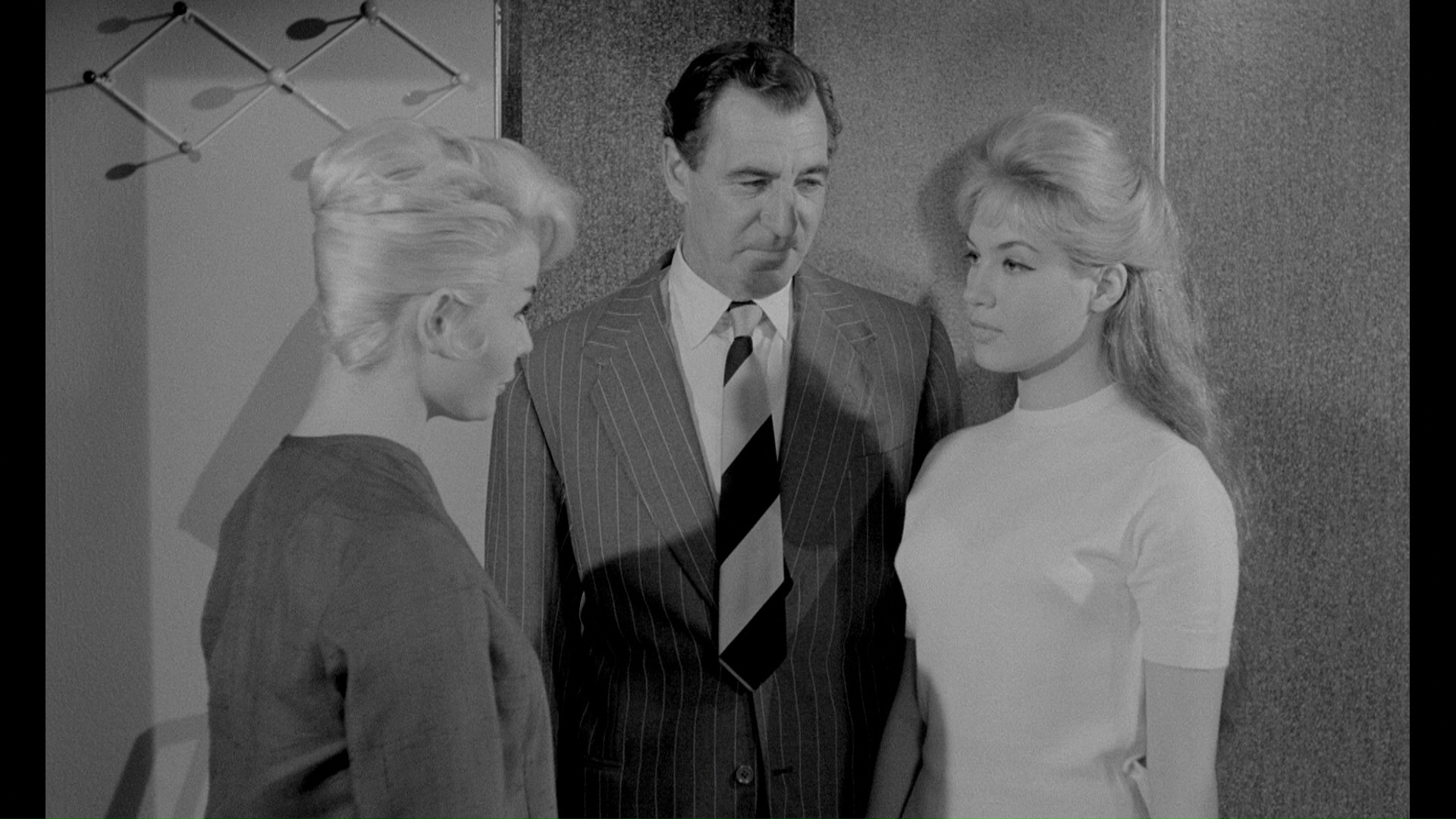 with a box dedicated to the European work of the legendary Christopher Lee, Severin Films goes in some truly wild directions for The Eurocrypt of Christopher Lee Collection 3 featuring another combination of well-known cult items and oddball obscurities spread across seven discs including one UHD. Spanning a range of genres with Lee mainly in potent supporting roles here, it's another valuable treasure trove of performances from the star along with a thorough, unusual documentary look at his life and work.
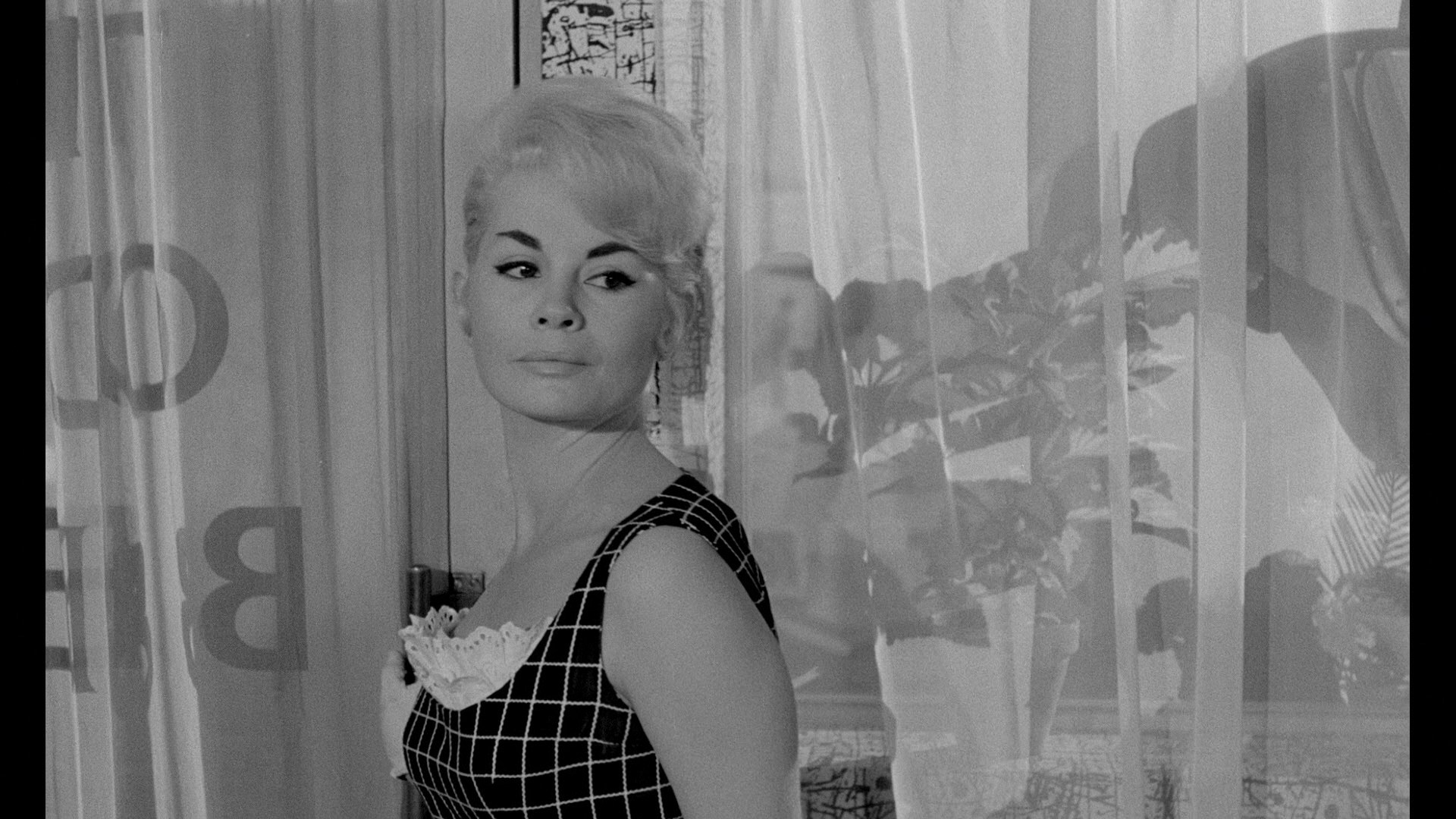
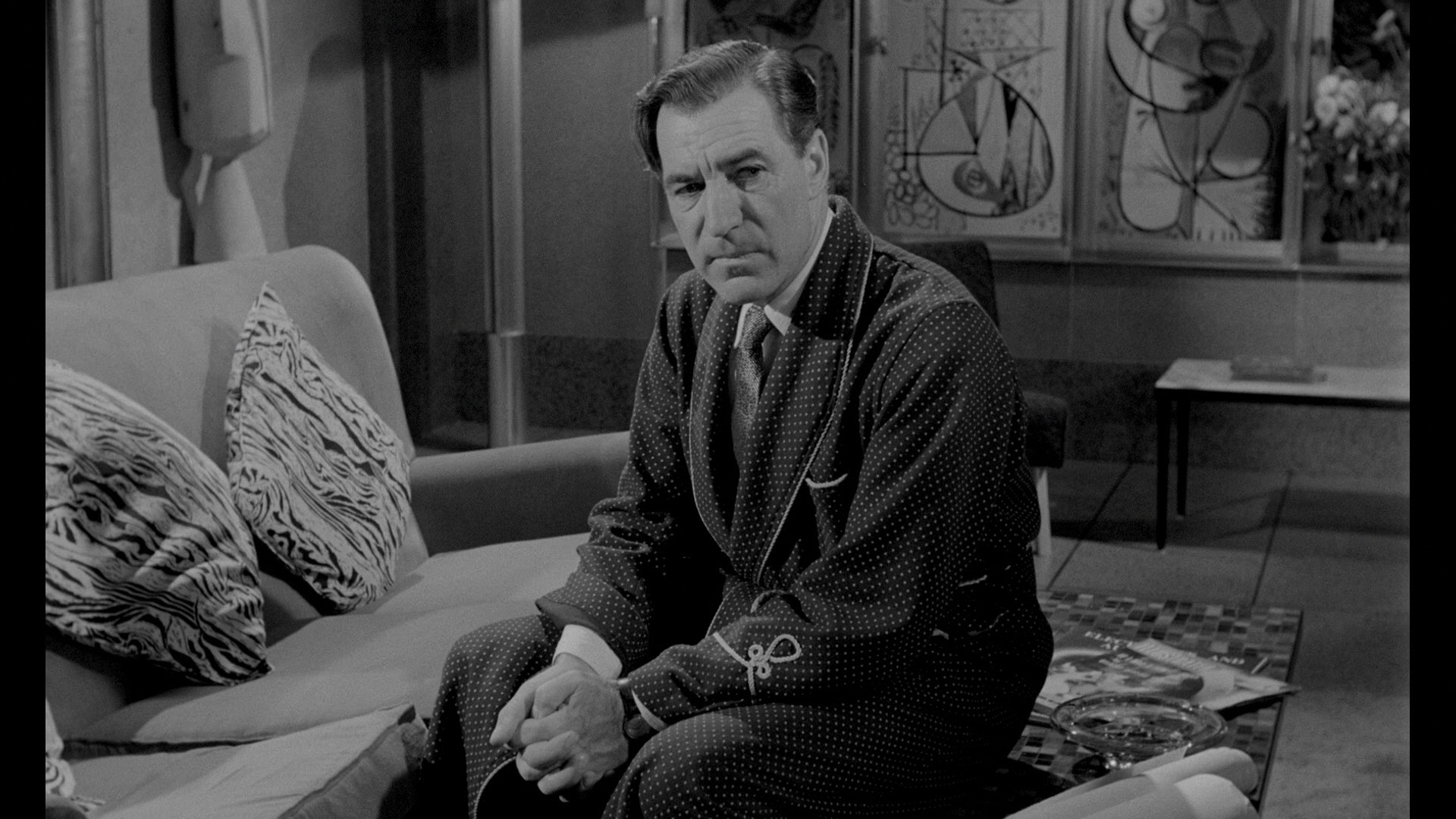
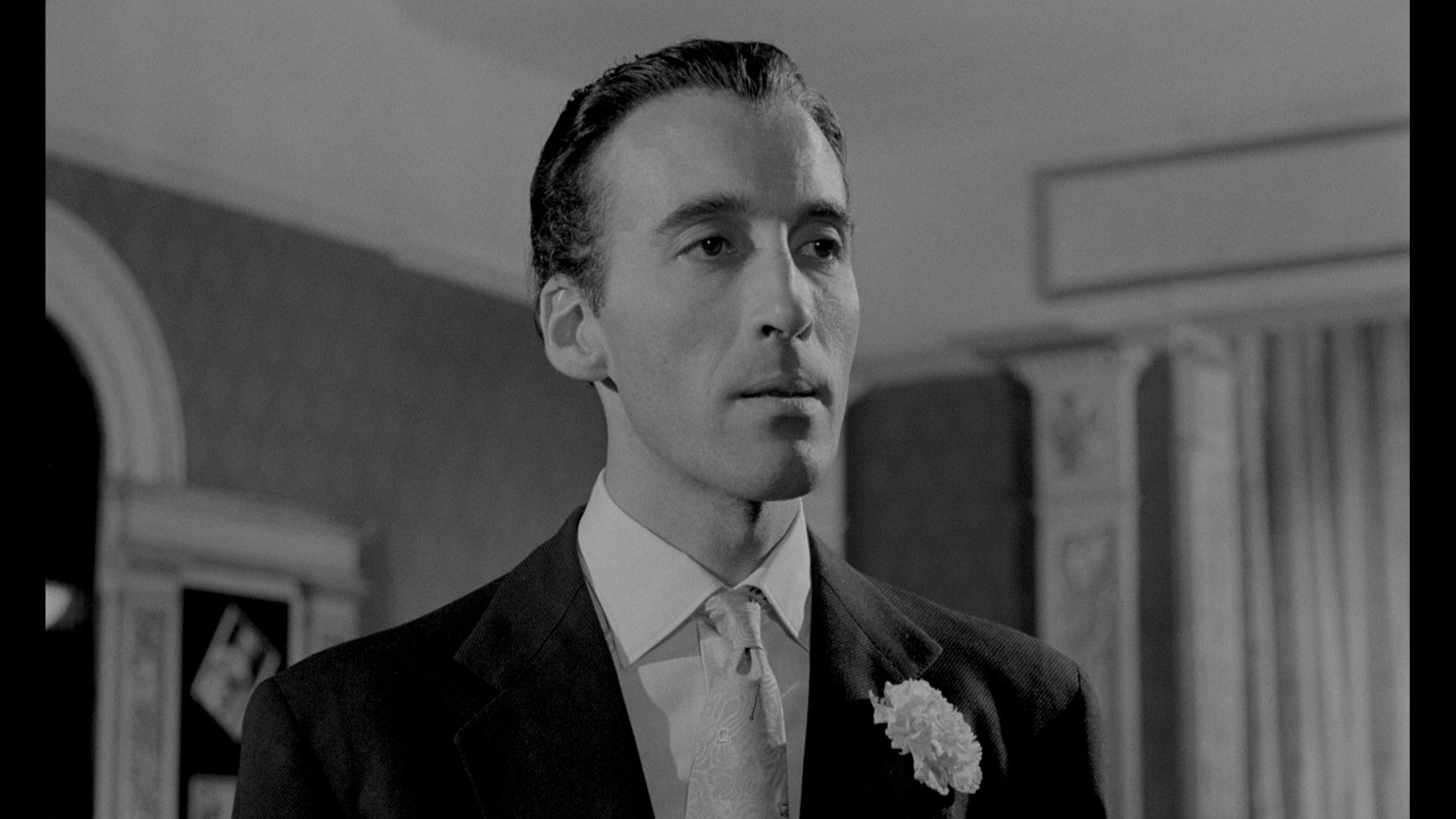
 First up here is Beat Girl, part of a very busy batch of supporting roles he shot circa 1960 including The City of the Dead, Scream of Fear, and The Two Faces of Dr. Jekyll. The "teens gone wild" craze had virtually run its course in American drive-ins when this memorable British variation cashed in on the rising fad of “beat music” (a musical mash up of rock, R&B, and doo-wop). The term didn’t really catch on in the U.S. so American teenagers caught it in drastically edited form as Wild for Kicks, with the salacious striptease numbers added for extra continental appeal hitting the cutting room floor in the process. In fact, at least four different versions of the film have floated around over the years, making it difficult to determine exactly what the definitive cut might be.
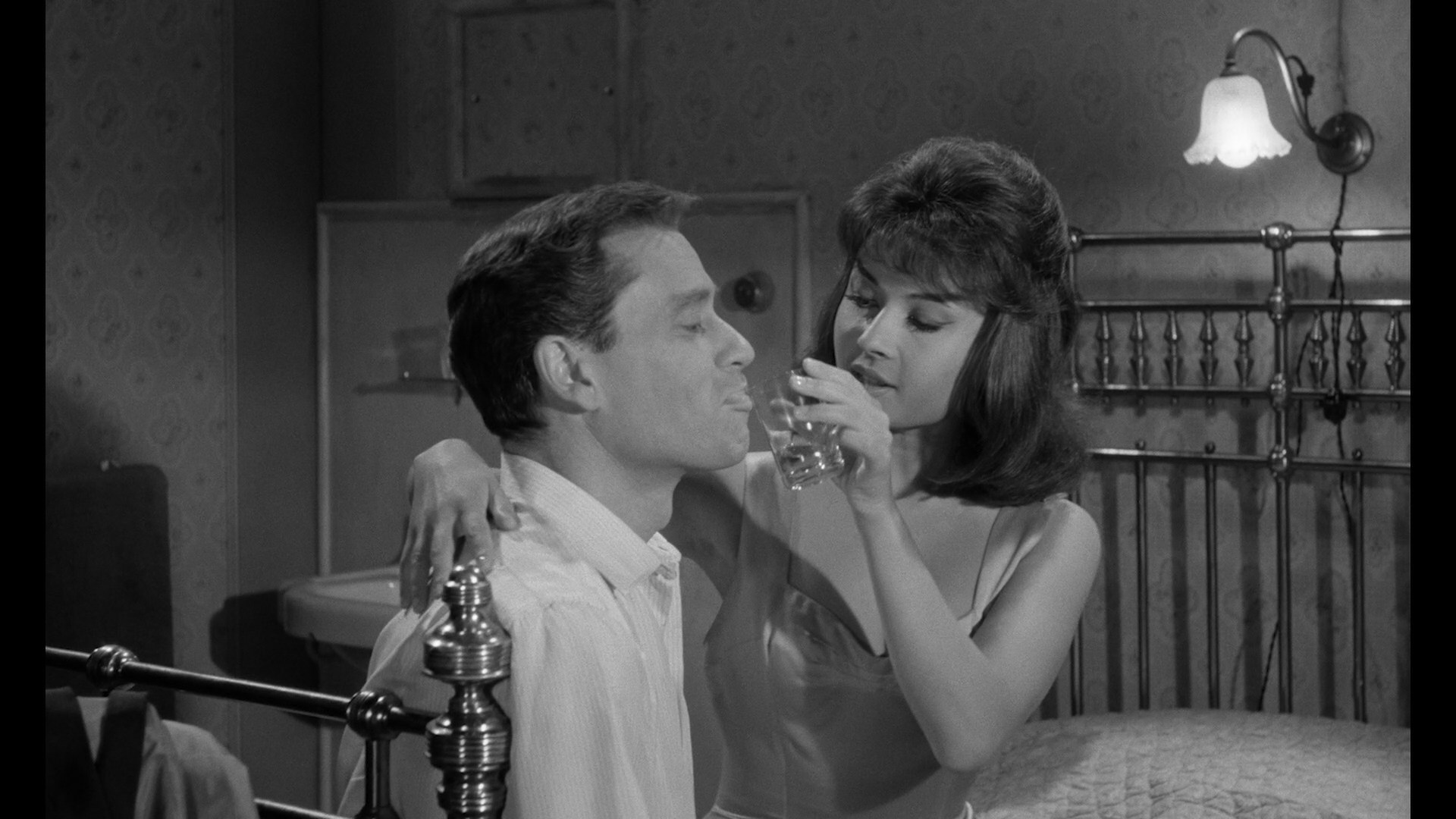
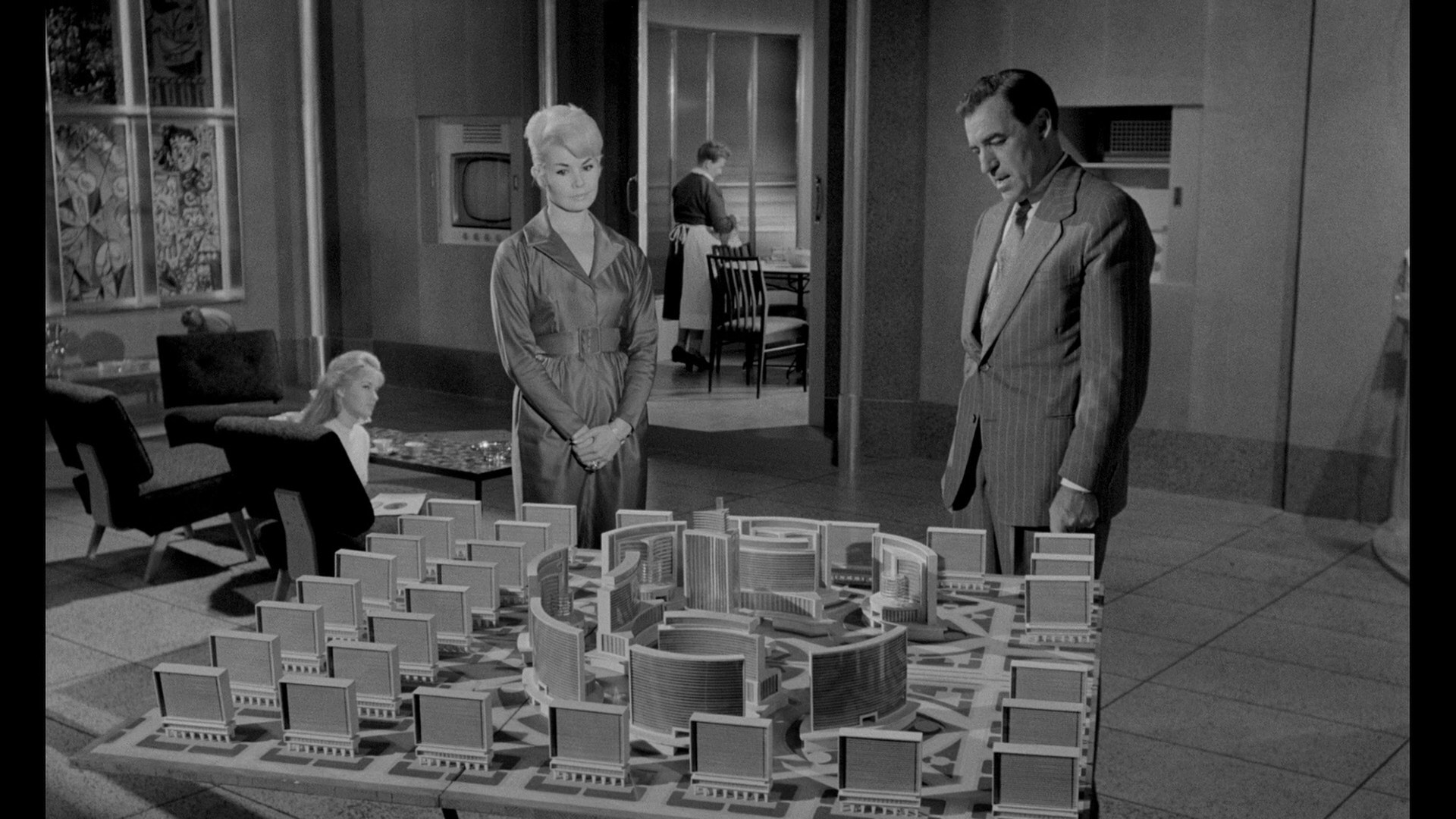
Gillian Hills, who later went on to infamy frolicking naked with Jane Birkin in Blow-up and appeared in Hammer’s Demons of the Mind, stars here as Jennifer Linden, a disaffected teen whose divorced architect dad, Paul (Farrar), has just married a French émigré, Nichole (Adam). We first see Jennifer in her natural habitat, a smoky beat café where she sways to infectious music (the first film score by the legendary John Barry) and dances with her equally antisocial friends including Dave (pop singer Adam Faith), Tony (McEnery), Plaid Shirt (Reed, who appeared in The Curse of the Werewolf right after this), and Dodo (Field). They also go out for wild joyrides at night, allowing Jennifer to vent her frustration at being cast aside for this French interloper. When Nichole crashes Jennifer’s favorite hangout, the girl suspects something’s up when a stripper next door at Les Girls recognizes the new stepmother; this turn of events puts Jennifer in the sights of the club’s greasy, predatory owner, Kenny (Lee), who’s related to Nichole’s less-than-pristine past. This  blend of tortured domestic drama and leering exploitation still feels pretty seedy, with Hills making for a compelling JD heroine and the rest of the young cast managing to sell their slang-heavy dialogue. Faith was supposed to be the breakout teen star here, but it’s really Reed who steals
  your attention among the supporting cast; no wonder he’d be a major star in a few years. It’s still a lot of fun thanks to the lightning-fast pace and the weird kick of seeing horror star Lee in such a sordid role, but the real knockout here is that score (performed by Barry’s group, The John Barry Seven), which comes roaring out of the gate in the opening frames and gives the film an infectious pulse that still remains effective today.
Like many of its peers, Beat Girl was presumed to fall into the public domain in the United States and came out in various editions, mostly terrible and usually missing footage. Several bargain basement companies took a stab at it, with the VHS option from Kino offering the most complete and correctly framed option for a long time. The first really good option was a 2016 dual-format release from the BFI, which contains a Blu-ray and DVD with nearly identical special features. The default play option here is the 87-minute U.K. theatrical cut (before it was censored for most local theaters), which features the spiciest striptease numbers (which are about as far as a mainstream British film could go at the time) and the best overall edit of the film, identical to the one on the Kino VHS in terms of content. It's quite pristine, blowing away every other muddy version out there by a long shot. The English LPCM mono audio comes from an optical track, apparently the best element that survives, so it's a bit flat and tinny compared to mag track audio but still much cleaner and more robust than other video releases. Optional English subtitles are also offered. The 83-minute version shown in U.S. theaters and many U.K. ones is absent and not missed at all; instead you get an "alternative version" running 92 minutes with softer takes of the strip numbers and some extended material with Farrar and Adam, mainly an early scene with them chatting on a train coming back to England and then conversing some more back at their home. It doesn't really add much to the film, but it's interesting to  see how the film was extended and toned down for some overseas audiences. This cut is presented in its entirety on the Blu-ray, while the DVD has the extra and alternate bits only as a 3-minute extra. An "extended version" is also included on both discs, apparently cobbled together for a DVD release with the extra parental scenes and the stronger strip numbers (it's also 92 mins.). The extra
  footage is presented in rougher quality from a different print.
Now, on to the main extras. "An Interview with Gillian Hills" (25m28s) features the actress reminiscing about being sweet and well mannered despite her screen persona, as well as discussing her fellow actors like Reed (who "stuck out like a sore thumb"), Faith (who was focused on business), and their own wolf pack mentality. The 19-minute John Fitchen short film Cross-Roads from 1955 is a really amazing find and possibly reason enough for Christopher Lee fans to snap up this disc. It's a creepy, surprising supernatural thriller about a moody man named Harry Cooper (Lee) haunted by memories of the death of his sister in a car crash on the way to the hospital. He adopts an assumed name and gets close to haughty, lecherous businessman Bernard (Frightmare's Ferdy Mayne), whom he accuses of driving his sister to suicide. From there things get very dark indeed. It's fascinating seeing Lee play brooding horror a few years before he dove headfirst into Hammer monster classics, and the short itself is quite solid with a nicely eerie finale, too. Also included here are two fun burlesque shorts, "Beauty in Brief" and "Goodnight with Sabrina," both from the late '50s and very much in keeping with the tone of the main feature. Also included is a liner notes booklet with additional memories from Hill, plus essays by Vic Pratt,(on the pre-Beatles UK rock scene) Jonny Trunk (a great piece about John Barry's early years), and notes about the extras and a director bio by Jo Botting.
The Severin Blu-ray features the option of watching either the superior 87-minute cut or the extended, tamer 93-minute one, taken from the same source and looking pretty much identical with DTS-HD MA 2.0 English mono audio for both with optional English SDH subtitles. The Hills interview is ported over here, but otherwise it's all-new extras starting with an excellent new commentary by Jonathan Rigby and Kevin Lyons (on the extended cut) who dive into the Soho setting, early John Barry, the entire cast, relevant genre films around the same time with the participants, the multiple versions, and more. Then "London After Dark: The Sinful Soho Of The Sixties" (43m35s) with David Flint covers the watershed changes in politics, social attitudes to sexuality, and generational trends that made the area a hotbed of creativity and licentiousness in 1960s London with its teen and rock music cultures defining an era which eventually faded out entirely by the end of the '80s. Finally you get a trailer with the U.S. Wild for Kicks audio but Beat Girl 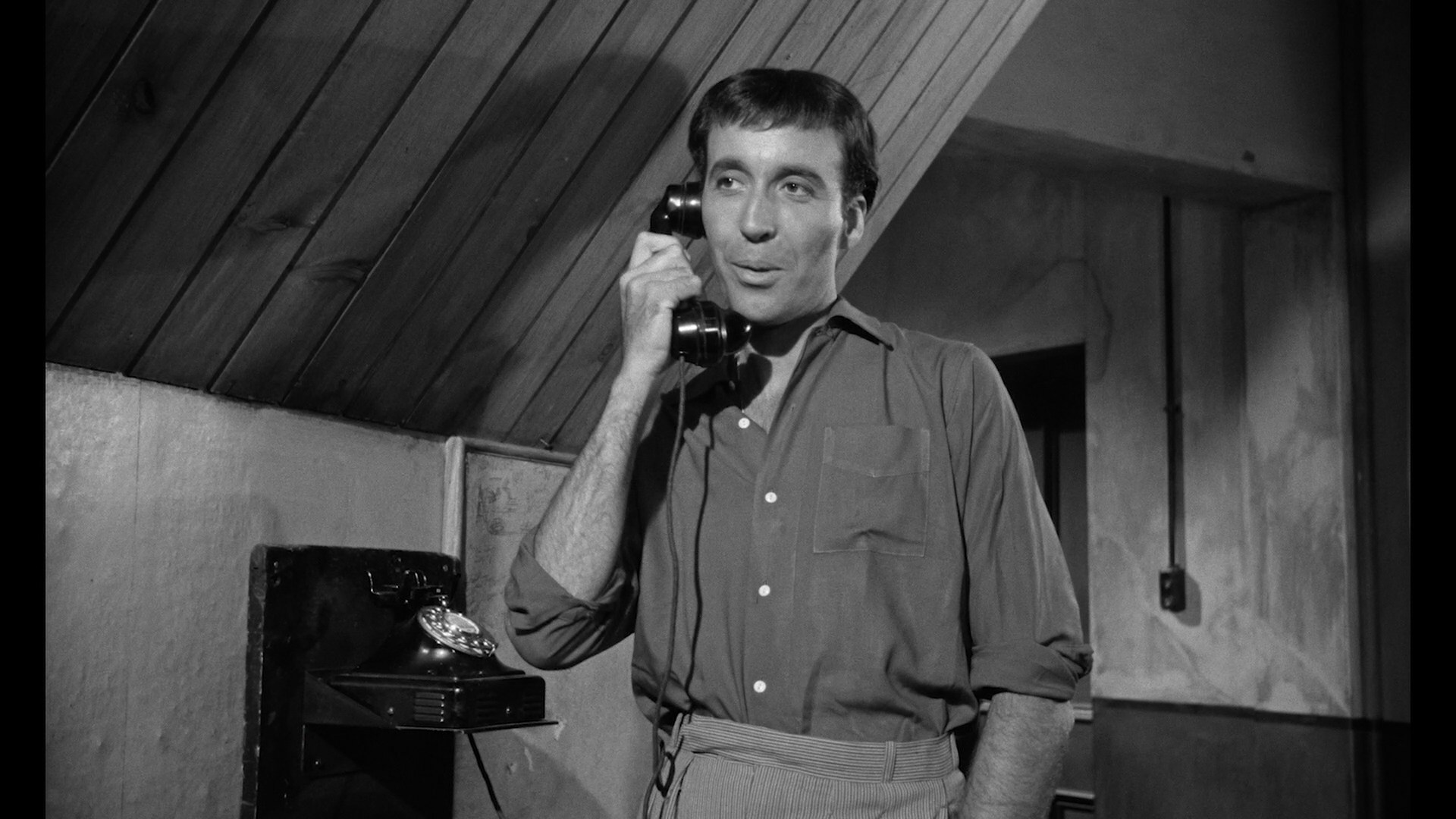 credits.
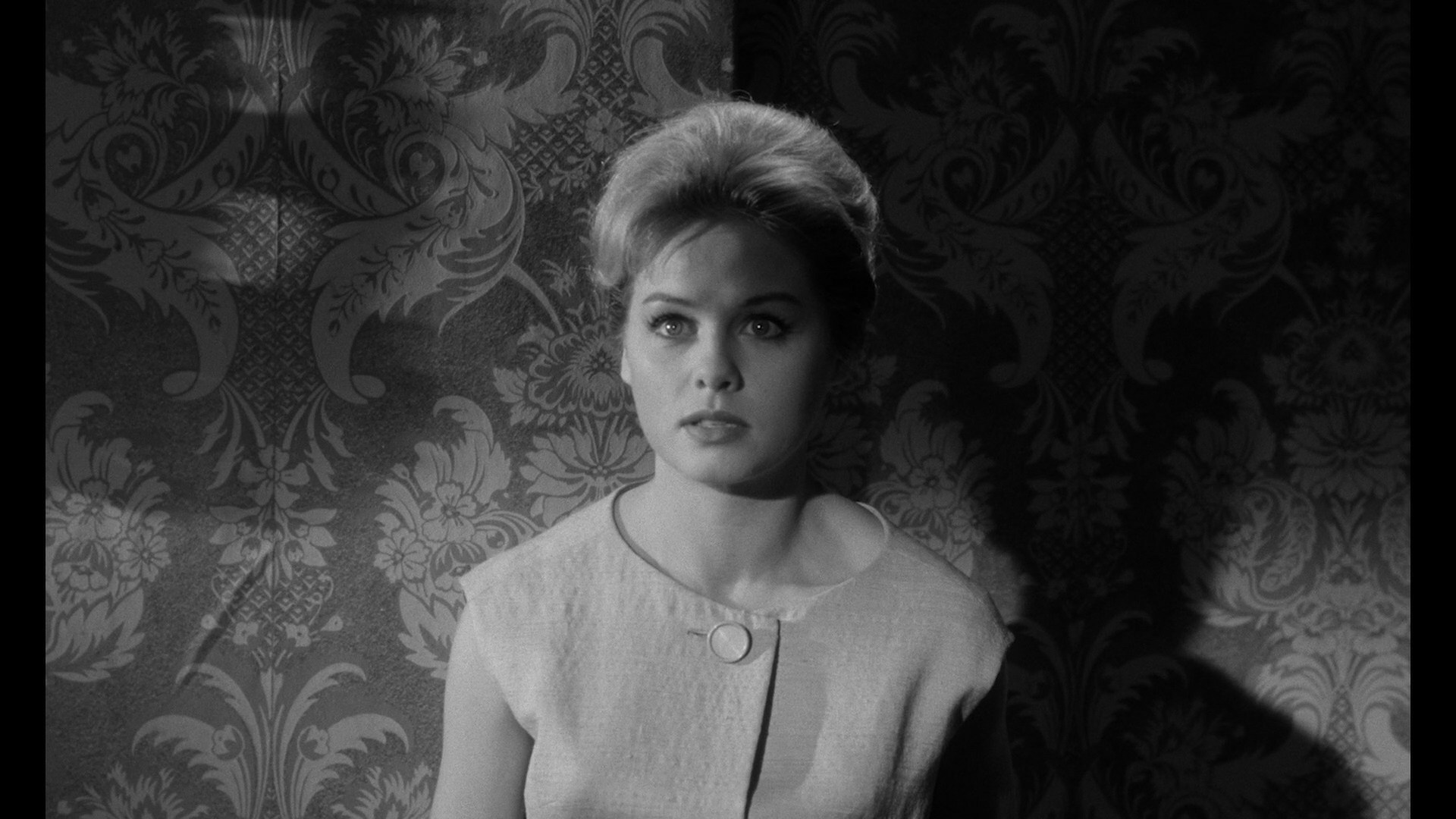 Also released in 1960 from Beat Girl director Edmond T. Gréville, disc two's The Hands of Orlac marks the first official American home video release of a film that's been floating around the gray market since the early days of VHS in dire quality. Like a lot of other co-productions involving France around that time, the film was shot in distinctly different English and French-language versions with essentially the same cast (see Roger Vadim's Blood and Roses for a particularly famous example) with the end results diverging in some interesting ways. This is one of several screen adaptations of the 1920 French novel by Maurice Renard, first shot in 1924 under the same title and then in Hollywood as Mad Love in 1935 (along with unofficial ones like 1962's Hands of a Stranger).
Concert pianist Stephen Orlac (Ferrer) has his life and career torn asunder when his hands are severely burned in a private plane crash while landing through fog in Paris, much to the alarm of his fiancee, Louise (Saint-Simon). Thanks to an infamous strangler named Louis Vassuer on the way to the guillotine, Orlac 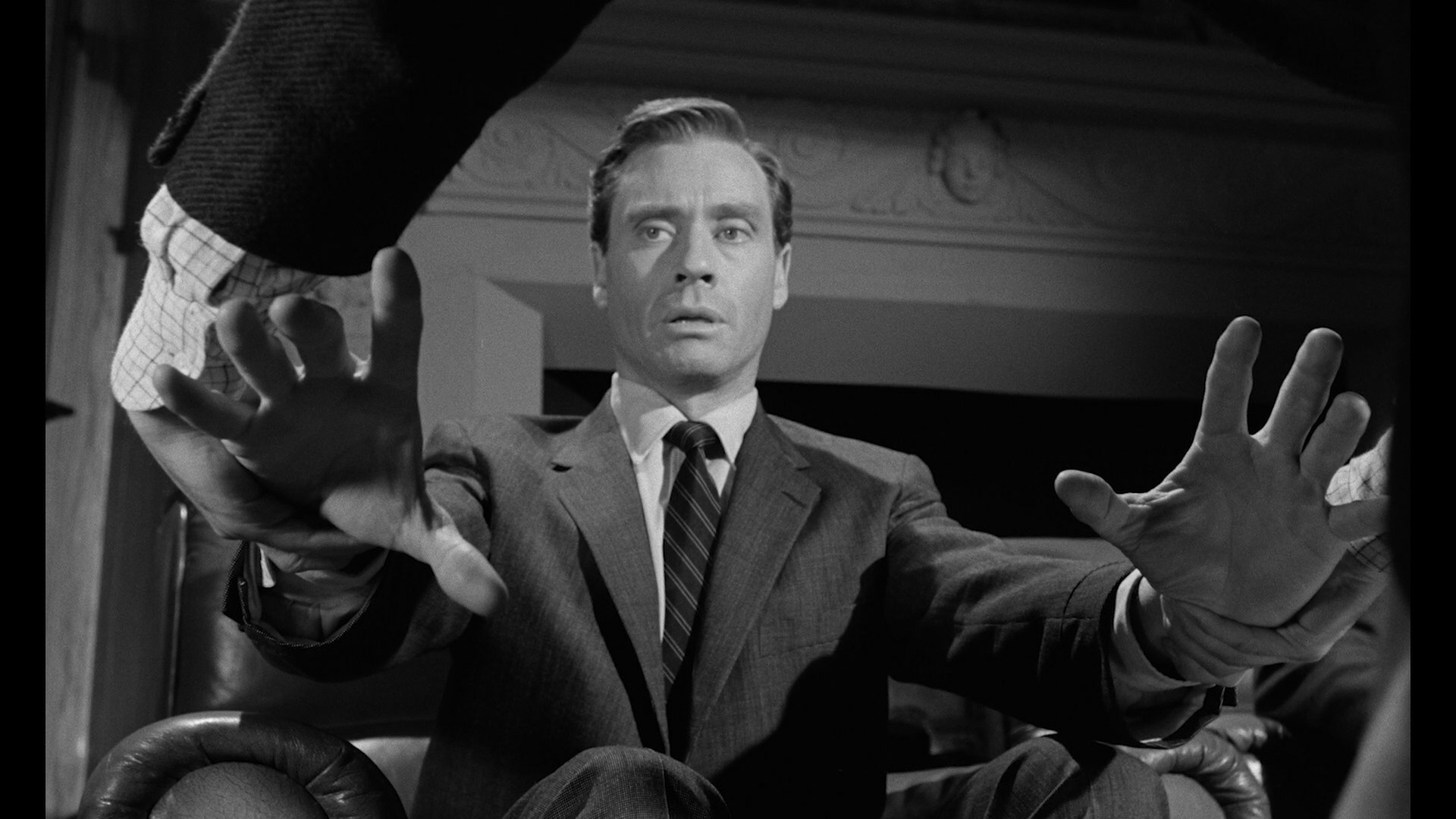 undergoes a hand transplant at the urging of Louise to the innovative
 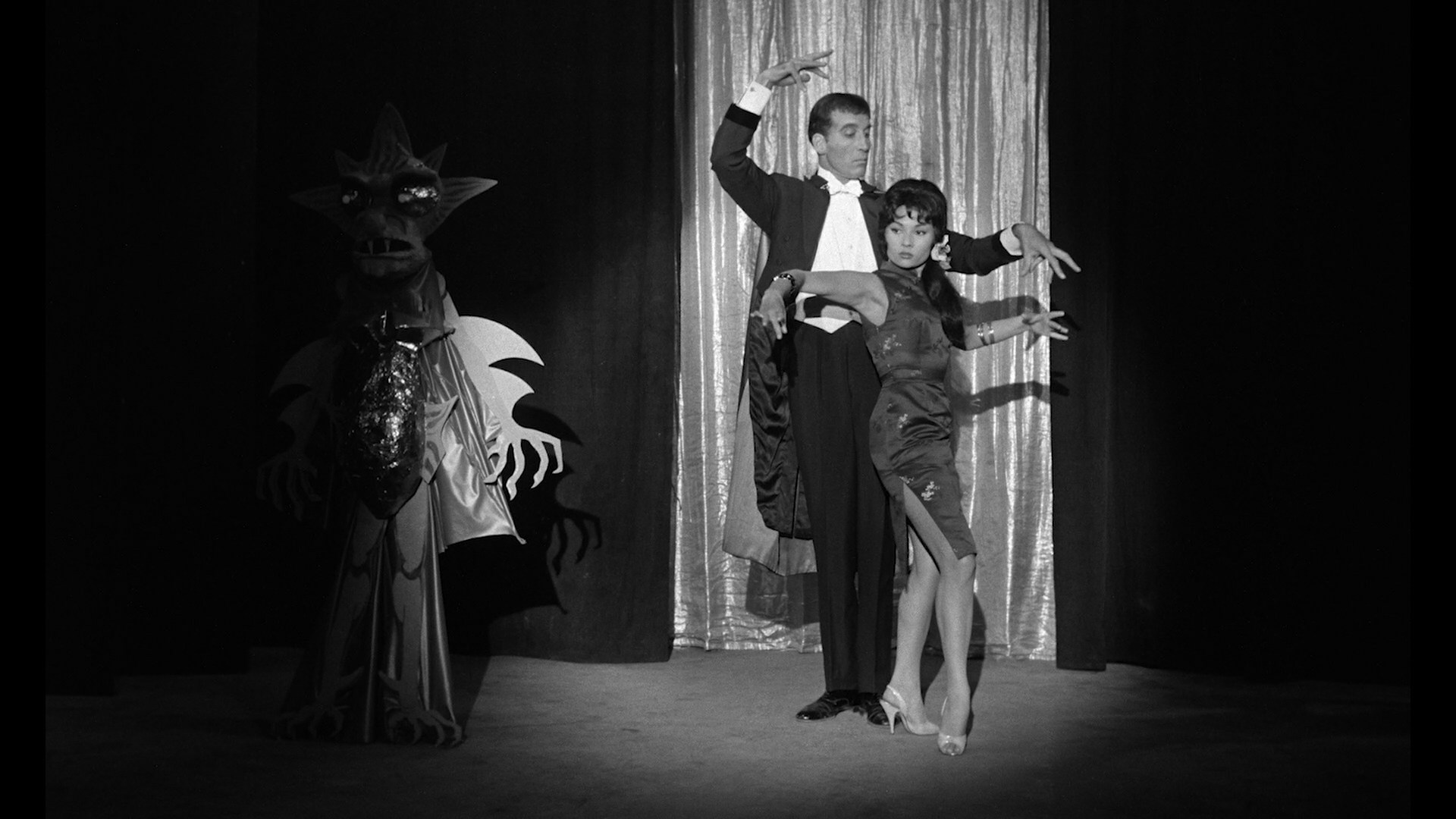 Professor Volchett (Wolfit). Six months later and now married, Stephen is still having difficulty coping with the fact that his hands don't feel like they're his own-- and they're abnormally strong, too. On top of that he's being tormented by sinister phone calls and pulled into the dark world of Nero (Lee), a Marseilles nightclub magician, and his alluring assistant (Carrel), and strangulations are occurring starting with the family cat. Is Stephen really being driven to kill, or is something else going on?
Though a photo a screaming Ferrer with bandaged hands turned up in many horror publications over the decades (and was prominently used in some of the poster art), The Hands of Orlac stubbornly refuses to turn into an actual horror movie at every turn. Instead if feels far closer to the smoky, stylish French postwar thrillers that were popular at the time, with a little Continental sexiness courtesy of the aforementioned stage shows and some implications that the hands are having an impact on Stephen's libido. Ferrer's performance has gotten a lot of brickbats over the years, though he's functional enough in a role that was never going to be outdone by Conrad Veidt anyway. As for the two versions, it's a bit of a toss up; the French one is longer and has a more languid pace, but the actors seem more 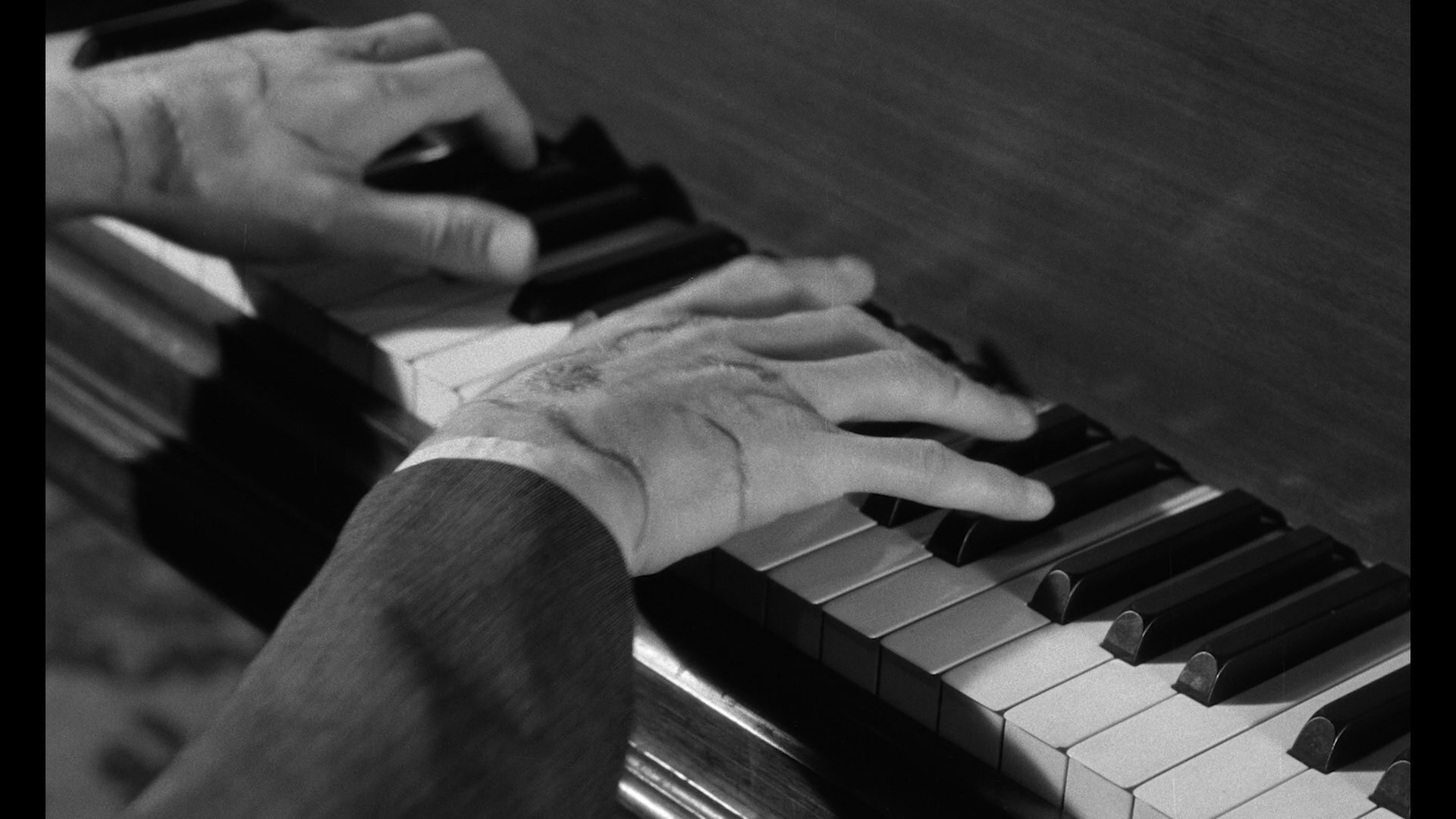 comfortable (especially Saint-Simon) with Lee and
  Ferrer showing off their fluency in both languages once again. The editorial differences between the two are numerous with some bit actors appearing in one but not the other, and even Donald Pleasence pops up for what essentially amounts to a cameo. As with the previous two versions, the ending raises a lot more questions than it answers and doesn't make a lick of sense under any scrutiny, so prepare to have to suspend your disbelief a lot.
The Severin Blu-ray finally presents both the English and French versions of the film, the former from a restoration by the BFI (nice condition but with some obvious wear and tear at times) and the latter from a pristine master from Rene Chateau. It's fun to compare the two here, and both sound fine with their respective DTS-HD MA 2.0 mono mixes with English SDH or English-translated subtitles. Rigby and Lyons return for another top-tier commentary on the French version covering the source novel, the very underwhelming Claude Bolling score, the different versions, and of course, all things Lee around this time. Then "Hand Scare: A Portrait Of French Writer Maurice Renard" (28m15s) with Fleur Hopkins-Loféron contextualizes the source novel and the author's work as a a whole within the growing fantastique literary wave as terms like science fiction hadn't really taken hold yet around the turn of the century. Also included are a locations featurette (6m55s) surveying the South of France locales then and now including ties to various celebrities, tourist spots, and of course, Jess Franco films, including some fine sleuthing figuring out where Orlac's villa is, plus the English theatrical trailer.
 Discs three and four are devoted to the big selling point of this set and one of the crown
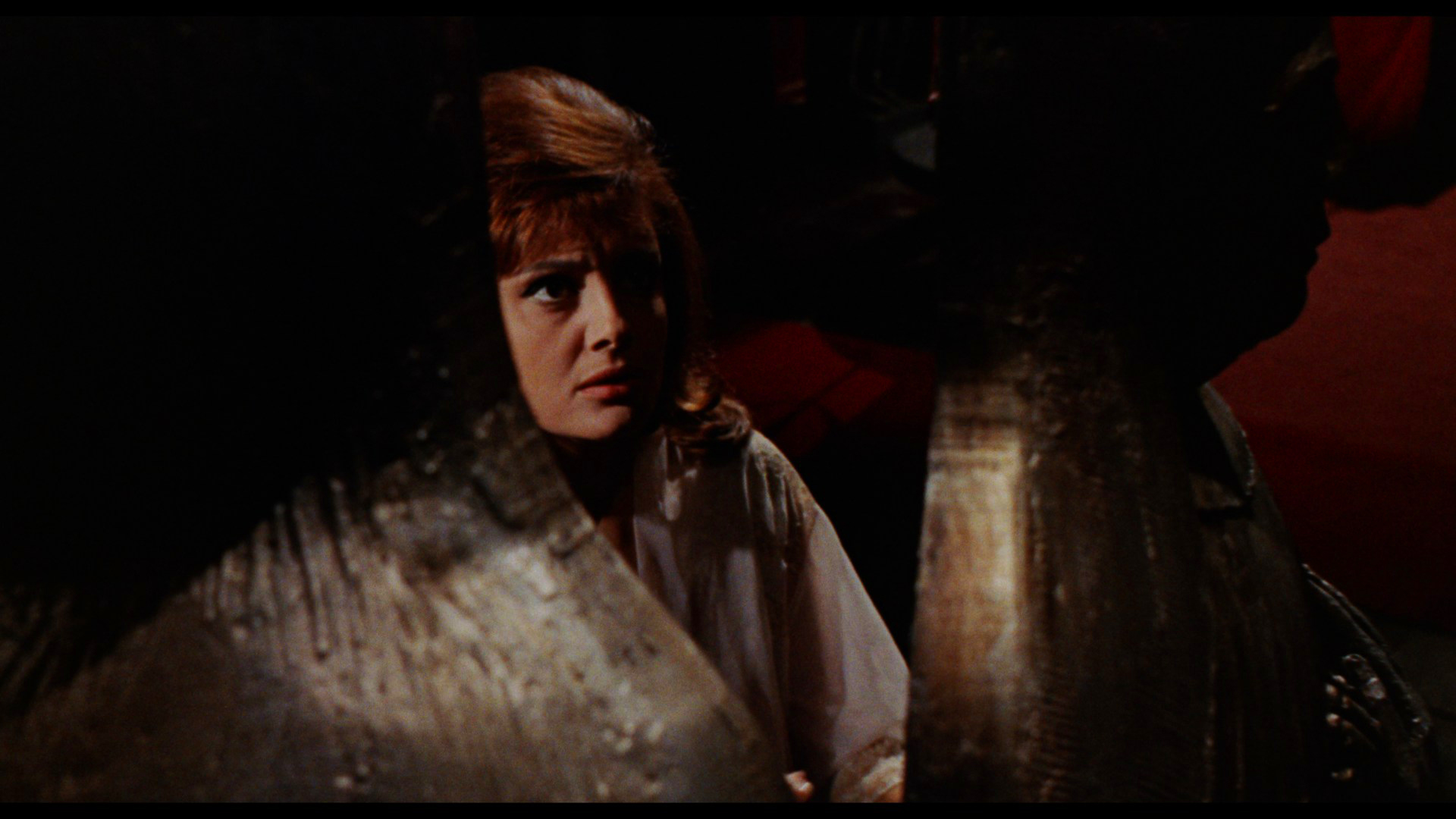
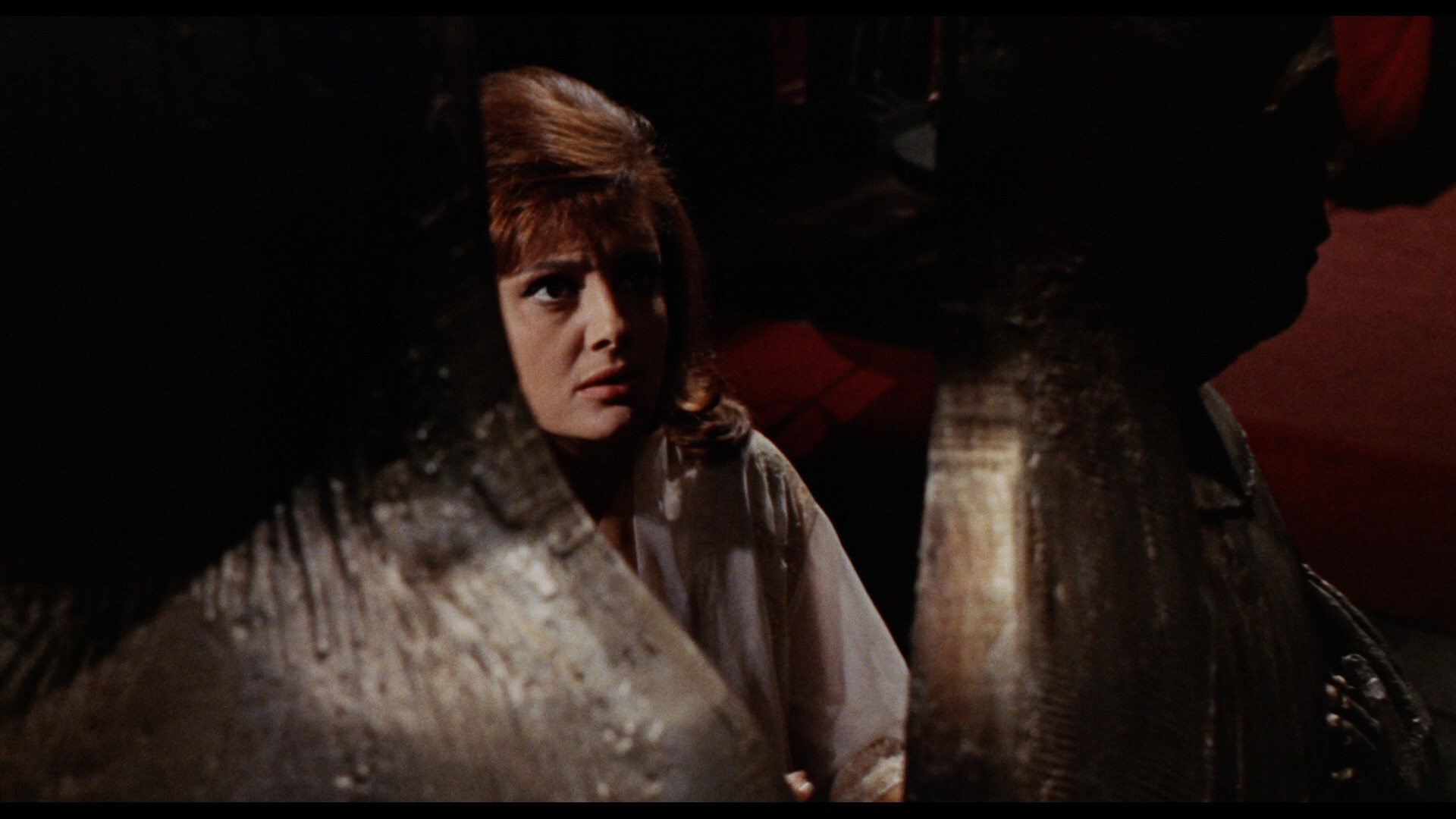
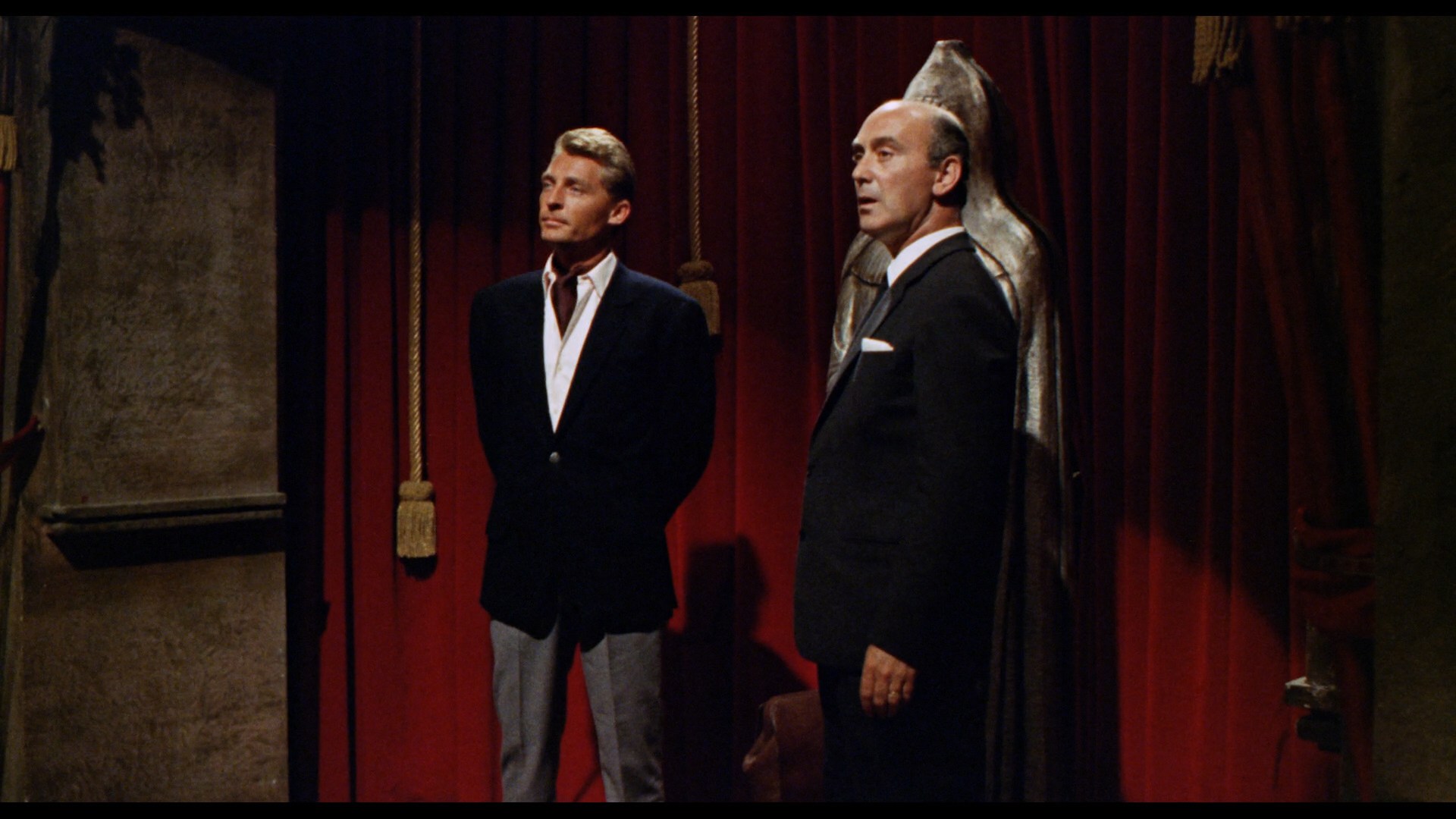
 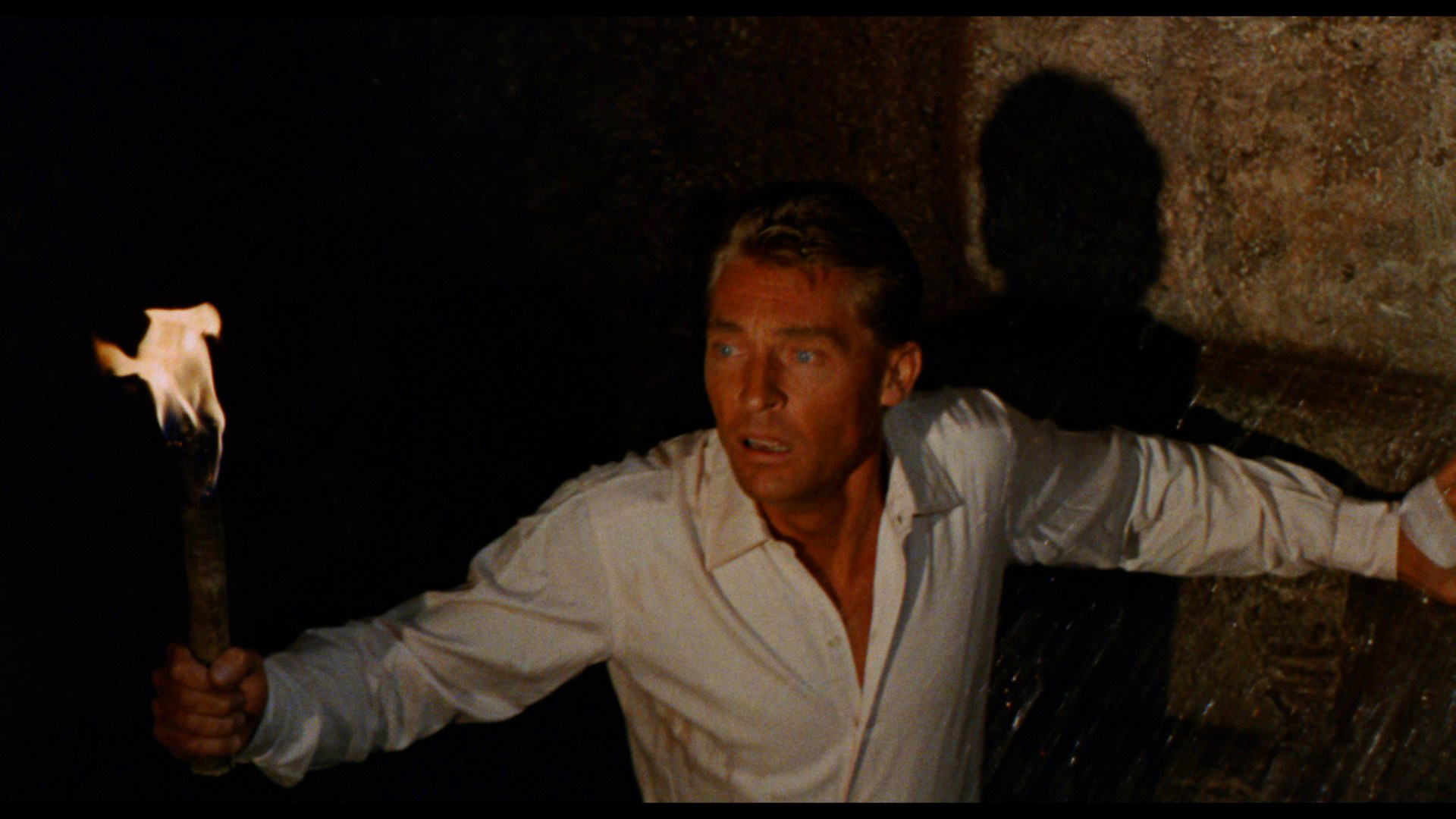 jewels of Italian gothic horror, Antonio Margheriti's The Virgin of Nuremberg. Also known as The Castle of Terror and Horror Castle, this quickly-made companion piece of sorts to Castle of Blood brings in Lee as a creepy-looking supporting character and possible suspect, here in the midst of his other Italian horror work in The Whip and the Body and Terror in the Crypt. Taking a page from the previous year's The Horrible Dr. Hichcock, the production veered away from the more traditional black-and-white approach in favor of shadowy, saturated color with lots of oranges and reds giving it a nice macabre flair. The film went on to earn significant praise from genre critics and impressed many in its few VHS and DVD incarnations, but after that it went AWOL for a very long time until Severin unraveled the elements and rights complications to finally deliver a much-needed UHD and Blu-ray set the film richly deserves.
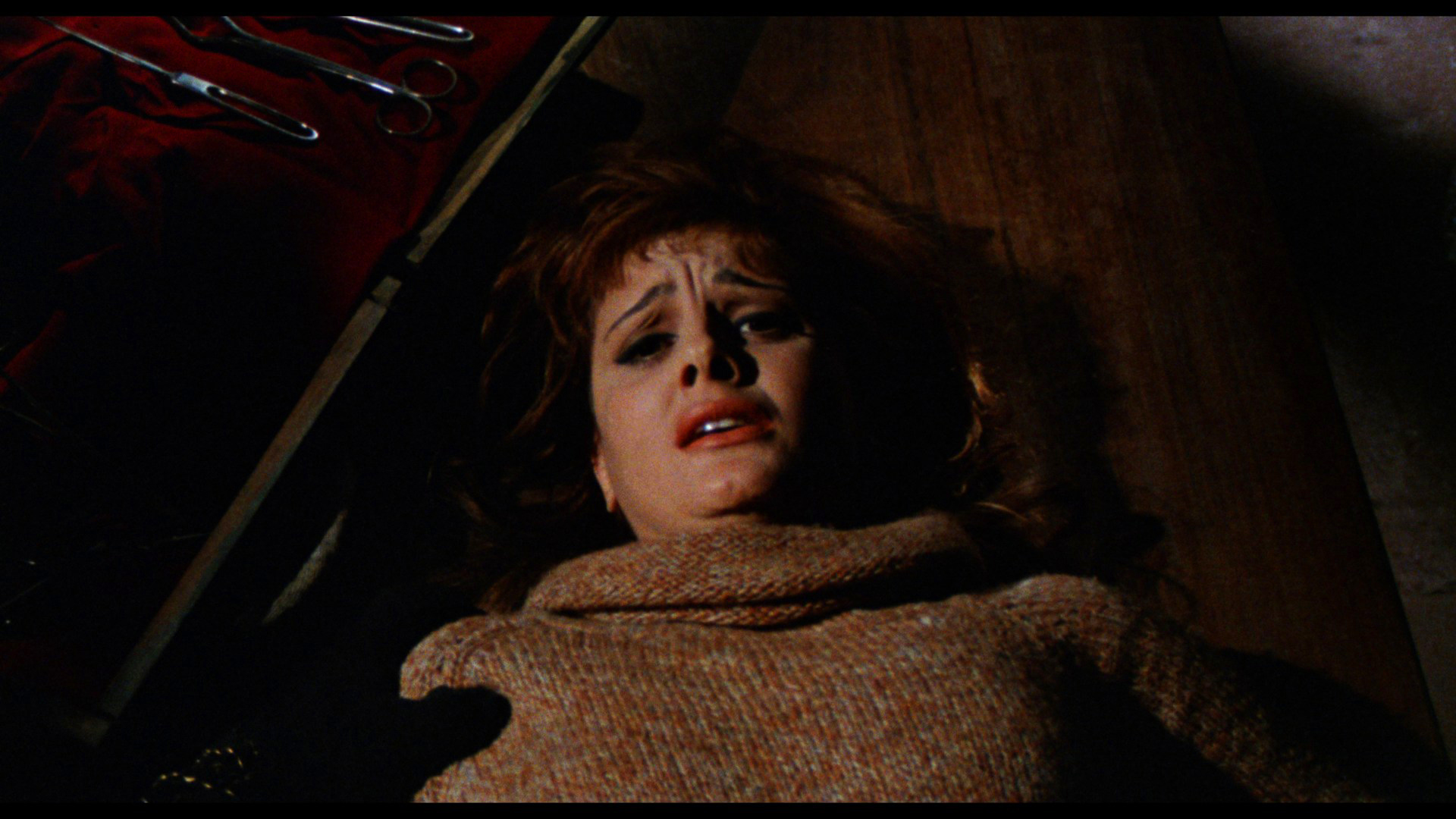
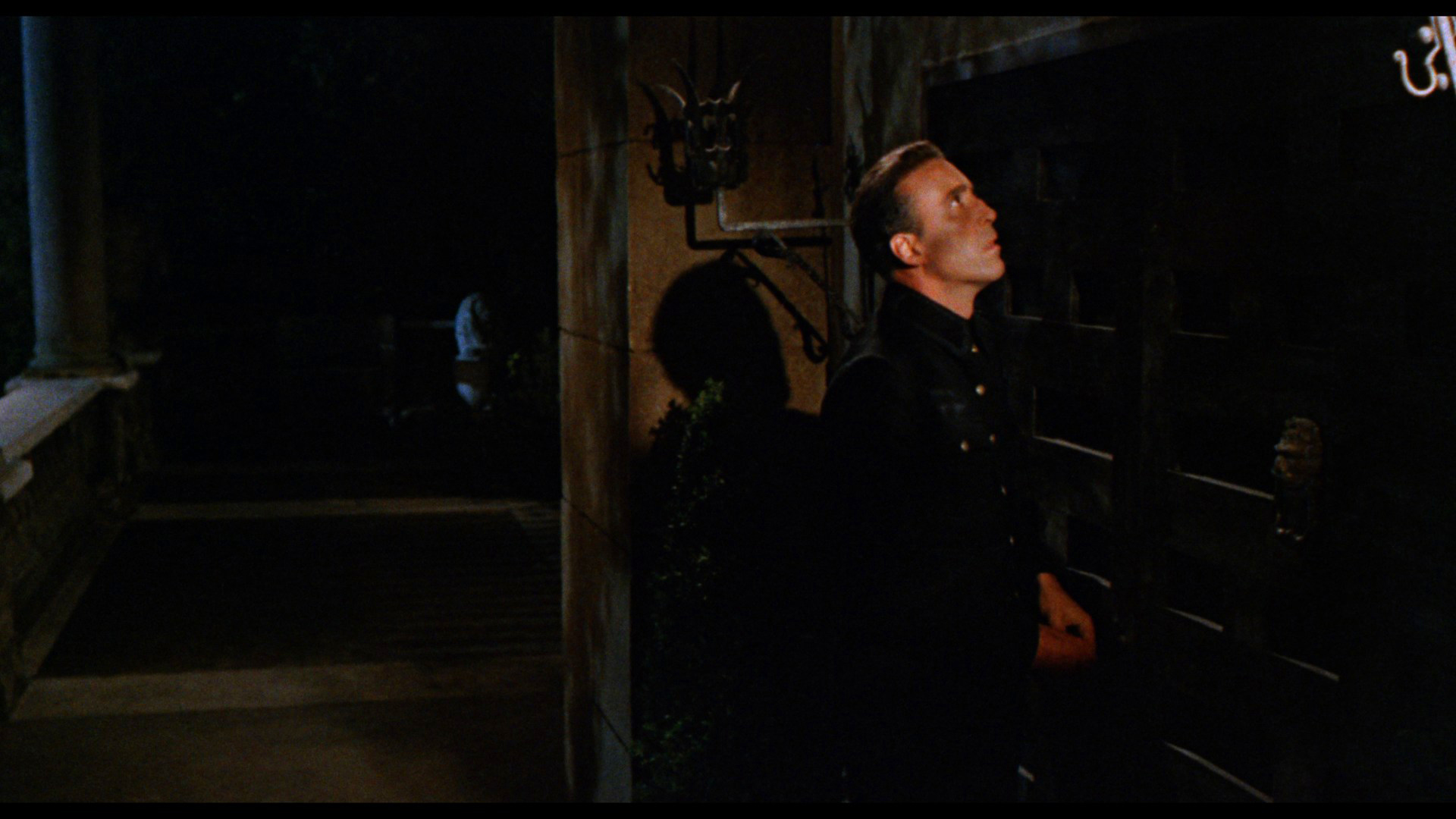
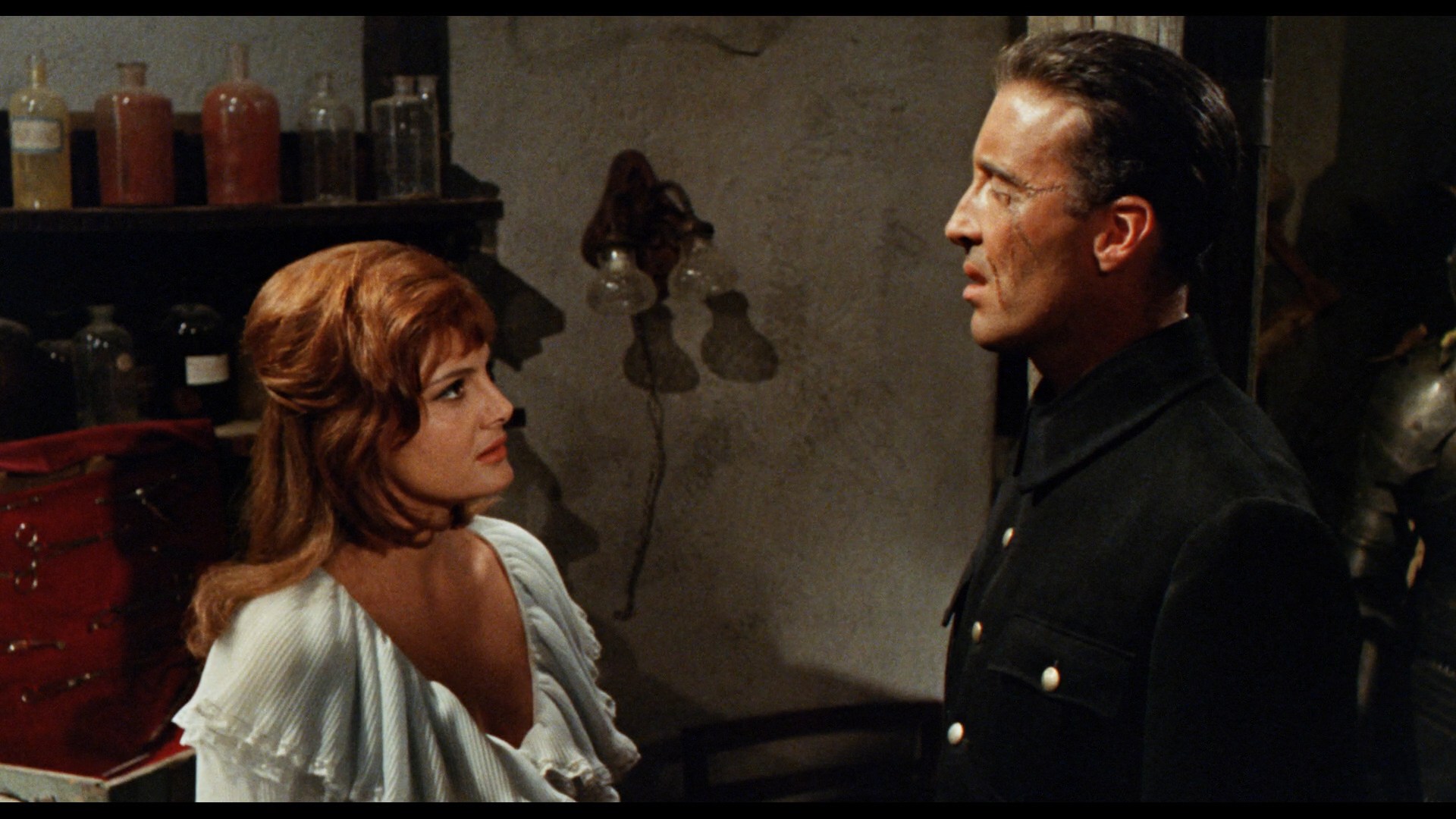
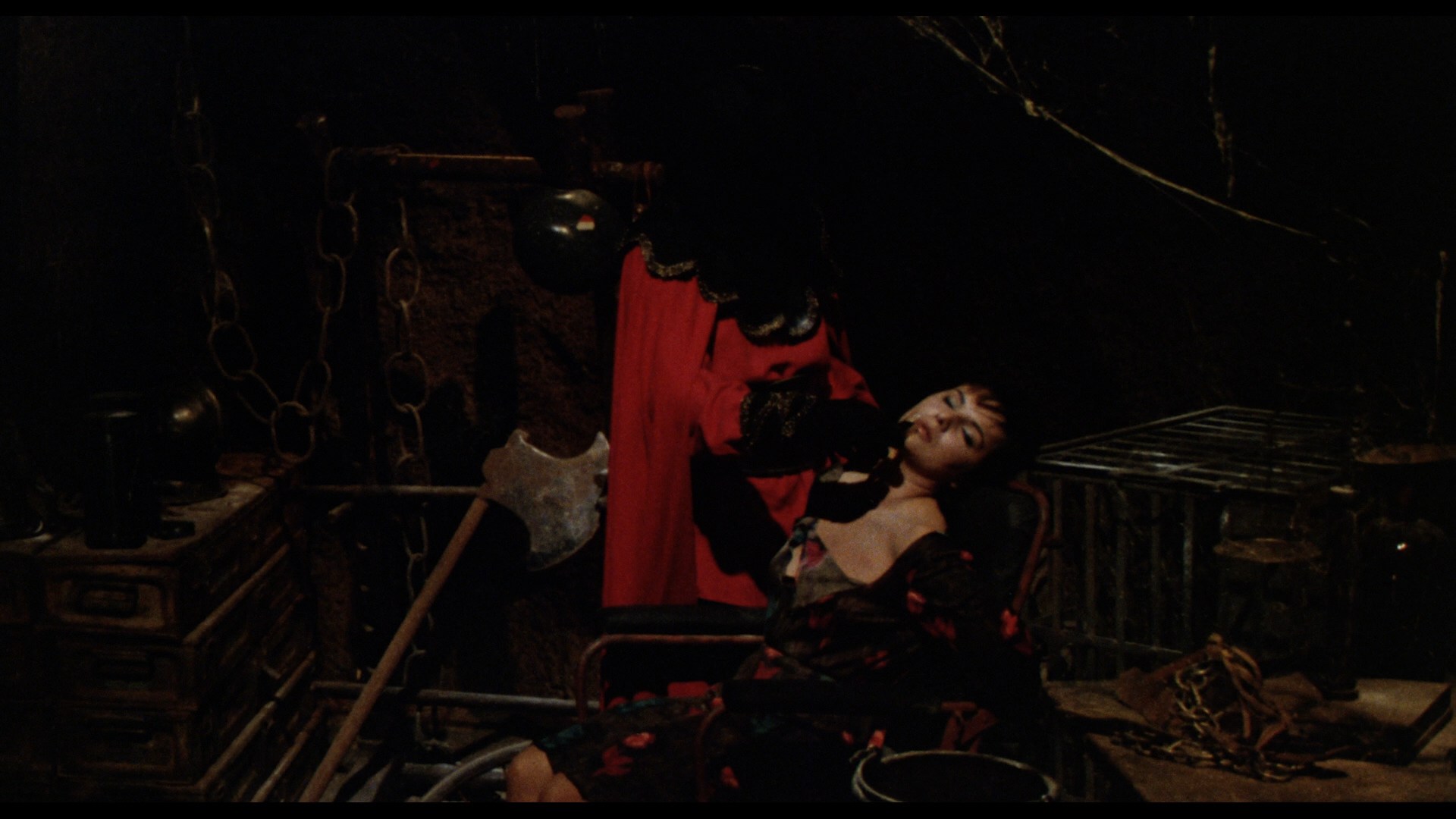
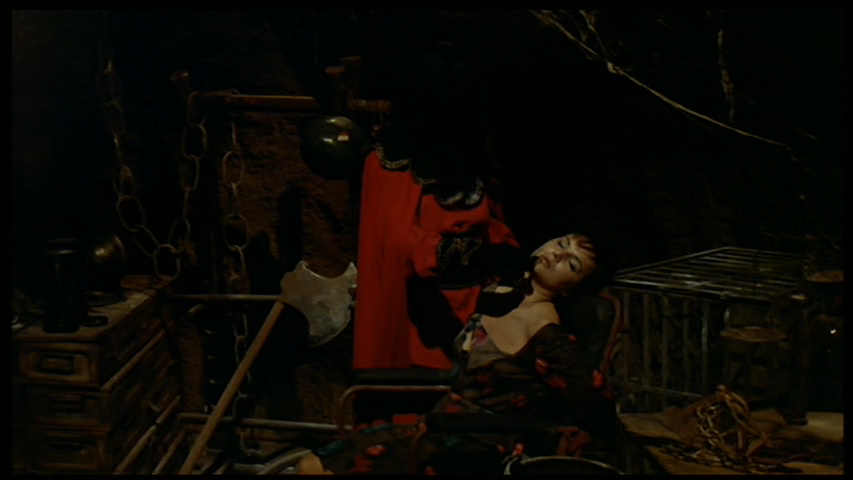
The title in this case refers to an iron maiden nestled deep within the spooky confines of the family castle of Max Hunter (Rivière) whose new bride, Mary (Podestà), discovers something alarming in it before the credits have even rolled. Nobody believes her claims that women are being captured, tortured, and killed within the castle late at 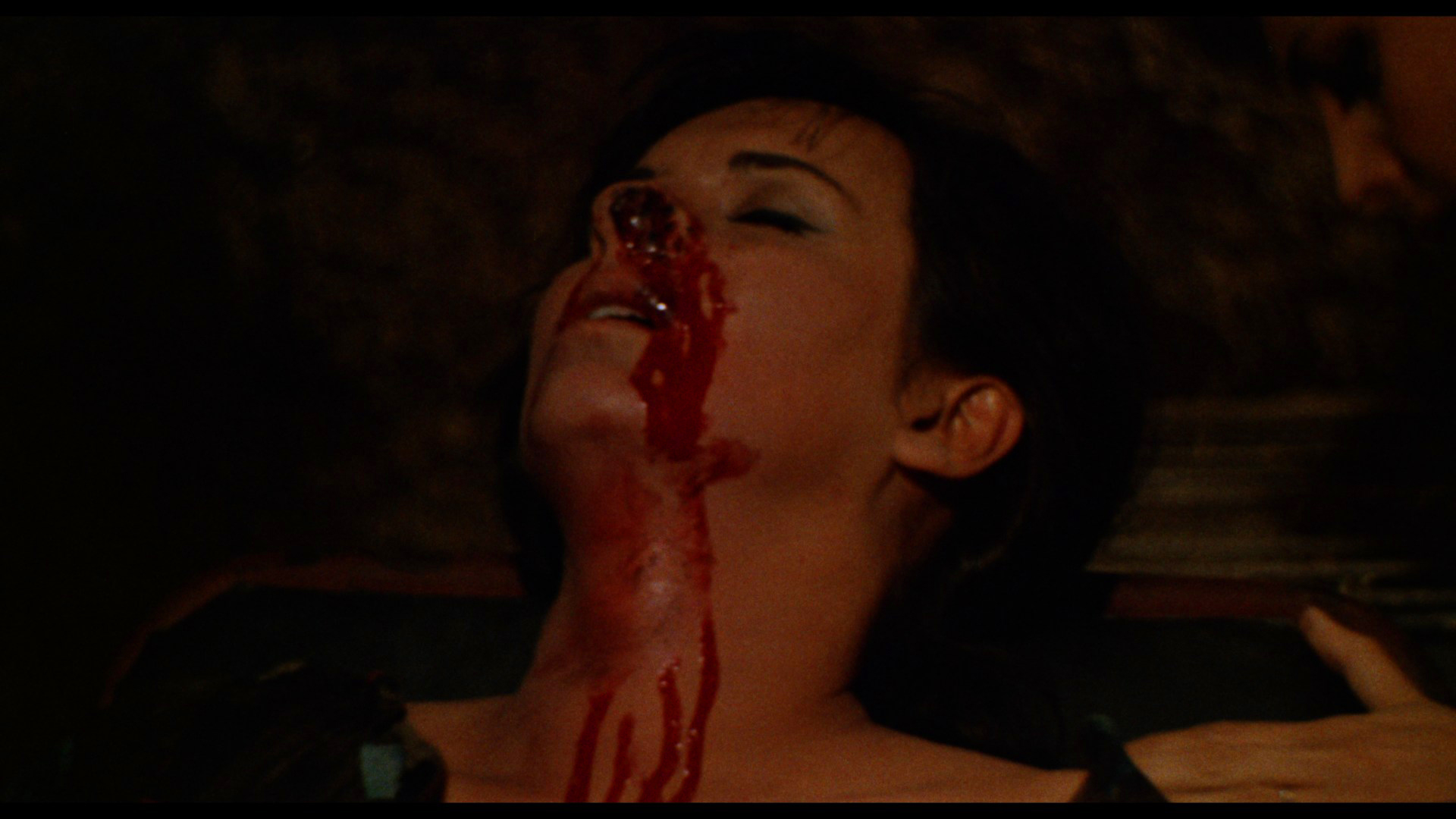 night when the evidence keeps disappearing, and the
 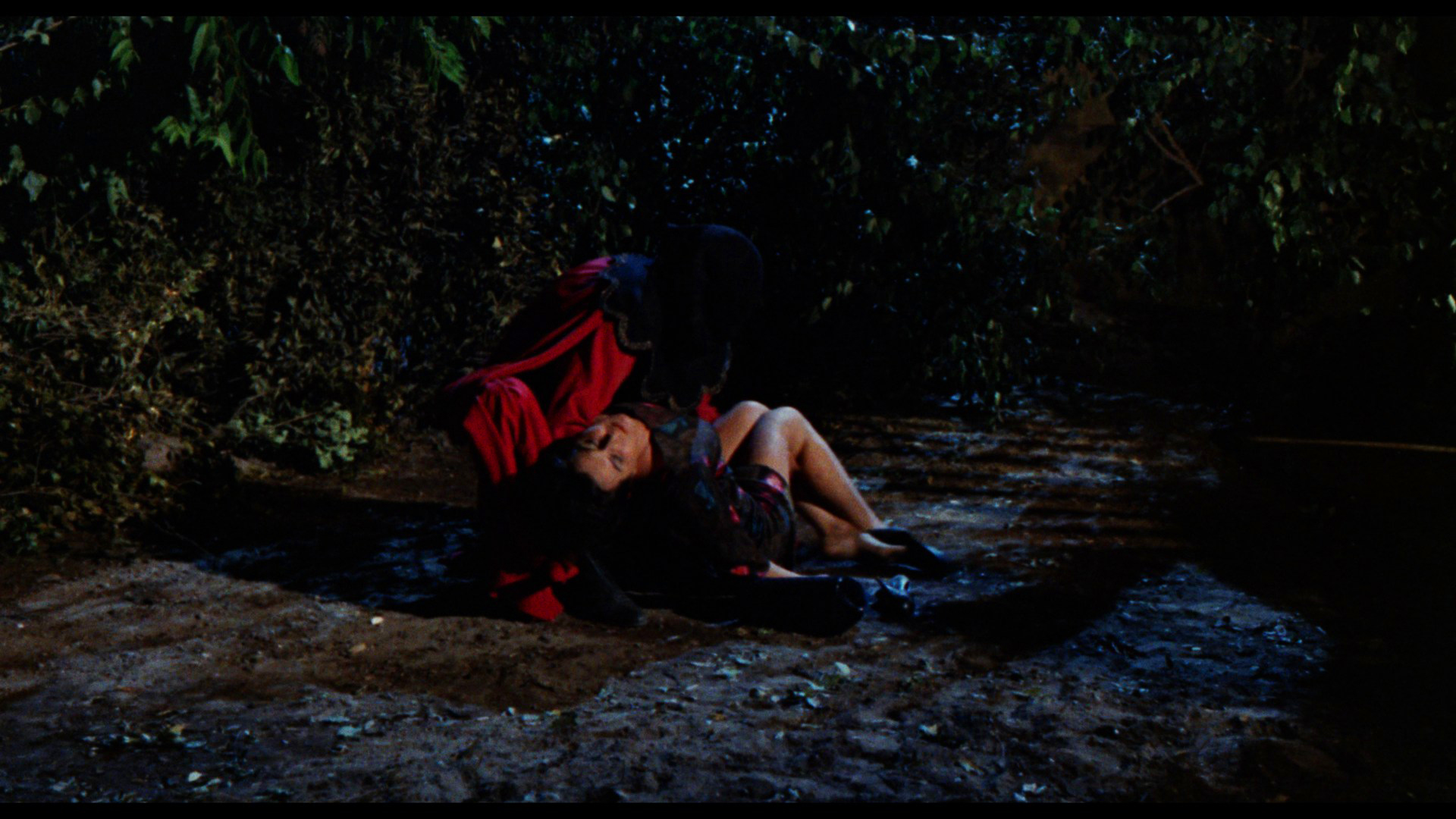 meager suspects also include the scarred, dour family servant, Erich (Lee). All of it goes back to a horrific secret in the castle's not-too-distant history involving a cloaked killer called The Punisher that will have a nightmarish impact on the couple's household.
Though it has all the necessary gothic trappings like flickering torches, endangered women in nightgowns, and shadowy corridors, The Virgin of Nuremberg shakes things up with a modern-day setting, a jazzy Riz Ortolani score, and a handful of surprisingly sadistic moments including a notorious one involving a rat and a face cage. It's also very much a non-supernatural murder mystery, and given its initial release in August of 1963, you could argue that it virtually ties with Mario Bava's The Girl Who Knew Too Much (which barely beat it to theaters) as the start of the giallo movie boom. Lee fans won't get a ton of him in this one, but he's fun to watch here with Podestà capably running most of the show as the amateur sleuth who gets in way over her head. It's all very atmospheric of course and up there with Margheriti's other horror films of the decade, making for great late night viewing and a solid choice for anyone who's still new to the Italian horror scene as well.
Tossed away as 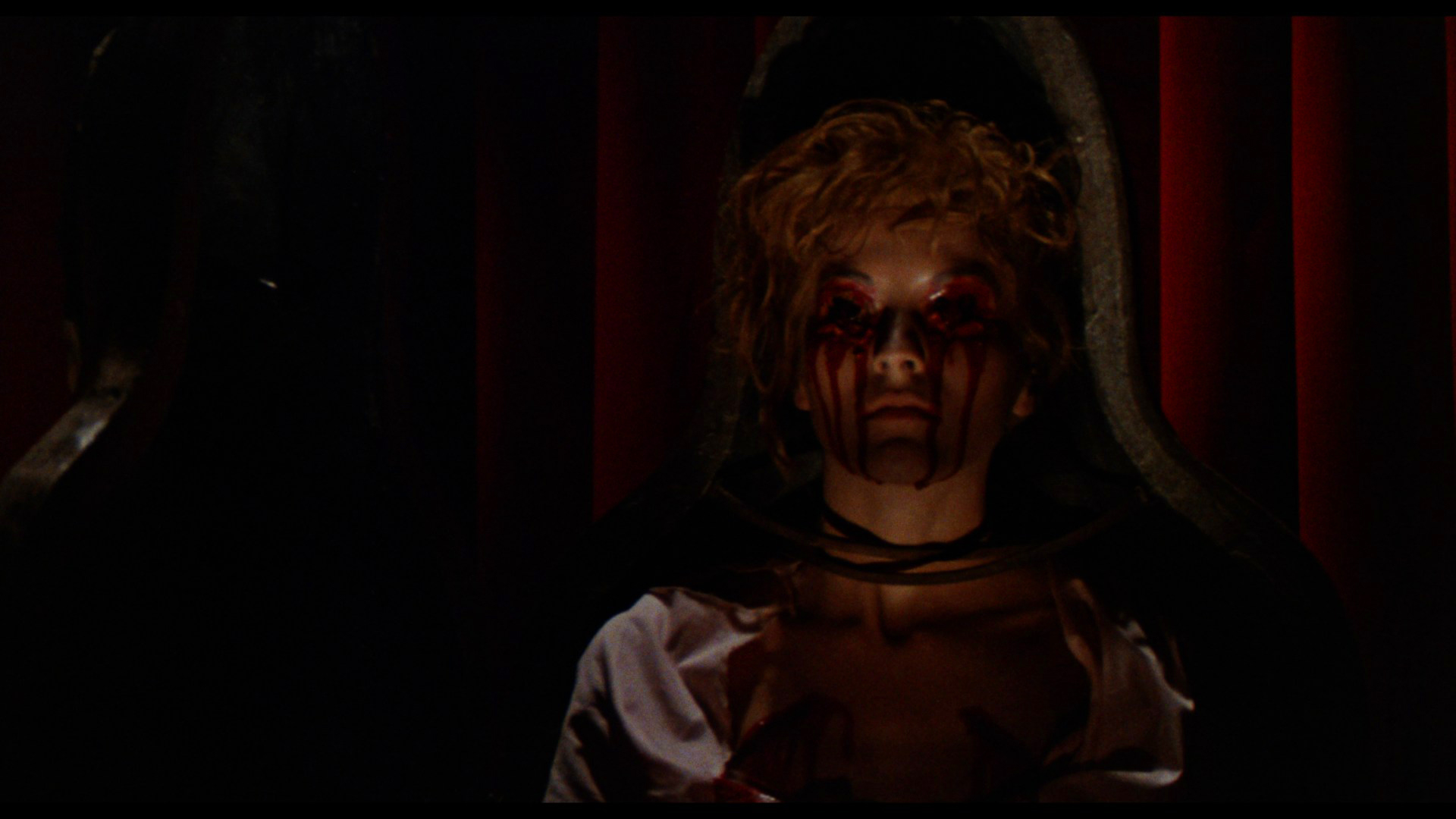 a horror programmer in most territories, The Virgin of Nuremberg didn't really pick up much steam for a while until it started getting appetizing write-ups in Midi-Minuit fantastique and The Overlook Film Encyclopedia: Horror. A very below-the-radar American VHS turned up in 1988 from AIP's Panther Entertainment which was essentially Gen X's first exposure to the film,
  with a brief appearance a decade later from Sinister Cinema also coming along. Shriek Show debuted the film on DVD in 2004 featuring the English-language version (the language in which it was shot without live sound, with everyone dubbed later as usual) with Italian credits, clocking in at 83m48s and looking okay apart from being interlaced. Extras include a 4m image gallery, an Italian trailer, and bonus trailers for Faceless, Flesh of the Beast, and Flesh Eater.
The Severin edition is, not surprisingly, a big step up across the board with a fresh 4K scan from the interpositive that adds a substantial amount of extra image info as well as much punchier colors with less of a yellow push. Both the English and Italian tracks are here in fine DTS-HD MA 2.0 mono options with optional English-translated or SDH subtitles. The film also comes with a commentary by this writer and Troy Howarth, so obviously no comments on that but hopefully it will prove enjoyable. Both discs also feature the usual Italian trailer, while the Blu-ray adds "Margheriti's Horror Castle" (4m6s), an archival interview with the director conducted by Peter Blumenstock (rough quality but nice to have) about his memories of this film including his positive impressions of Lee and the rest of the cast. Also included is "In the Iron Maiden" (20m15s), an interview with screenwriter Ernesto Gastaldi by Fabio Melelli (with interjections from Margheriti) about the significance of the historical backdrop for the killer's motivation, carrying over the leading man from Castle of Blood, the weirdness of taking on pseudonyms for international co-productions, the trust involved in casting the 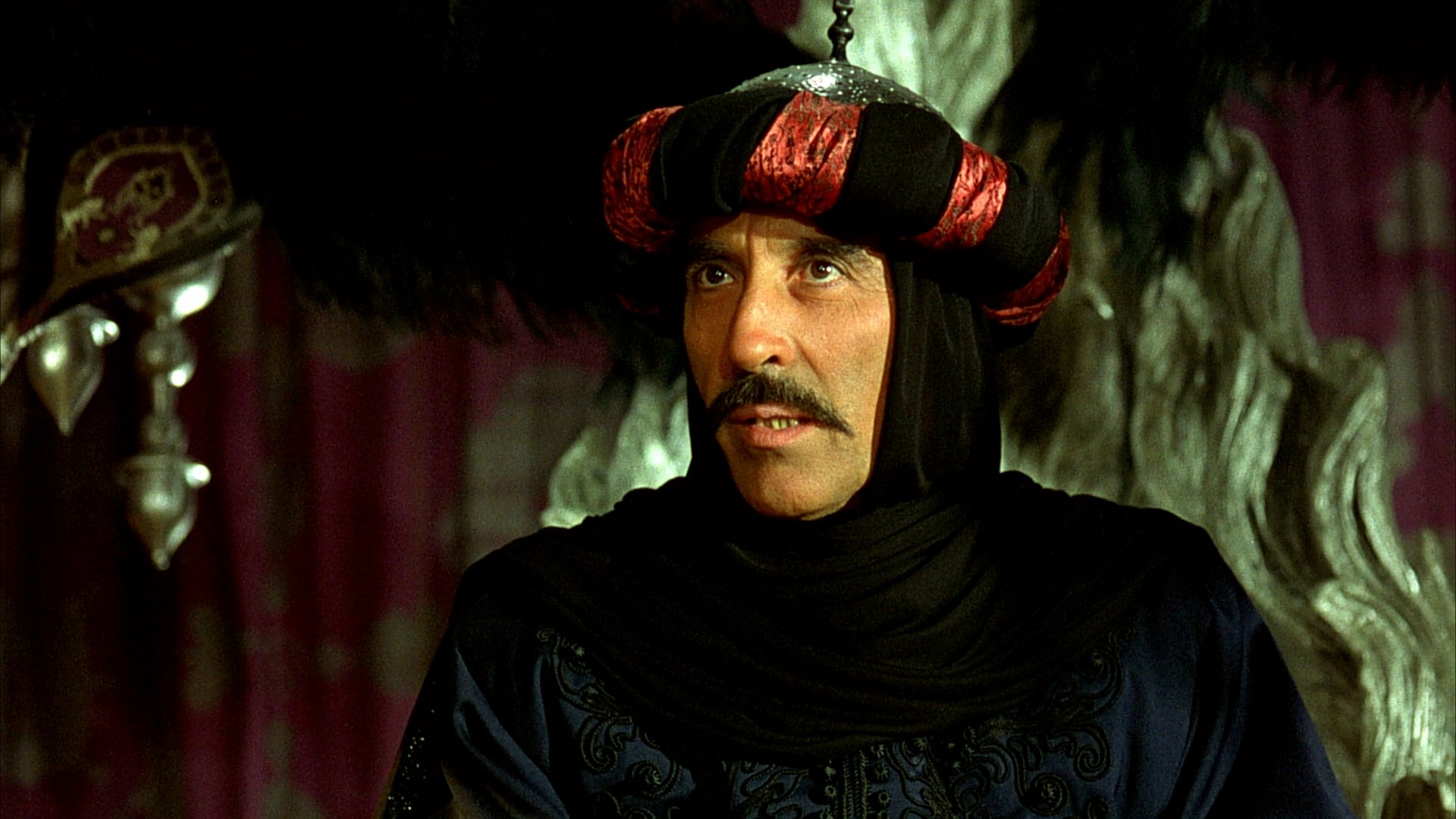 leading lady who had to carry so much of the running time,
  and the tempo achieved in the writing of the script.
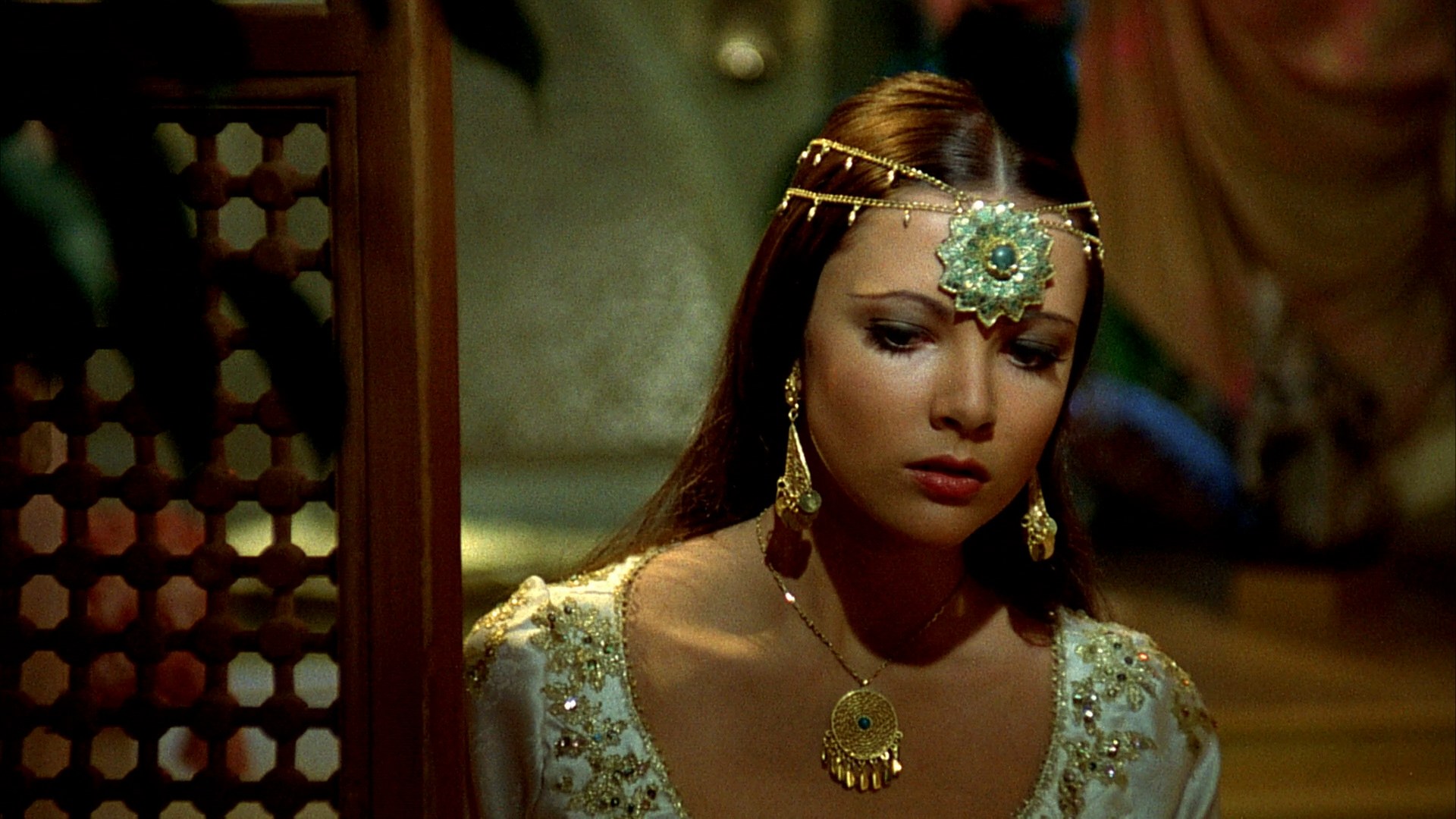
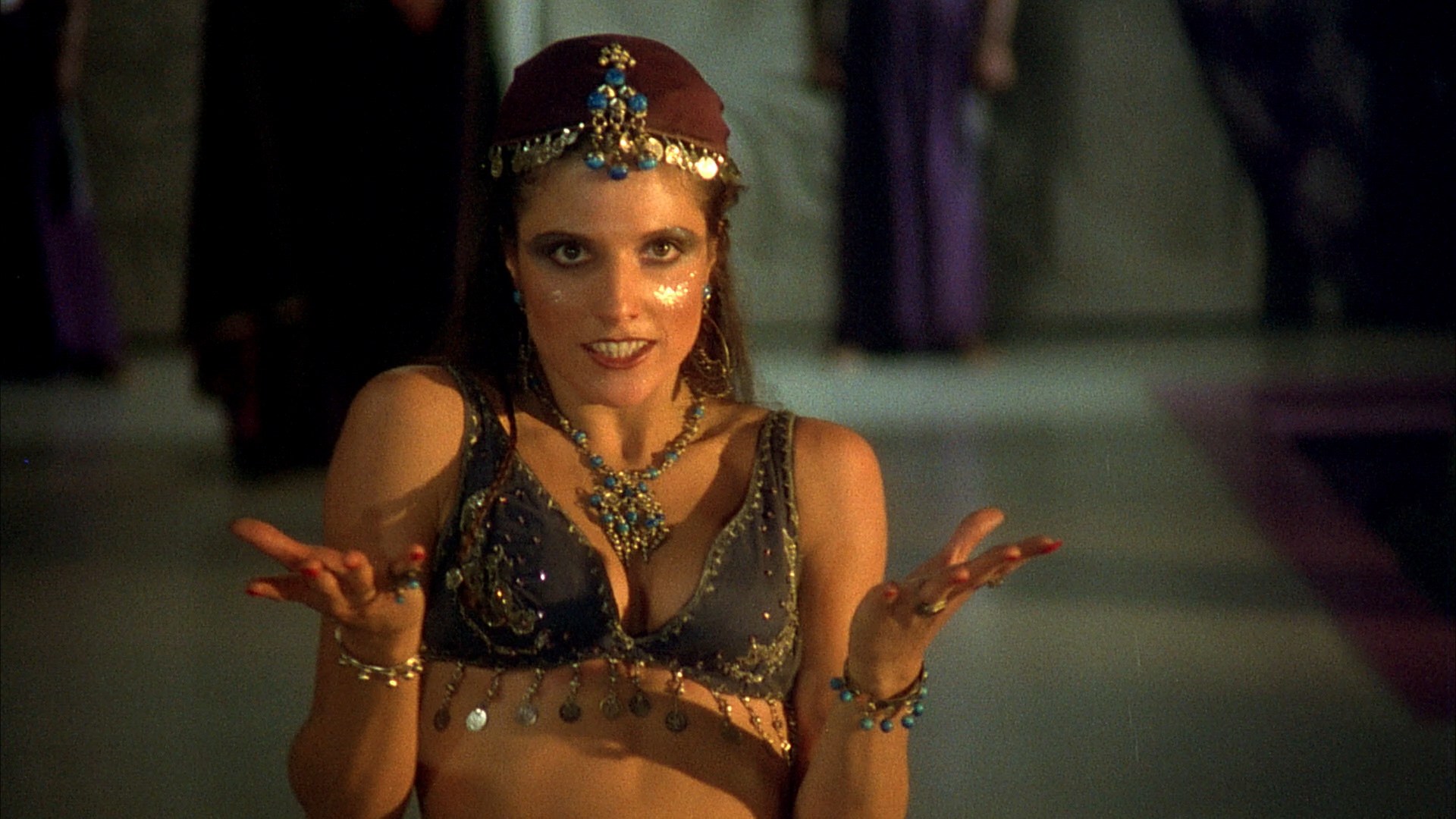
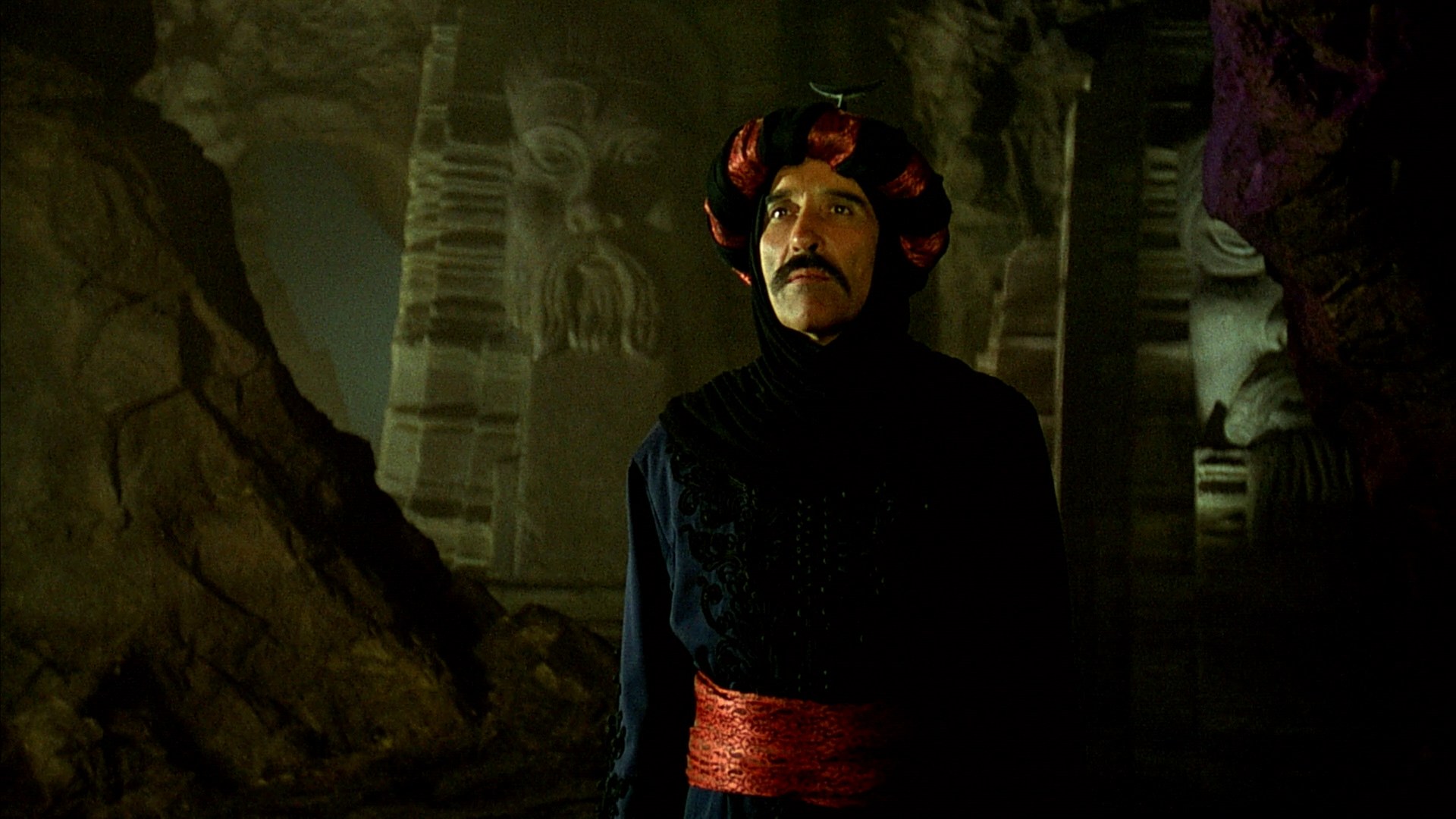
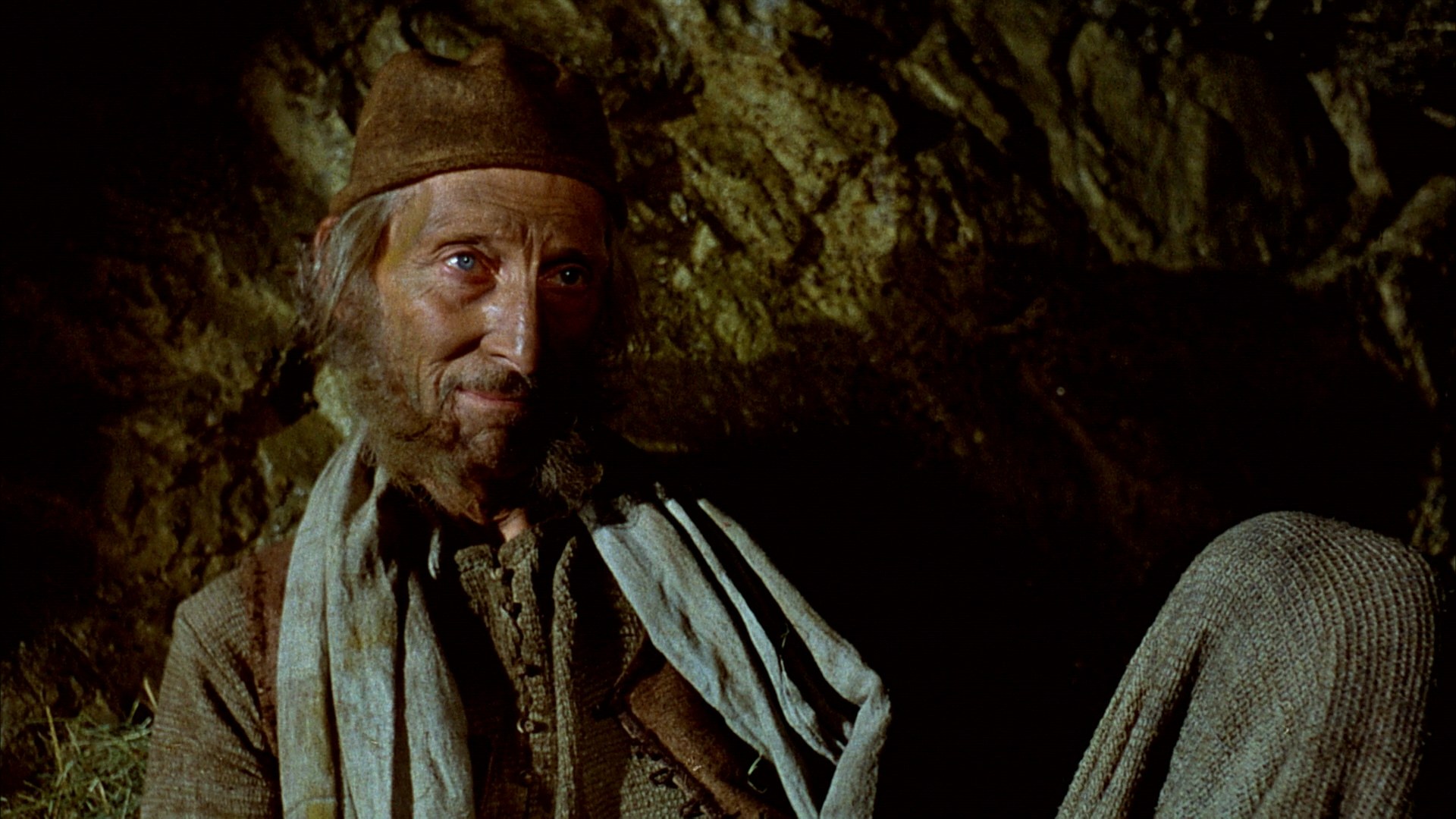
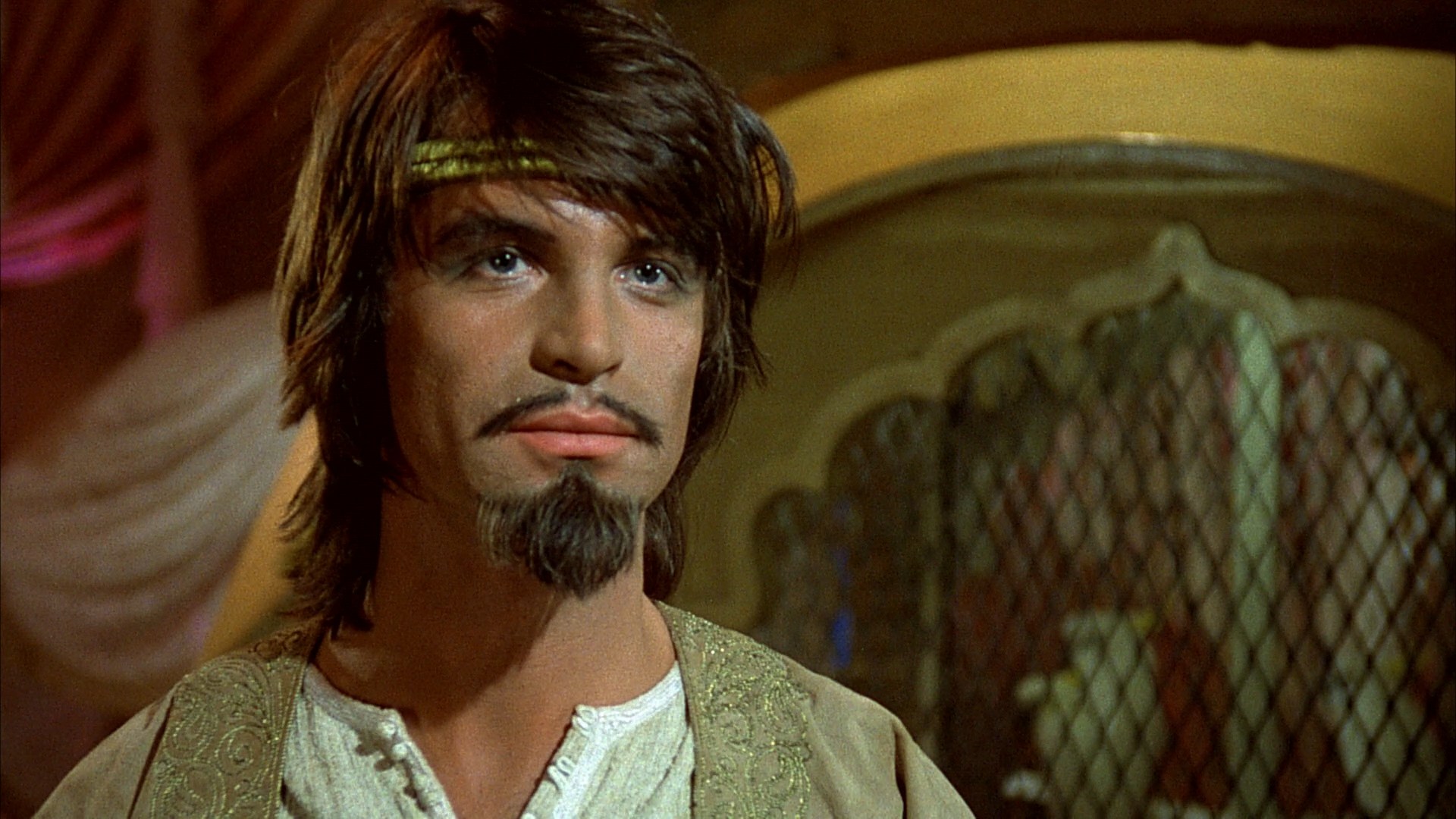
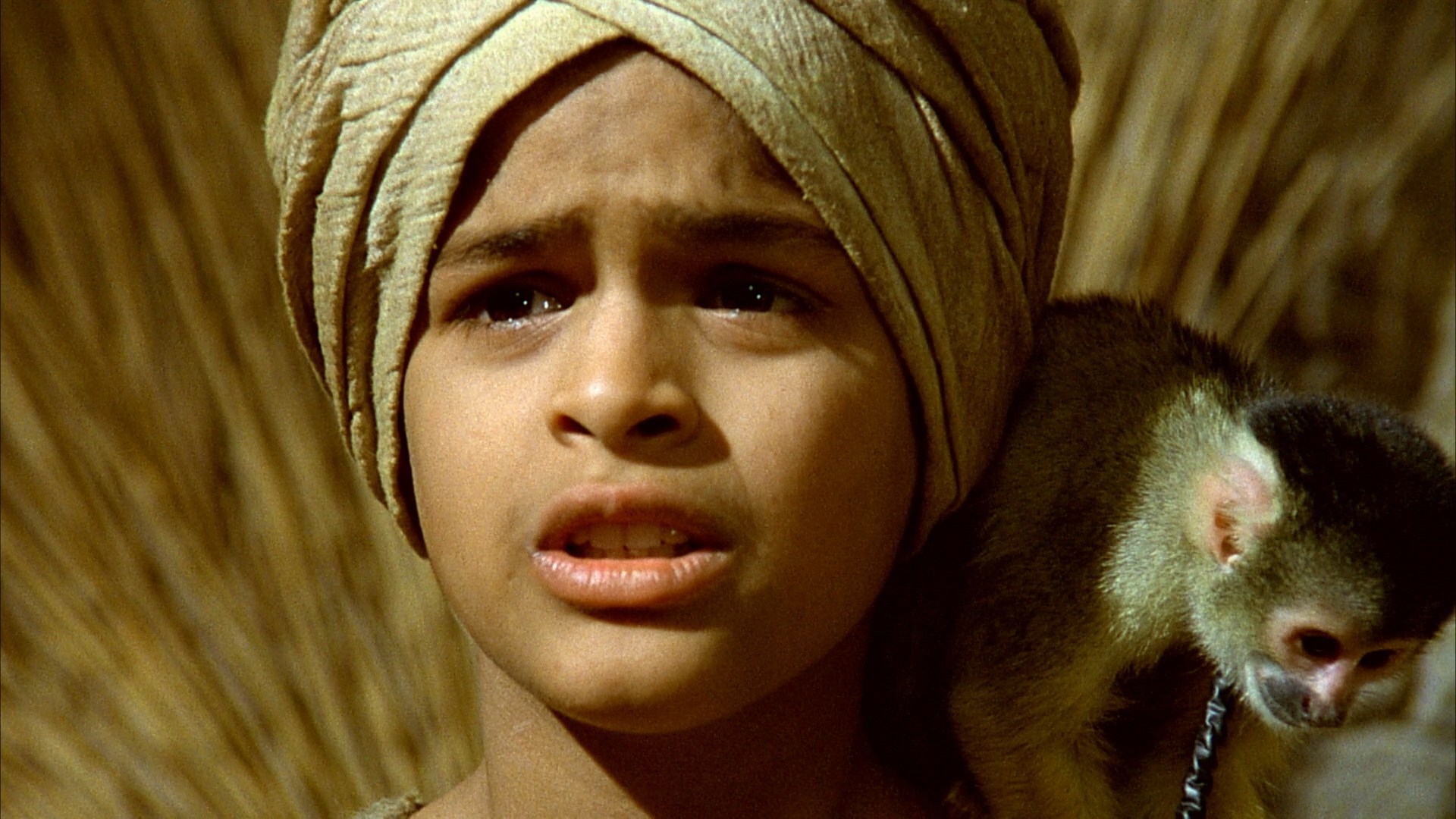
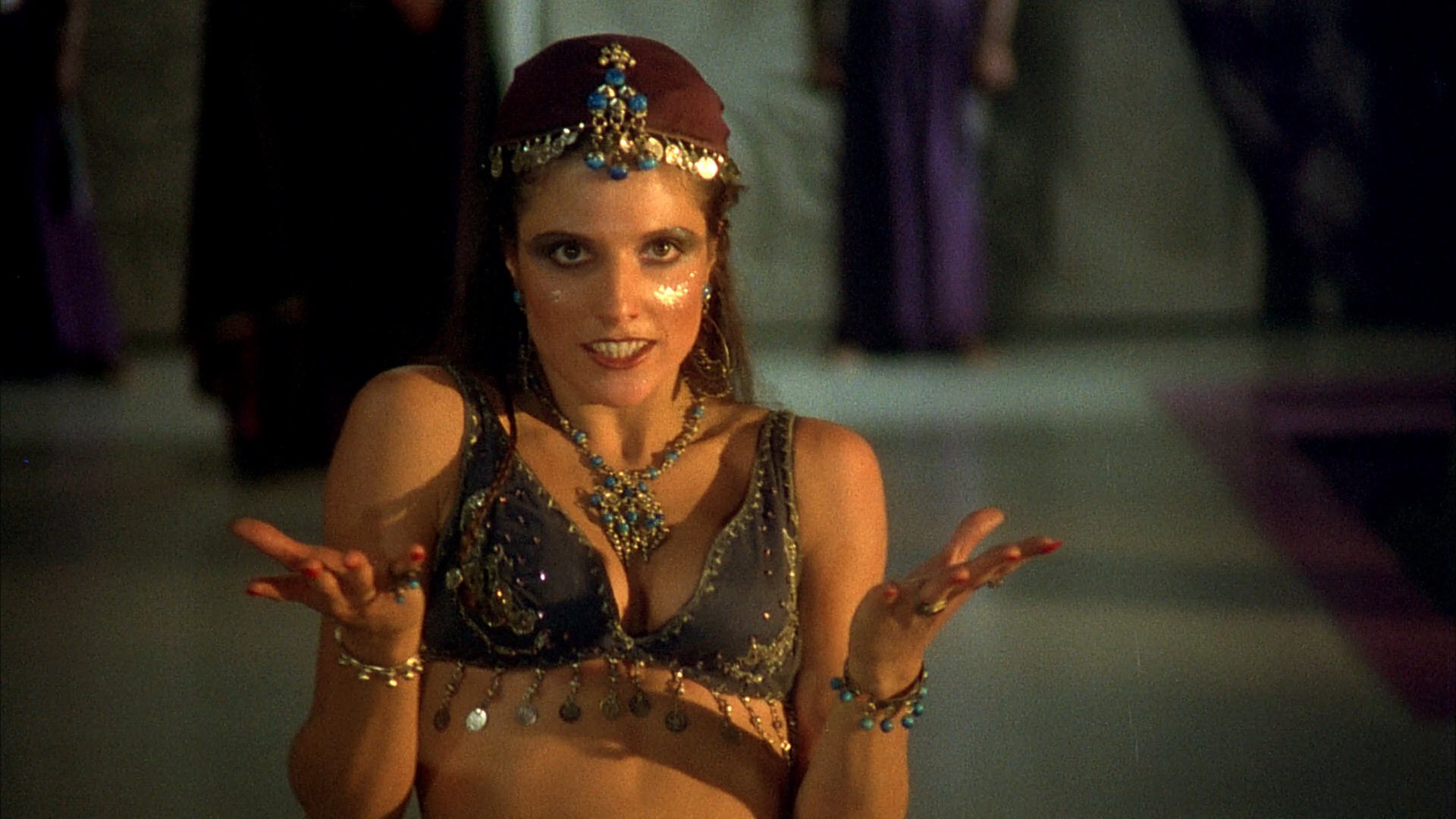
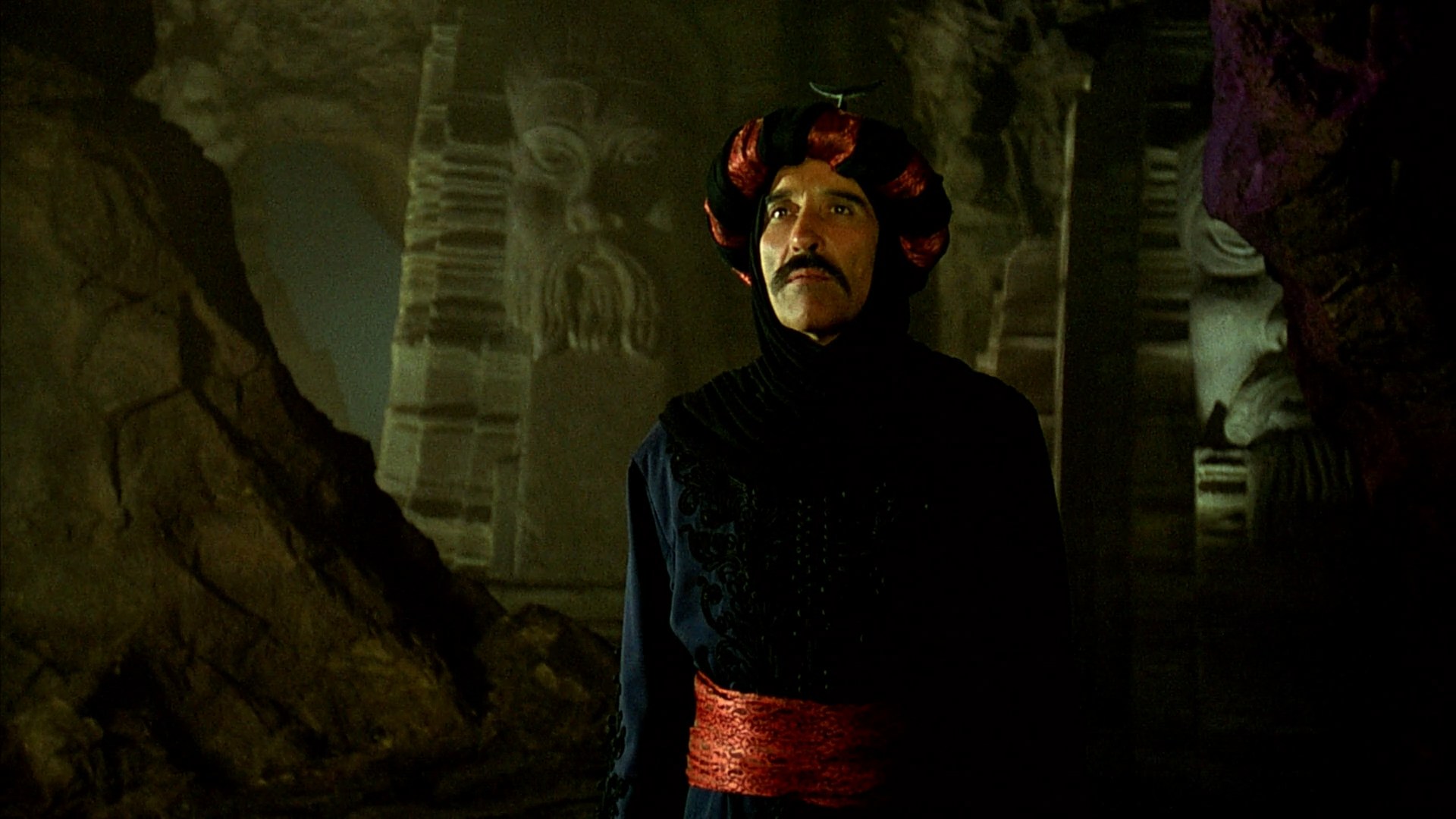
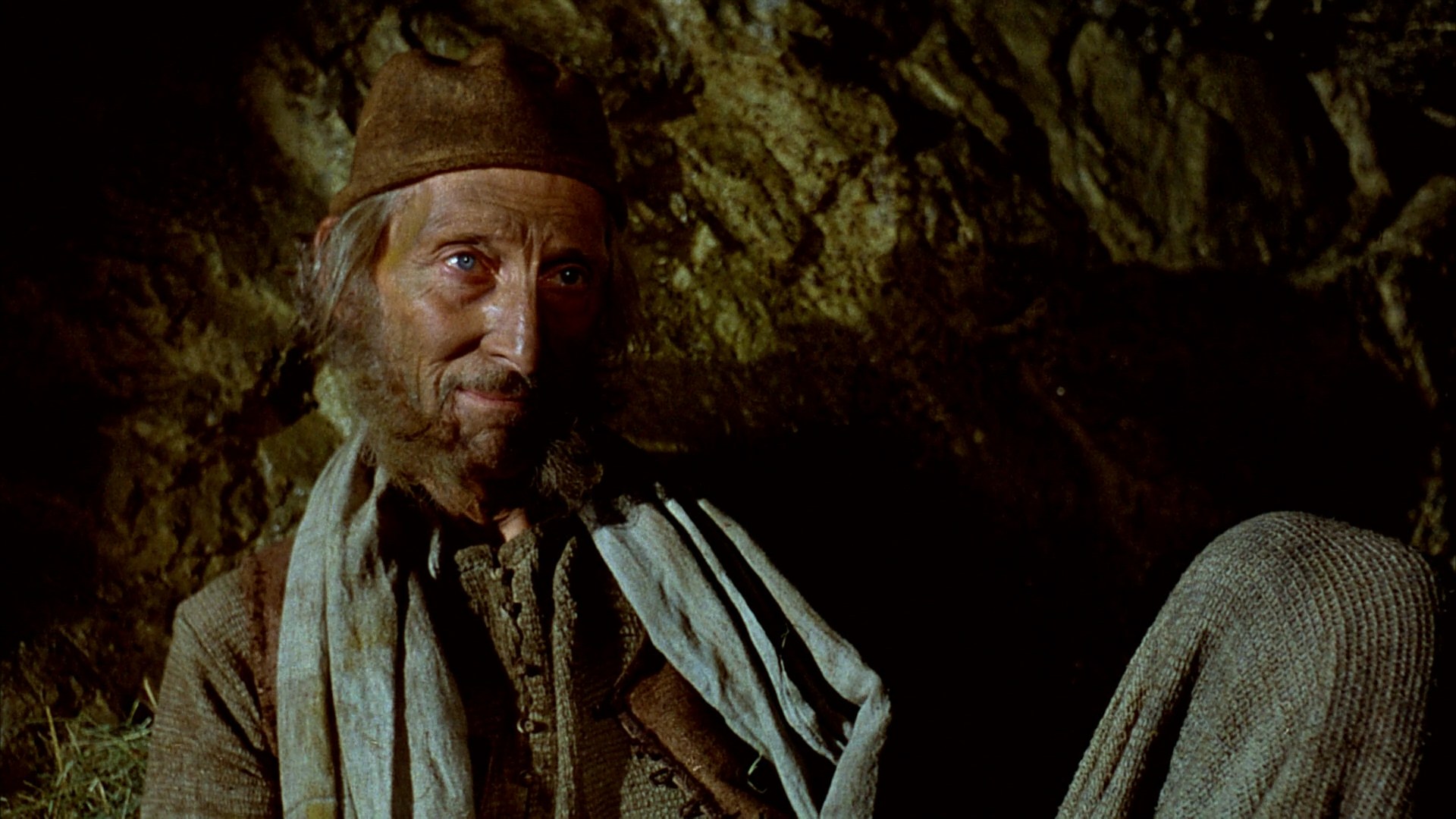
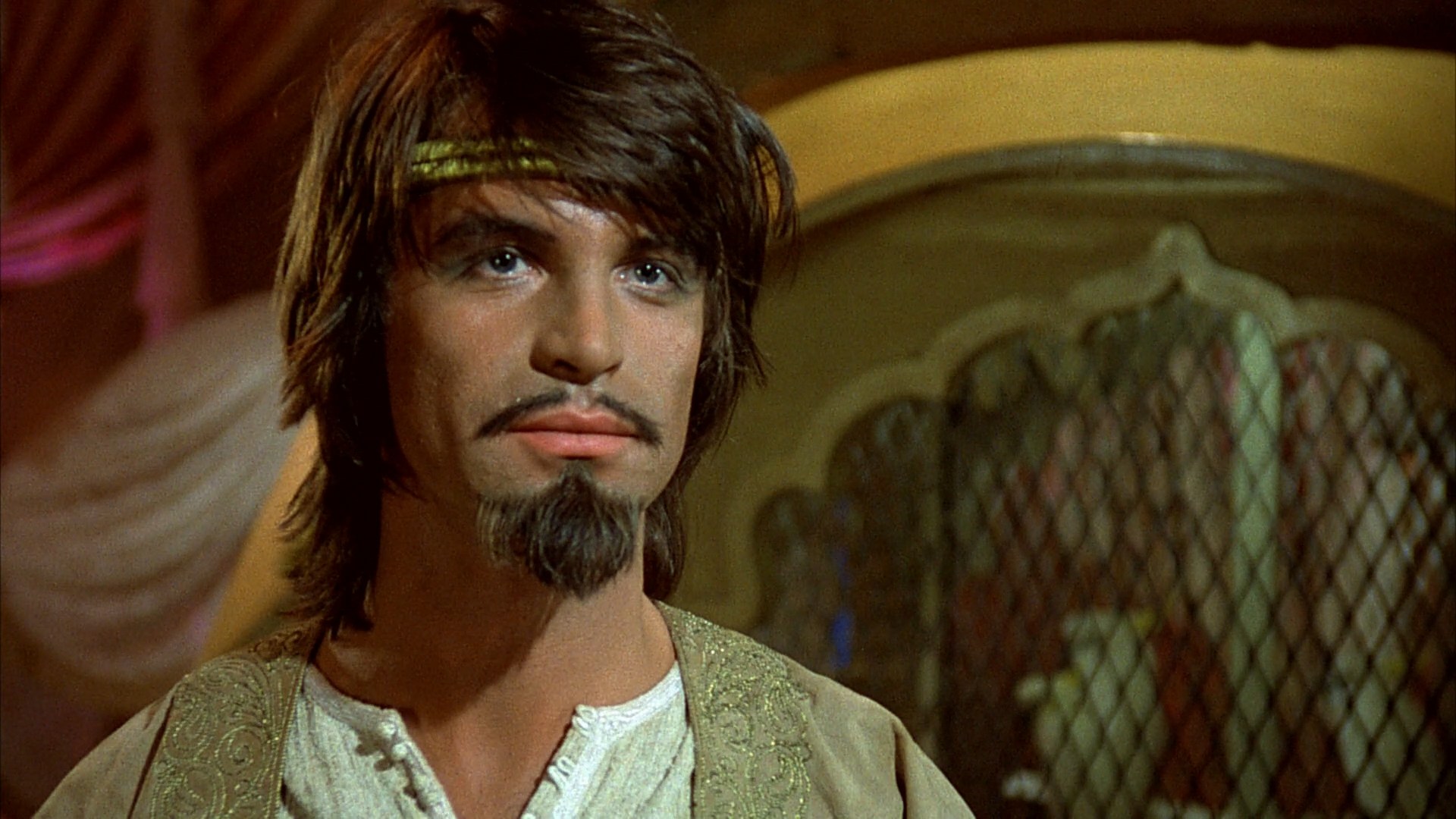
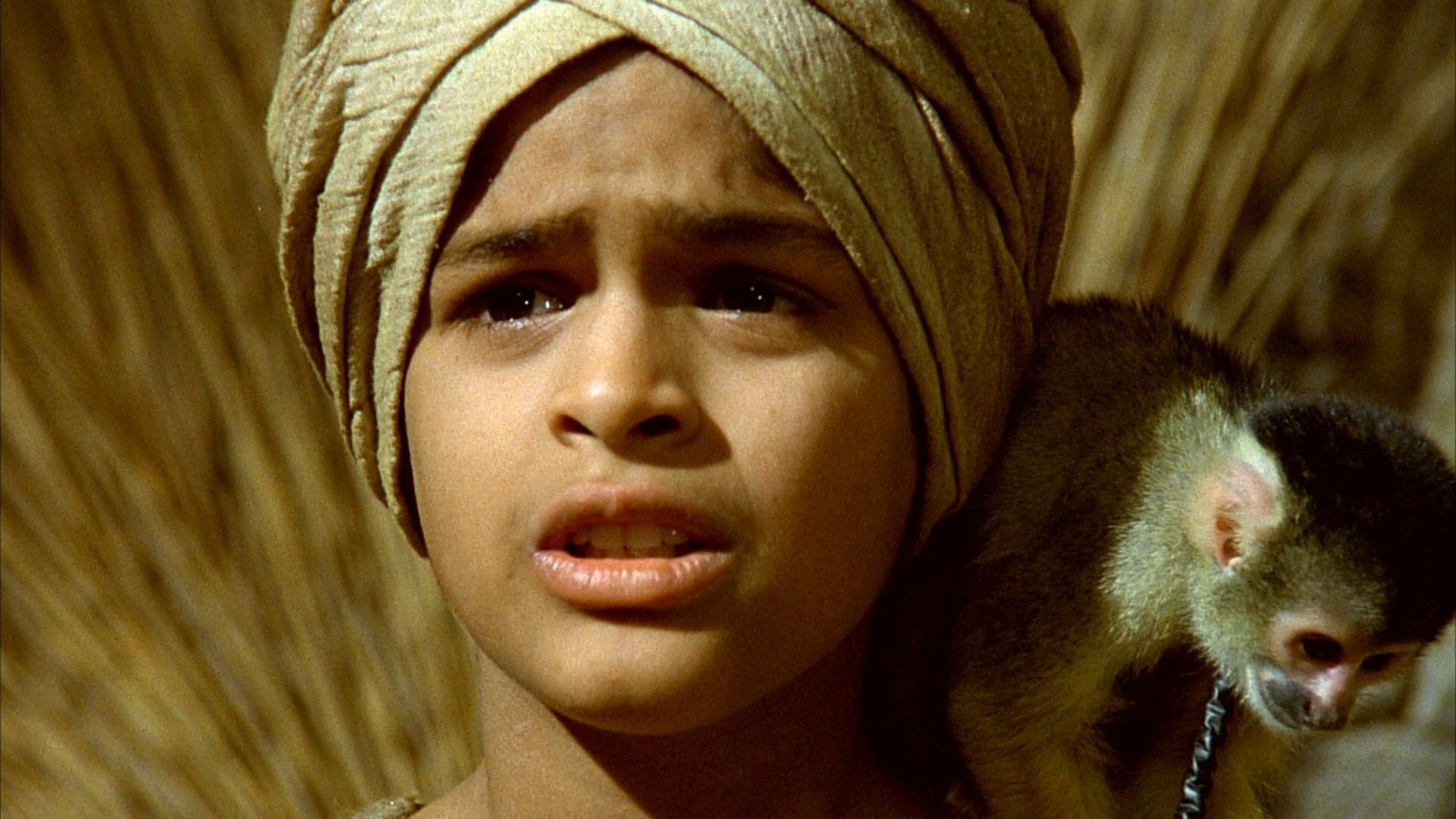
On disc five we hurtle forward sixteen years to 1979's Arabian Adventure, part of a string of mostly family-friendly adventure films directed by Kevin Connor capping off a streak including The Land That Time Forgot, At the Earth's Core, The People That Time Forgot, and Warlords of Atlantis. The formula continues here with lots of bright colors, special effects, and an affordable star-laden cast with Lee getting top honors here as the wicked Caliph Alquazar whose beautiful daughter, Princess Zuleira (Samms), is sought by Prince Hasan (Tobias). Of course it's up to crafty street kid Majeed (Sira) to help him on a quest to retrieve a magical rose from a perilous swamp to earn the princess' hand, plus a magical stone with Capucine inside it offering advice. Other guest stars along the way include a nice bit for Peter Cushing, a very strange one for Mickey Rooney, and even a young John Ratzenberger in his character bit actor days.
Obviously this 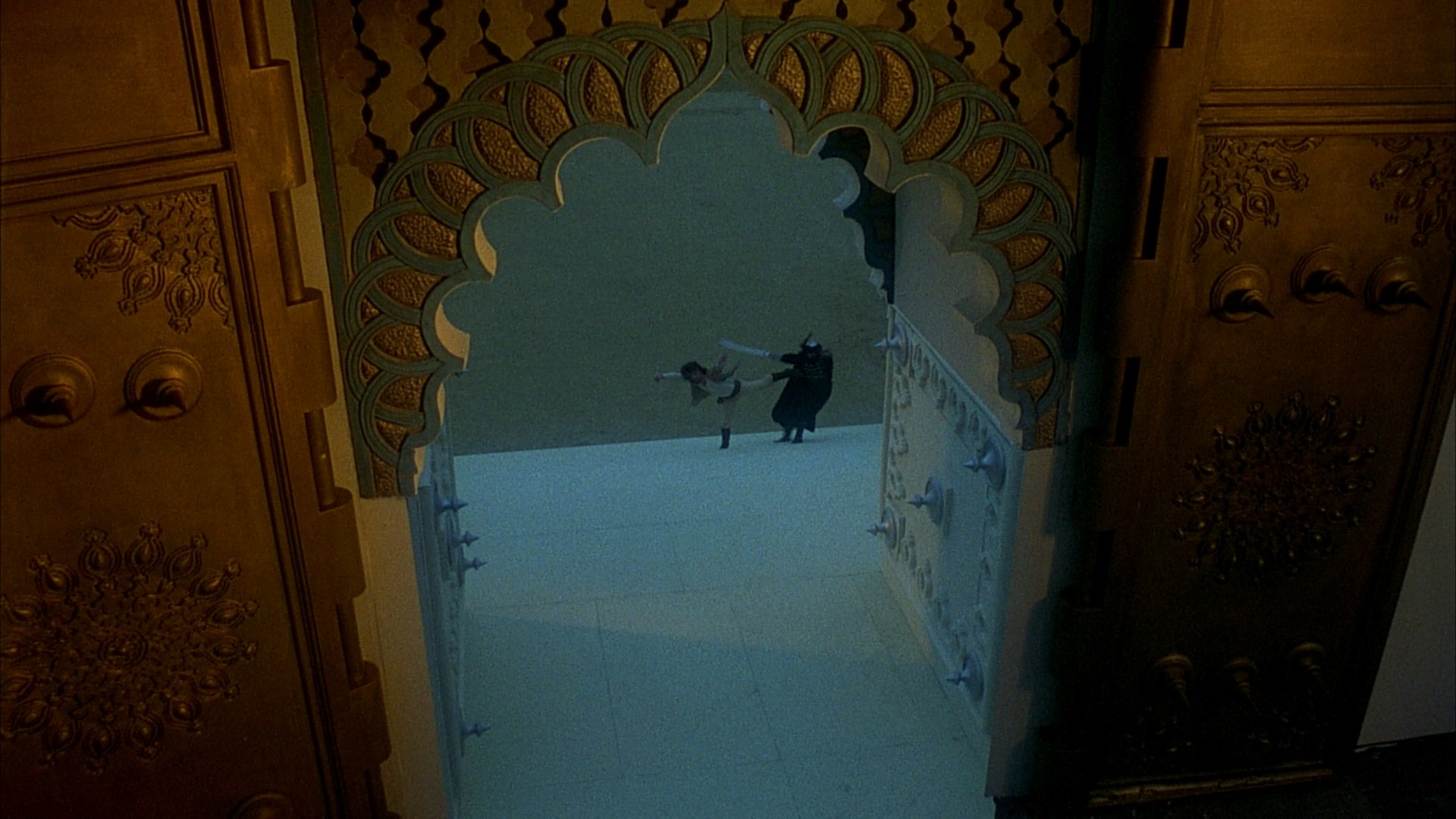 one doesn't break any new narrative ground at all as it's essentially a throwback to 1940's The Thief of Bagdad by way of Harryhausen, complete with flying carpets, sword fights, and monsters. The script by Doctor Who vet Brian Hayles keeps things moving at a fast
 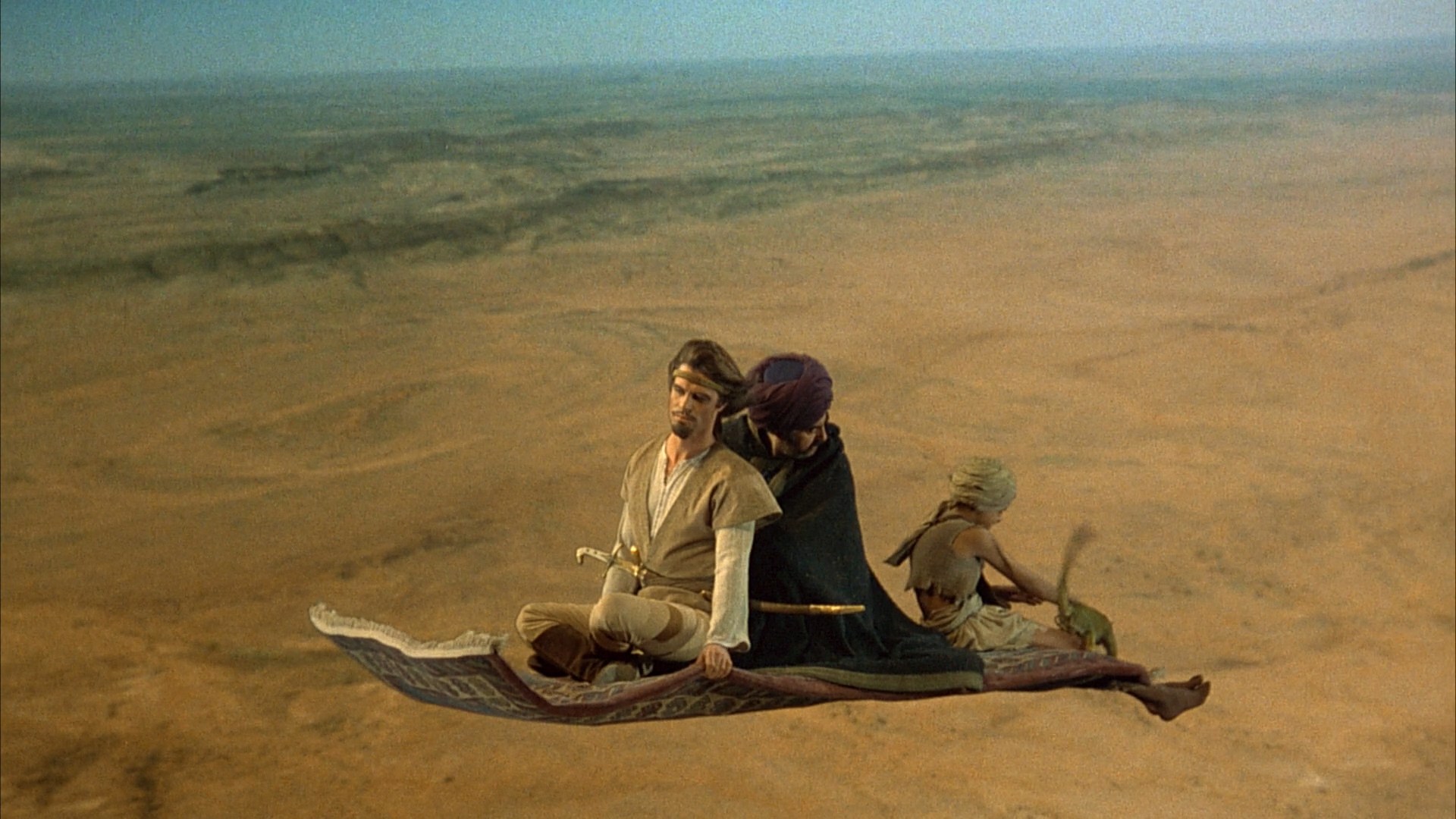 clip with plenty of opportunities for massive sets, models, and in-camera optical tricks, and the cast seems to be having good fun with Lee in particular being a standout. Any fans following his career know the '70s were a very odd time for the star including his "going Hollywood" with Airport '77, Return from Witch Mountain, and another 1979 film, 1941, none of which did a lot to advance on the boost he'd gotten playing a Bond villain (quite well) in The Man with the Golden Gun. Handled by British Lion in the U.K., the film got a very slight U.S. theatrical run from AFD and went very quickly to cable TV for a while. A handful of VHS and DVD editions turned up over the years, with Kino Lorber upgrading it to Blu-ray in 2019 featuring a solid 2K scan from the camera negative and a fun commentary with Connor and C. Courtney Joyner.
The Severin 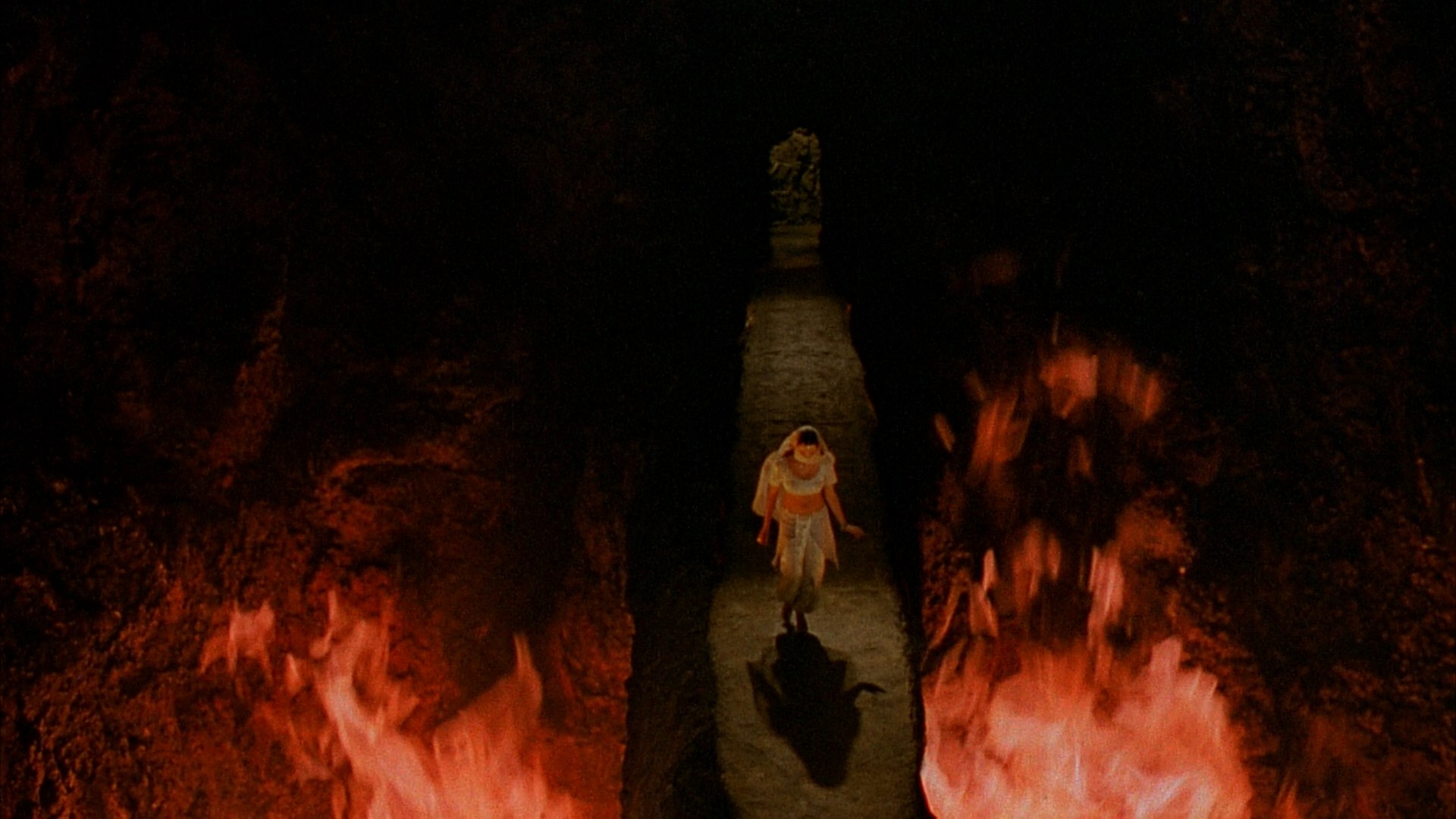 release looks comparable to the Kino Lorber transfer (with a good DTS-HD MA English 2.0 mono track with English SDH subs) but adds a healthy batch of extras including a new commentary with Connor and Severin's David Gregory covering the cast, the model effects, the swordsmanship, the funny claim that Milo O'Shea's role was originally offered to Kenneth
 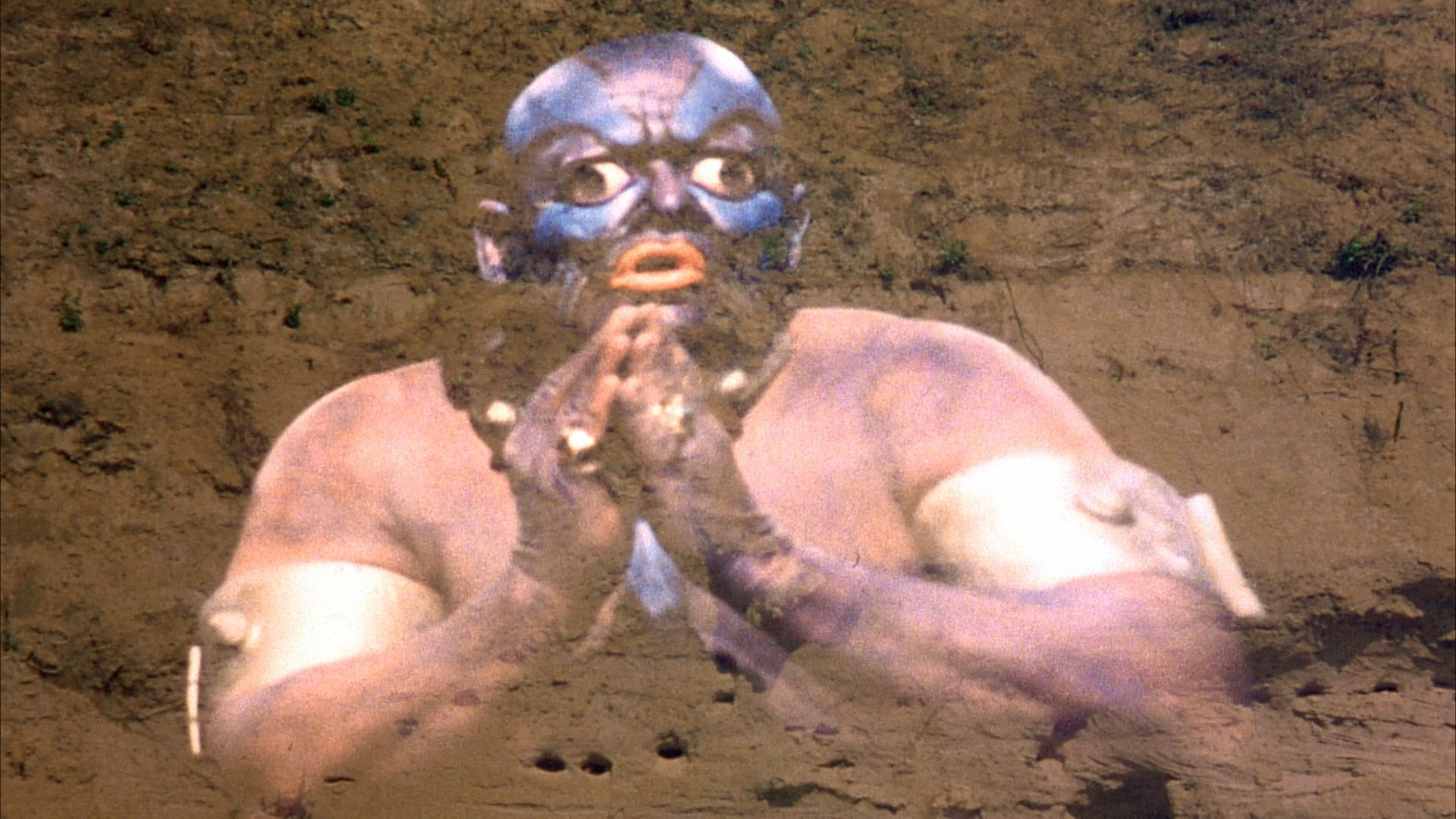 Williams(!), and other odds and ends from the production. In "The Princess Adventure" (9m24a), Samms cheerfully talks about how she got this early role (before making it big on Dynasty and General Hospital) and the fun she had working on a big costume fantasy epic-- plus more Kenneth Williams. In "Arabian Adventurer" (18m40s), Sira, now a successful producer-director, discusses growing up with an actor dad, his comfort on film sets, his memories of the shoot, and thoughts on his co-stars. Finally in "Arabian Zoom" (7m22s), Sira and Samms have a great in-person reunion and catch up with their lives before hopping on a Zoom call with Connor talking about their fond memories together. Also included are two trailers and the 1996 documentary The Many Faces of Christopher Lee (59m52s), featuring numerous interviews with the star and touching on many of his most famous role, Hammer and otherwise. This one has been out on DVD standalone a few
  times, and it's nice to have here again.
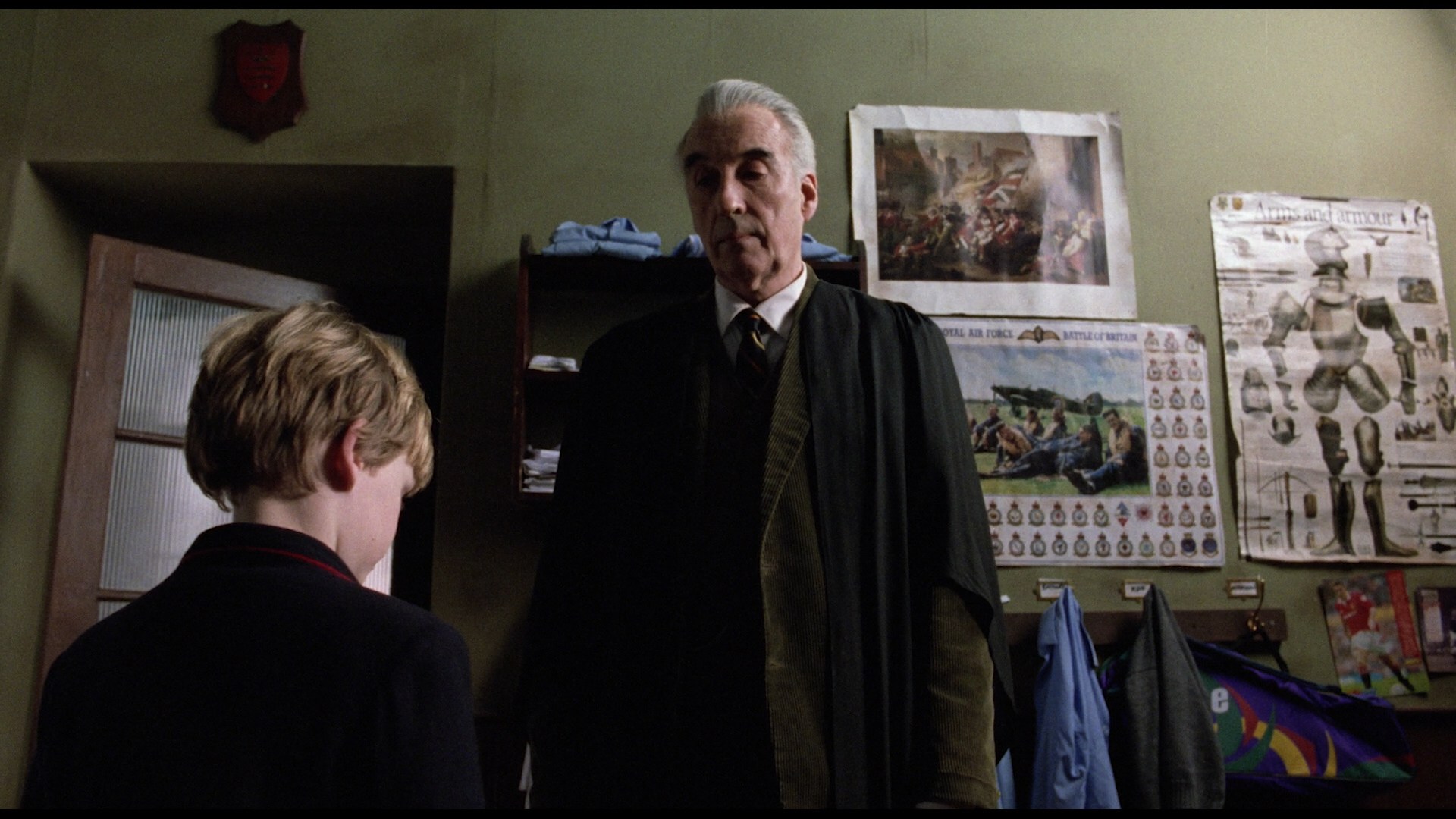
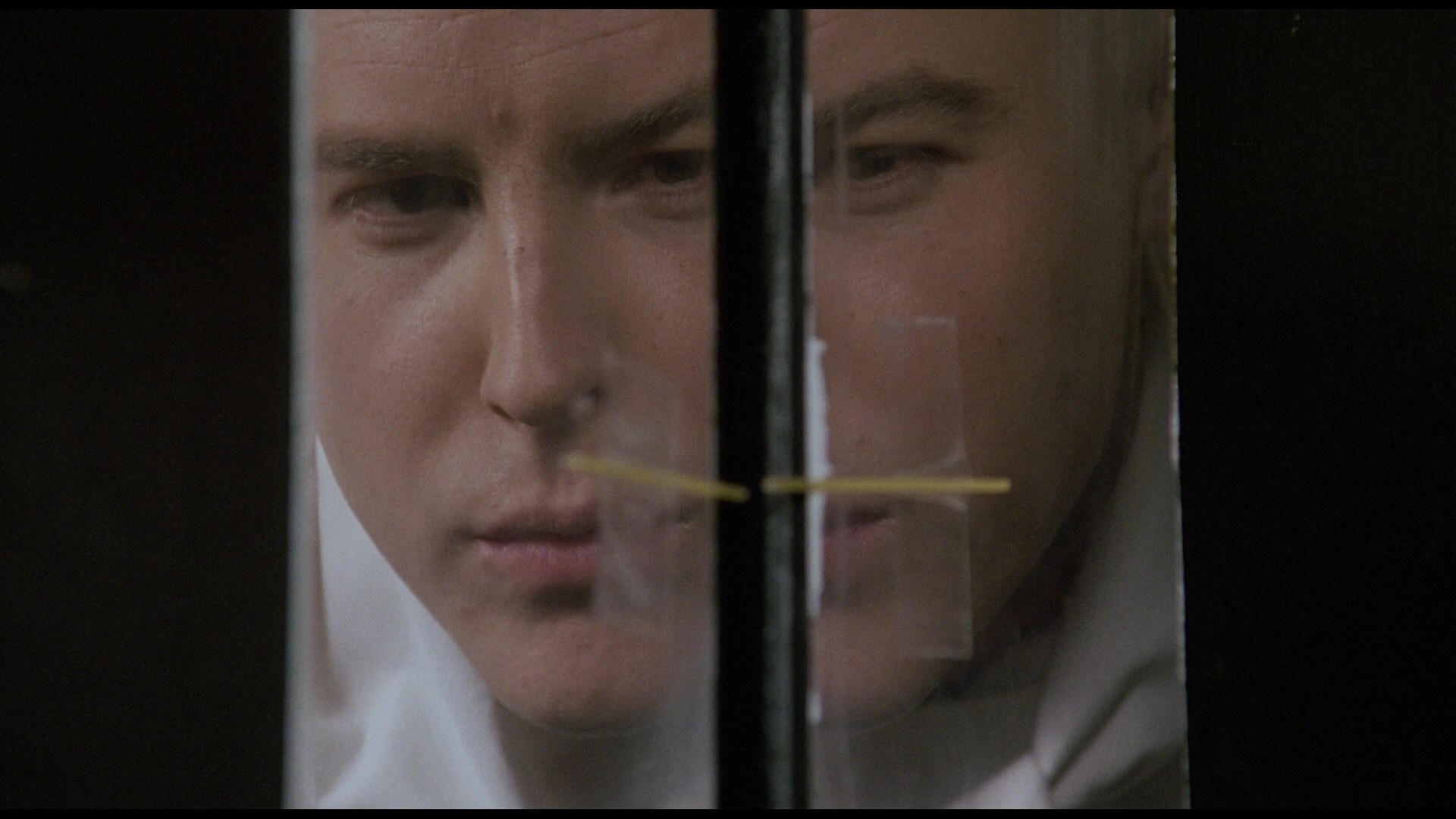
The most obscure film in the set by far comes on disc six with 1994's A Feast at Midnight, a gentle boys' school comedy from director and co-writer Justin Hardy (son of The Wicker Man's Robin Hardy, a circumstance covered in painful detail in 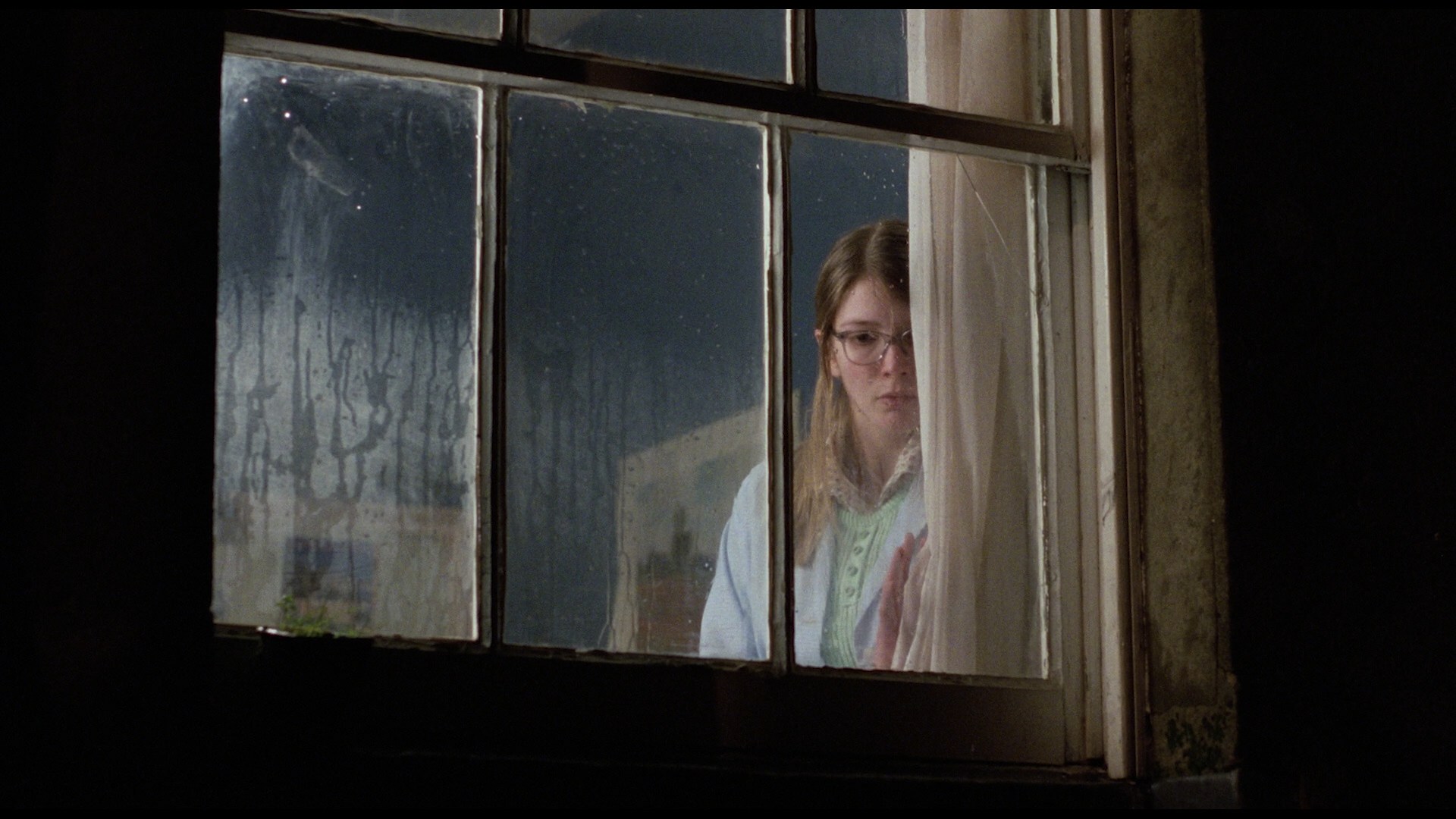 more recent years). In what would have made an ideal Severin Kids title if the label ever brings it back, Lee plays Raptor, an imposing teacher at a boarding school, Dryden Park, where new arrival Magnus (Findlay) tries to fit in with a culture built on pillow fights and unquestioning consumption of the dull food ordered by the headmaster (Hardy). Magnus' love of finer cuisine inherited from his father (Fox), to whom he writes regularly, inspires him to begin a secret midnight society, The Scoffers, who make tasty and ever-larger treats in the kitchen. Meanwhile other secrets on the premises overlap as the club gets more members and builds to a special covert birthday banquet for Raptor's daughter, school nurse Miss Charlotte (Faulkner).
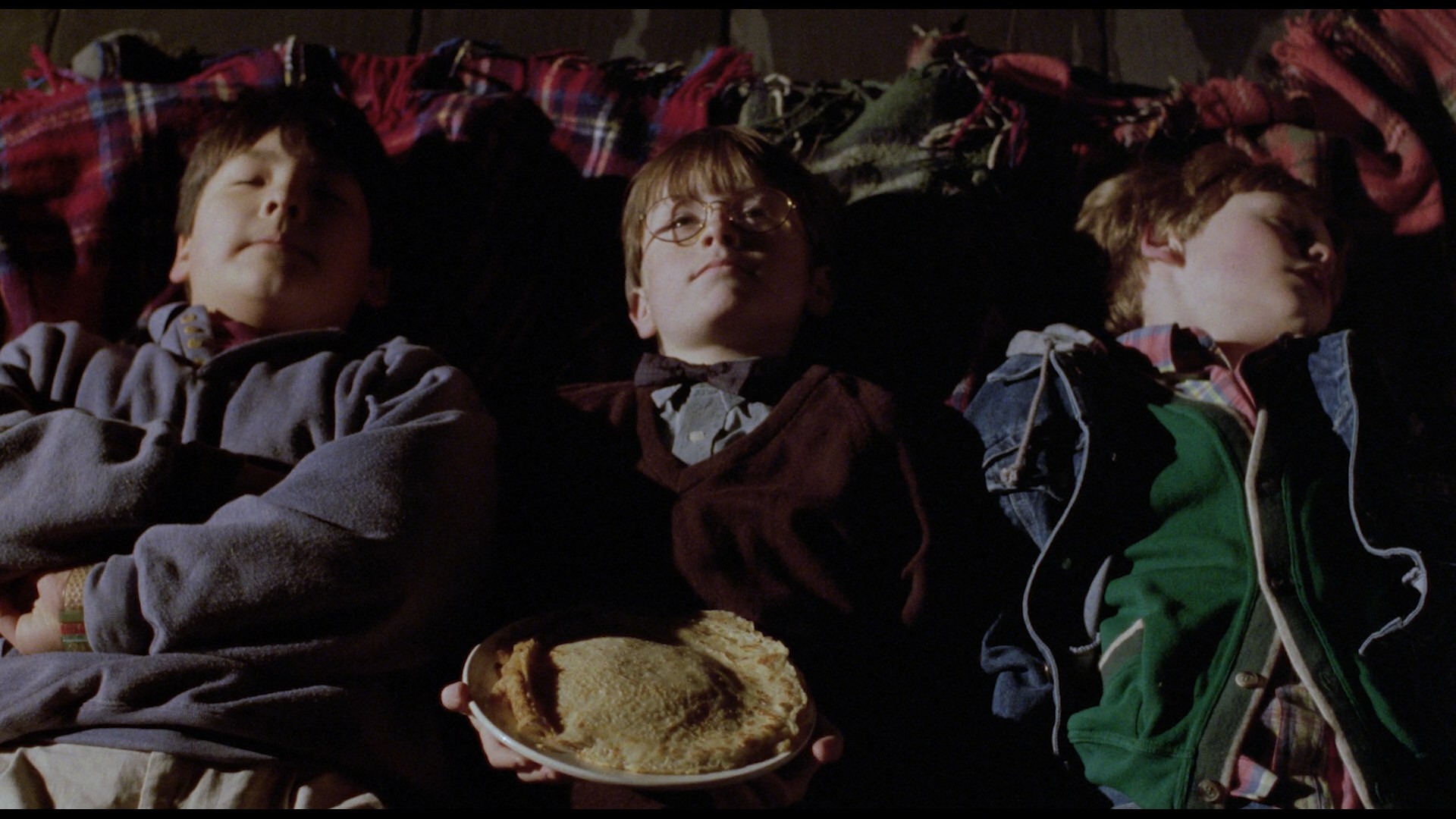 There's definitely a ring of true-life experience here in this mixture of pratfall comedy and sincere drama, which also entails the unique opportunity to see Lee get whacked in the crotch during an outdoor phys ed session. It's the kind of film you'd stumble on during the afternoon multiple times on TV, a far
  cry from what you'd normally expect from Lee but a nice change of pace if you've gotten this far in Severin's sets devoted to him.
Barely shown theatrically, A Feast at Midnight was released on VHS in the U.K. and Canada but never officially in the U.S. until now. (Ignore the awful bootleg DVD out there from the dreaded Jef Films.) For some reason it has been out streaming on various platforms in HD from Lionsgate for a while, but you're better off with the Blu-ray which looks great, has a solid DTS-HD MA English 2.0 stereo track with optional English subs, and adds a new audio commentary with Justin Hardy and co-writer Yoshi Nishio (and an uncredited Gregory) talking about everything from Patrick Macnee to hero's journey narratives to real-life boarding school experiences. 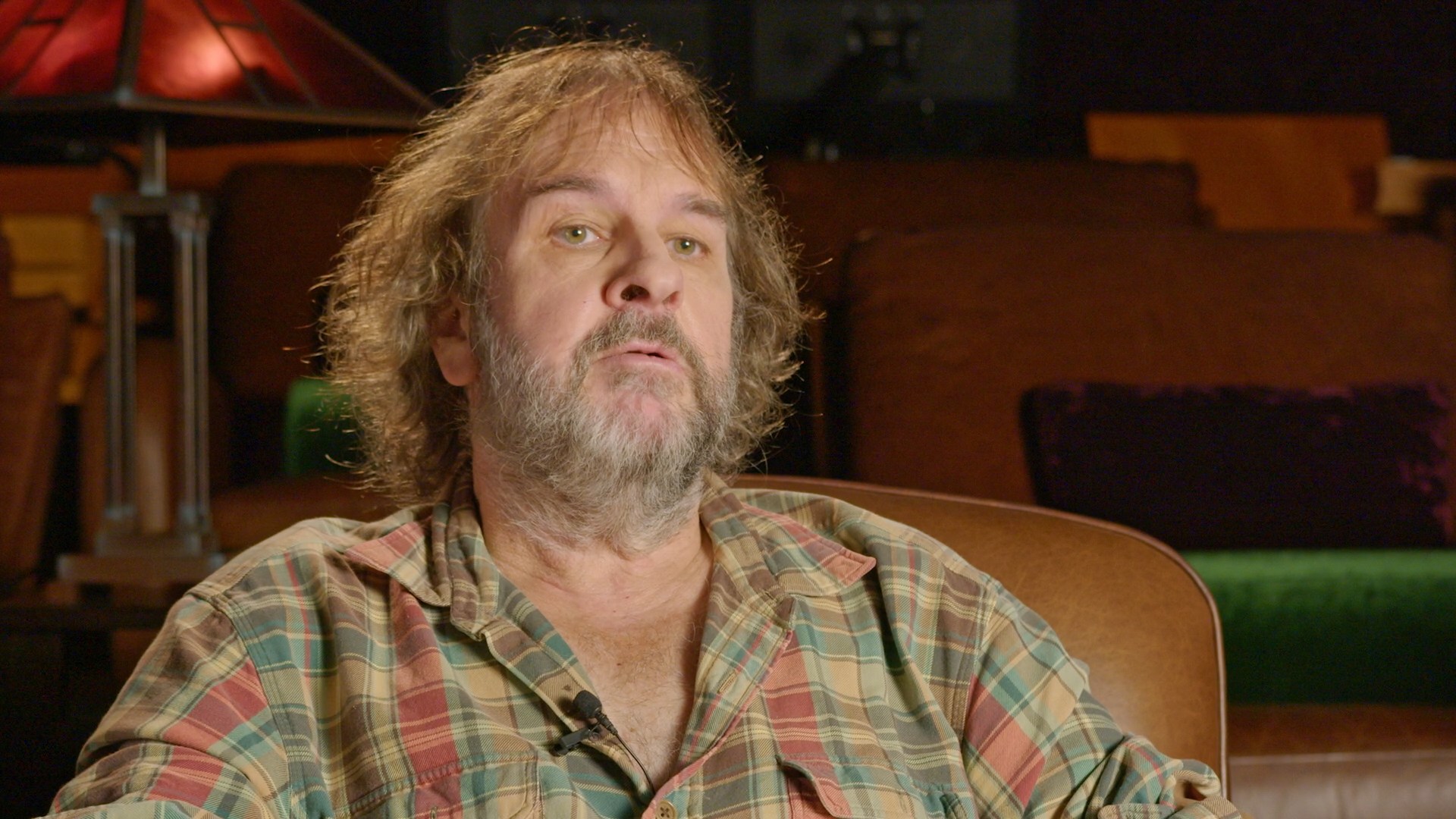 A trailer is also included with very American narration, which somehow feels wrong.
Finally on disc seven, the man himself takes center stage in 2023's The Life and Deaths of Christopher Lee, an unusual partially crowdfunded documentary from Skyk Original and the BFI that focuses on a broader portrait of Lee's overall life and appeal as a screen presence complete with striking marionette performances voiced by Peter Serafinowcz. 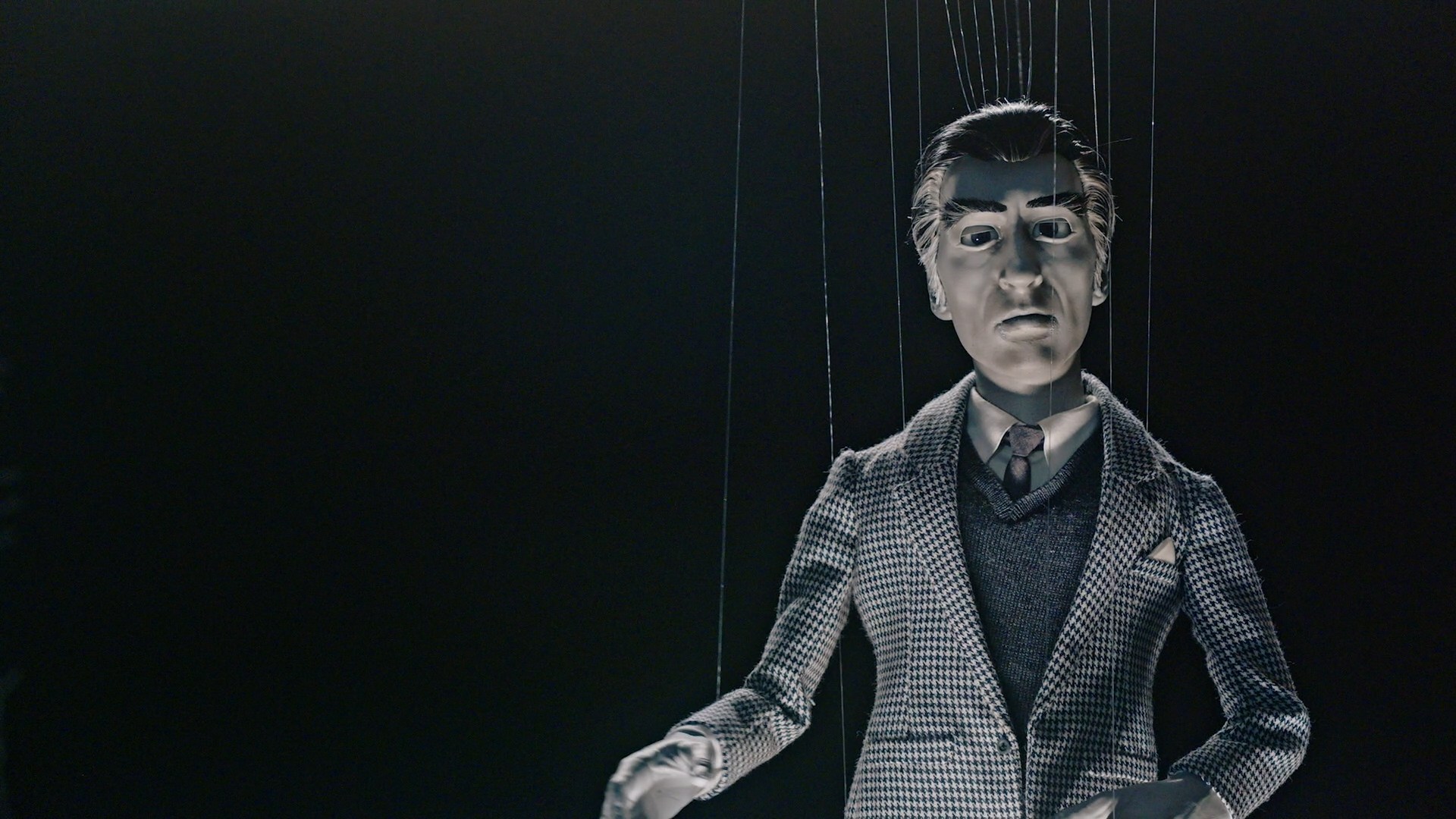 Numerous interviewees who knew him for periods both long and short turn up here including Peter Jackson, Lee's niece Harriet Walter and son-in-law Juan Aneiros, Caroline Munro, Joe Dante, John Landis, Rigby, and more, with the personalized bits working the best and providing some insight into aspects you may not have heard before. The Gerry Anderson-style puppet and overall animation that pops in and out can be more uneven, but it's an interesting and risky idea that helps set this apart from the standard doc whether you're completely into the concept or not. There's a lot of affection here as well as the novelty of seeing the first doc made after his passing, with that retrospect angle getting something unique out of the interviewees (especially his family members). Though it would be impossible to acknowledge all of his many, many movies and
 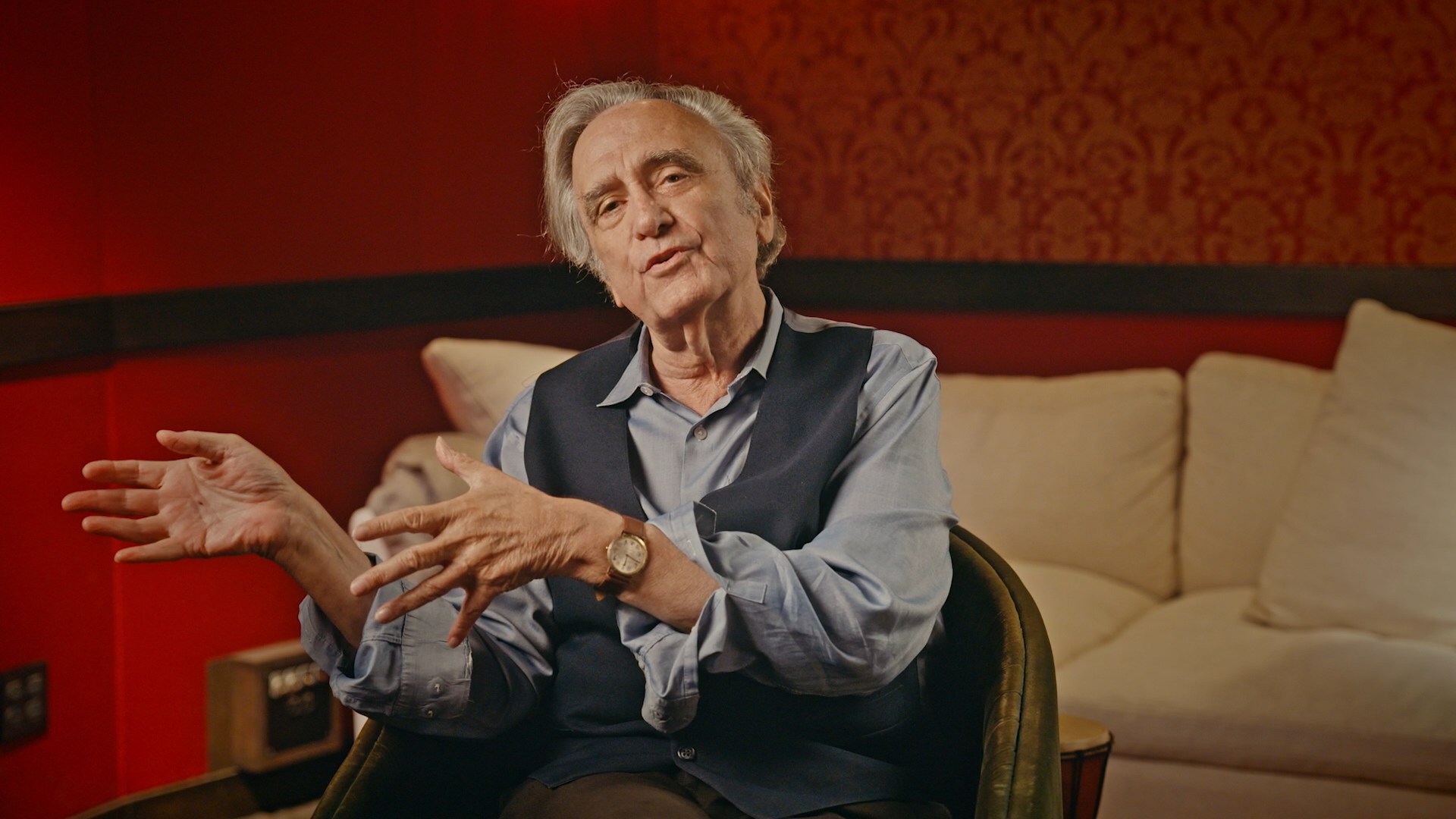 other projects in the running time of a standard feature film like this, they get a lot closer than you might expect as well including a few choices that come out of nowhere.
Given this is a relatively recent production, it's no surprise the Blu-ray looks and sounds immaculate including both DTS-HD MA 5.1 and 2.0 English audio options with English SDH subtitles. The music and sound design here are quite 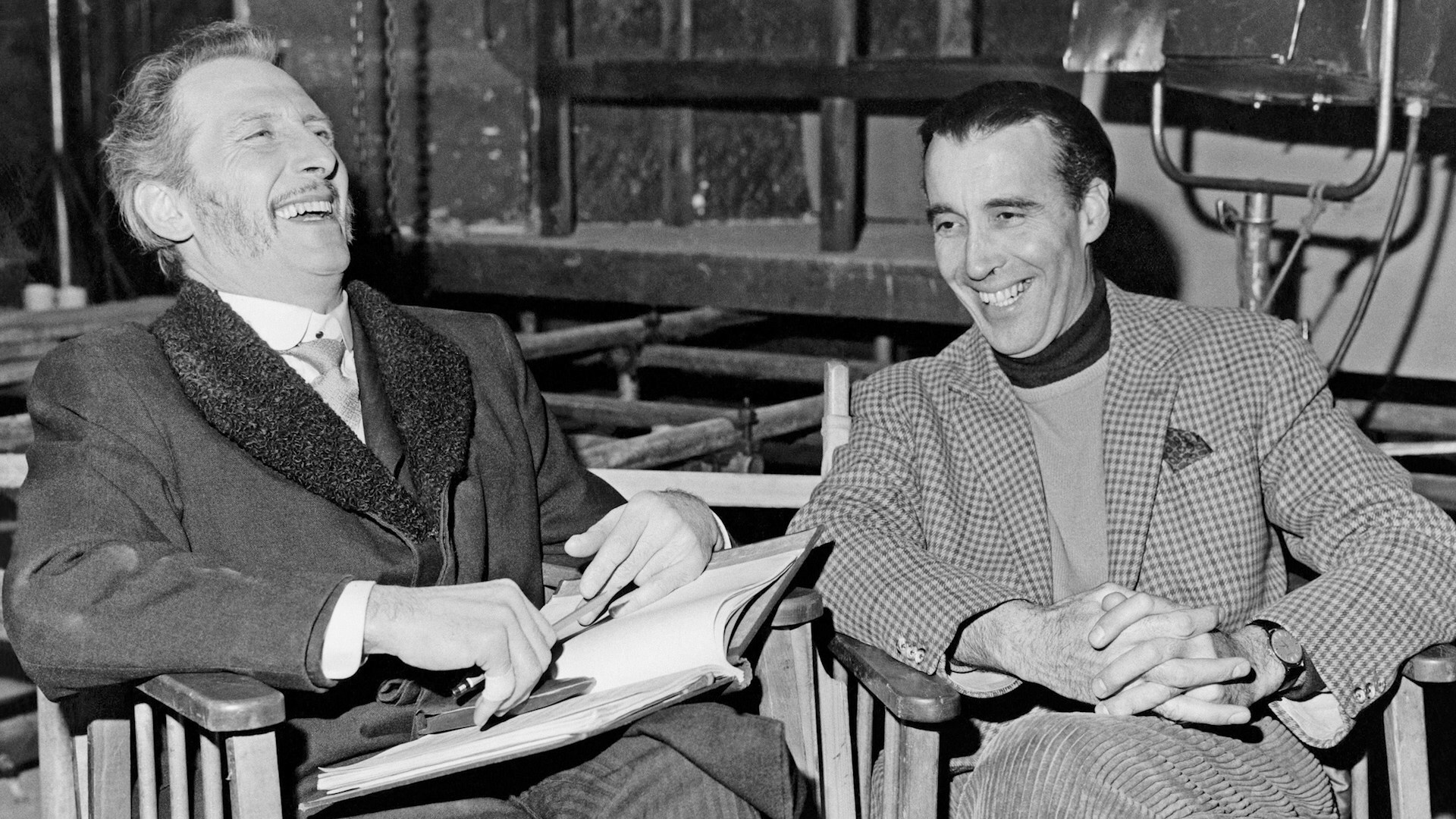 complex at times, and either options works well. Director Jon Spira and Producer Hank Starrs provide a packed audio commentary chatting about the numerous participants, Lee's personality and misconceptions about him, the debunking of a few assumptions about the animation (including some bits that are handmade even if you might not think so), and the transient nature of many of Lee's films that most assumed would only be seen if you were lucky enough to be in a certain country at the right time. Also included is a BFI Q&A (20m4s) with Spira, Starrs, and Rigby about the project's origins after Reel Britannia, Lee's often minimized sense of humor, and the process of putting the doc together, a trailer, and extended interviews with Aneiros (12m26s), singer Gary Curtis (13m31s), Dante (16m50s), Jackson (18m7s), Landis (16m2s), Paul Maslansky (12m57s), and Walter (12m56s).
BEAT GIRL: Severin Films
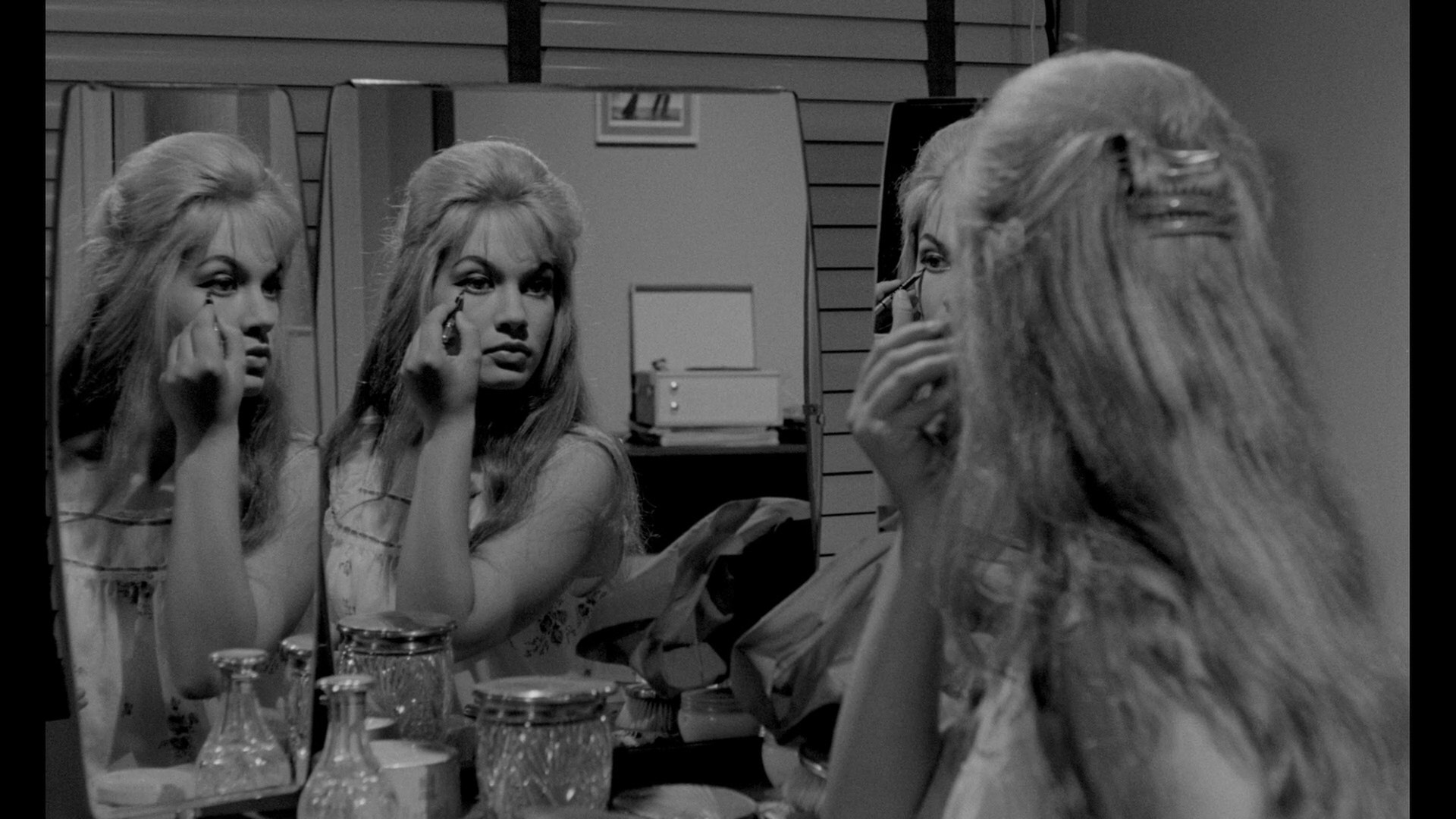
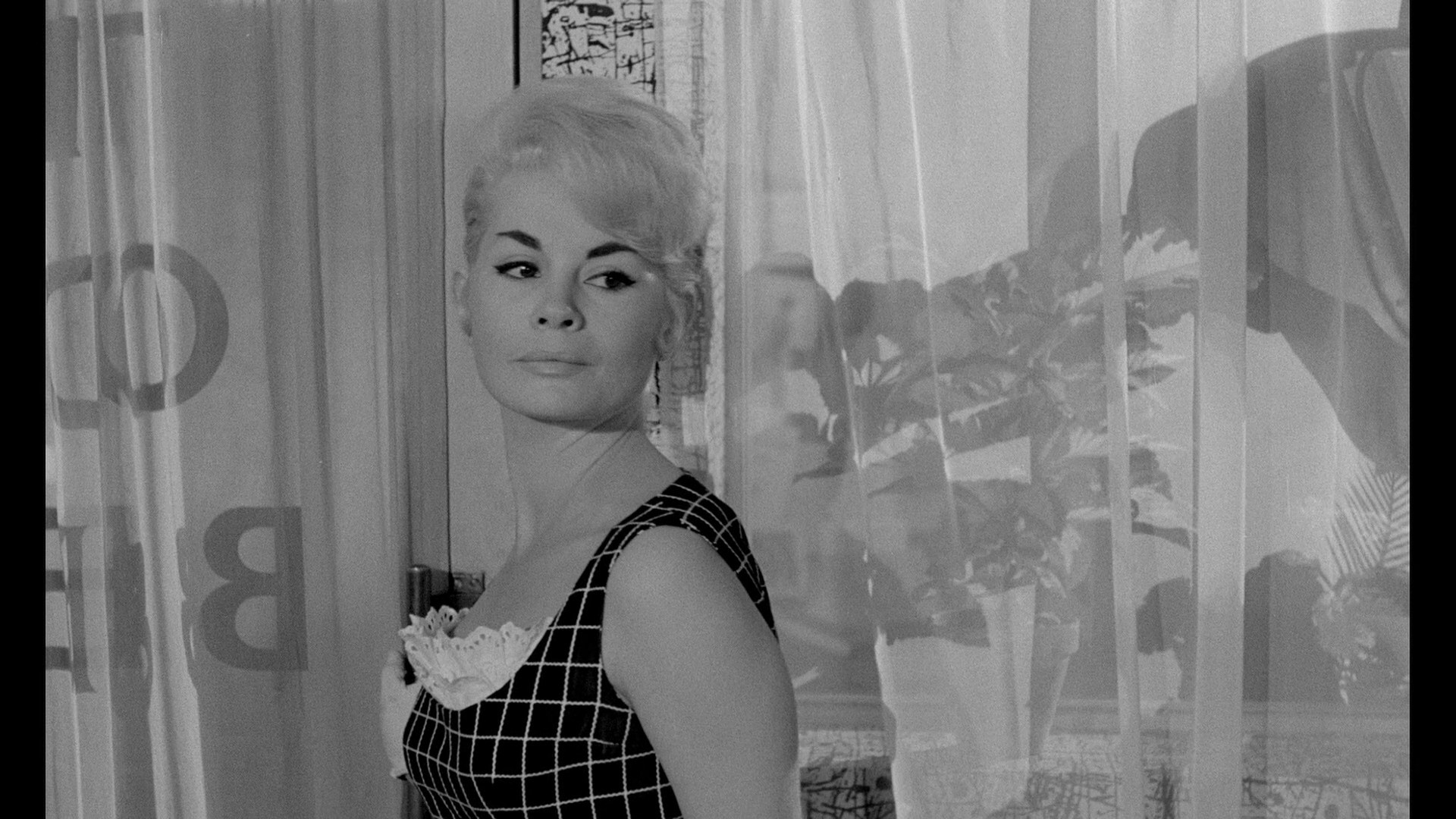
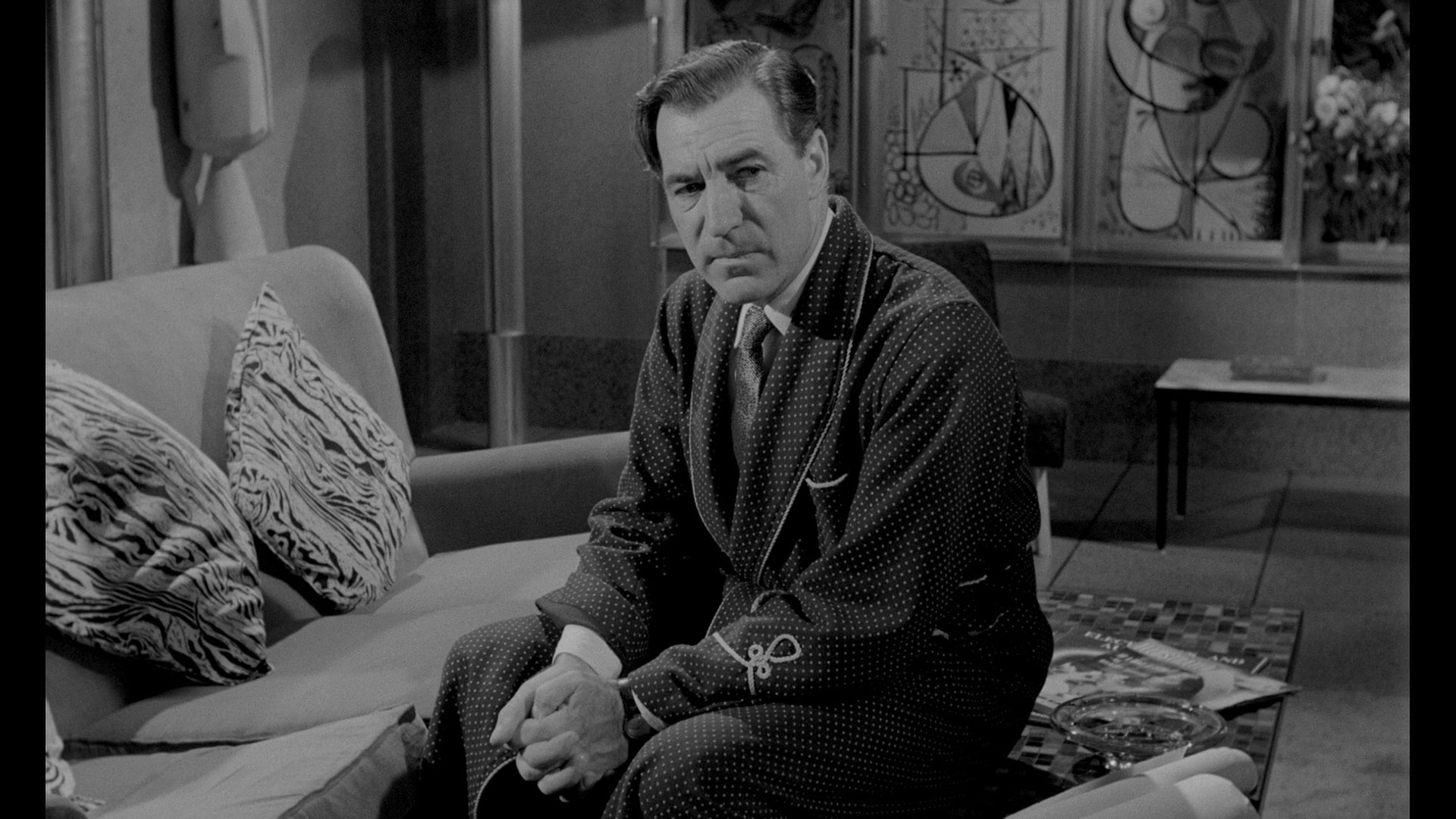
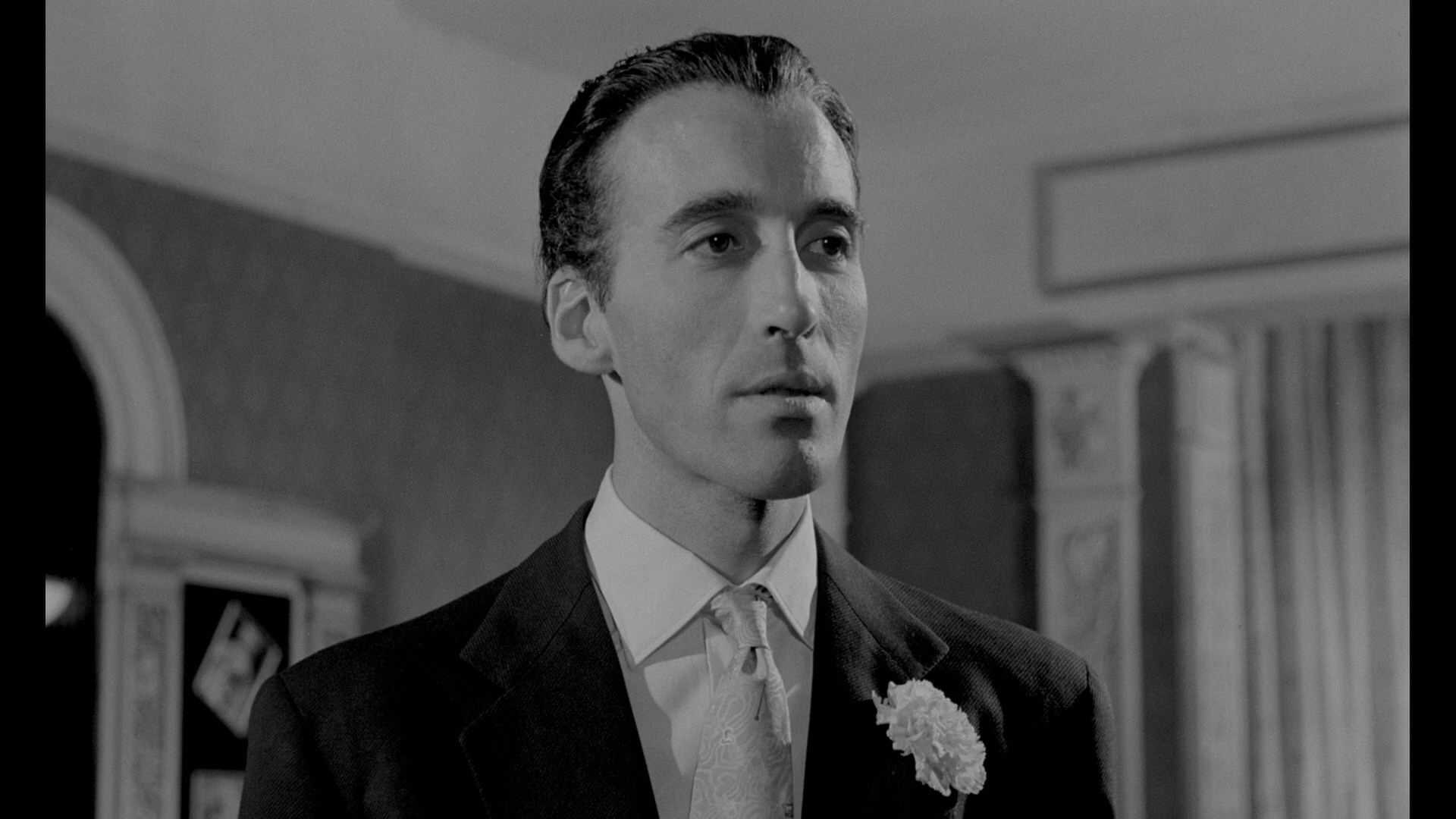
BEAT GIRL: BFI
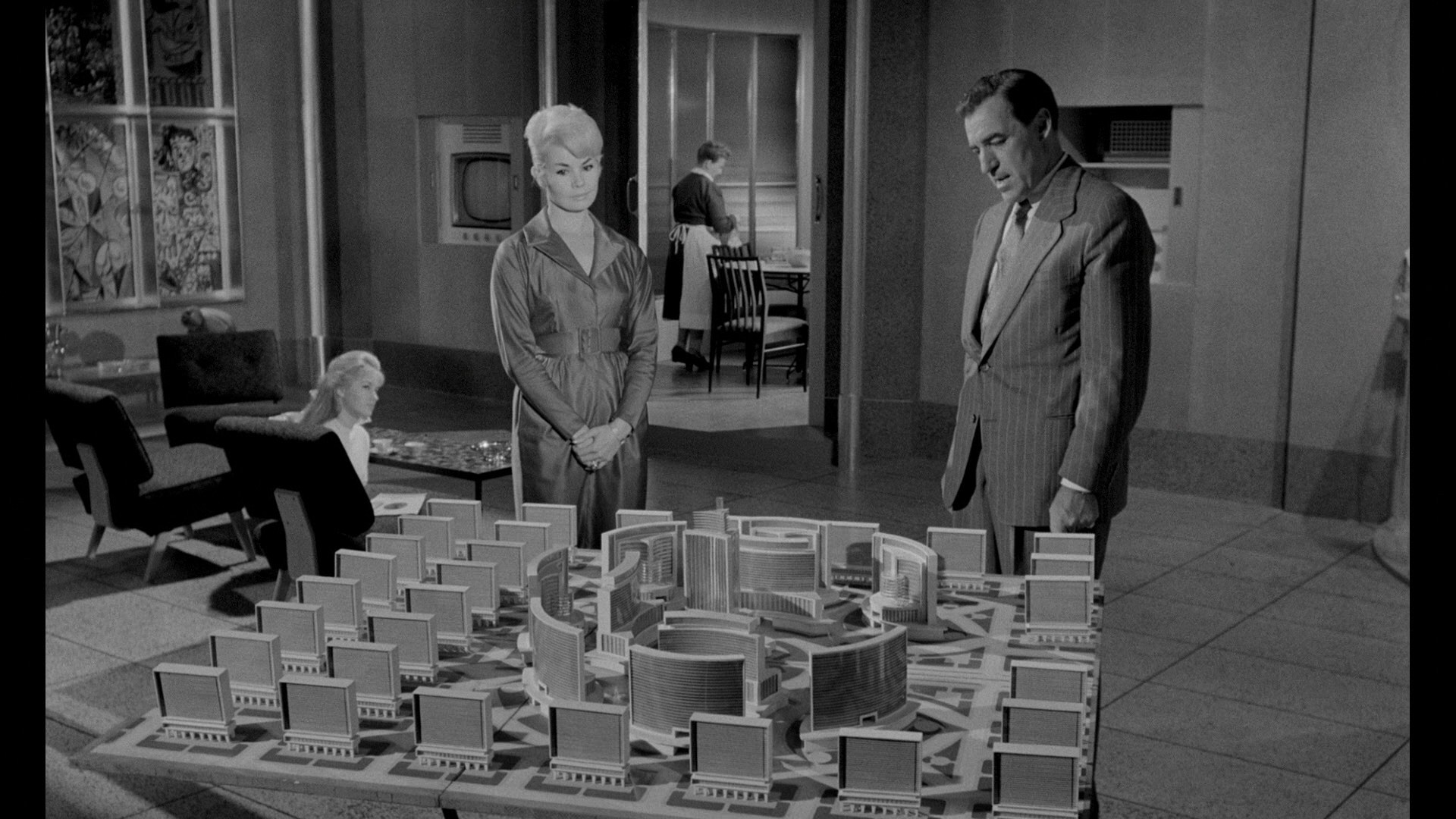
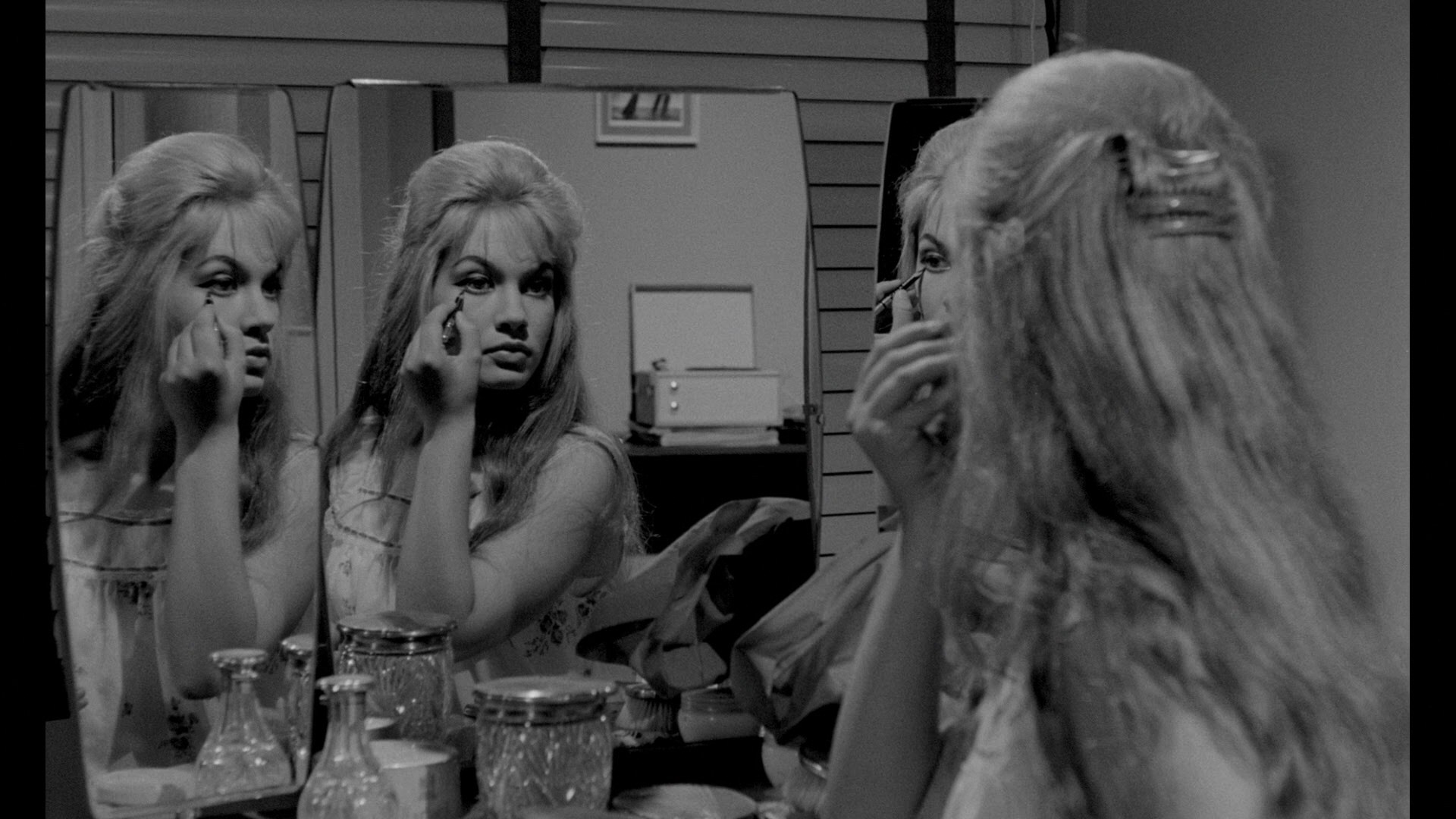
THE VIRGIN OF NUREMBERG: Severin Films (UHD)
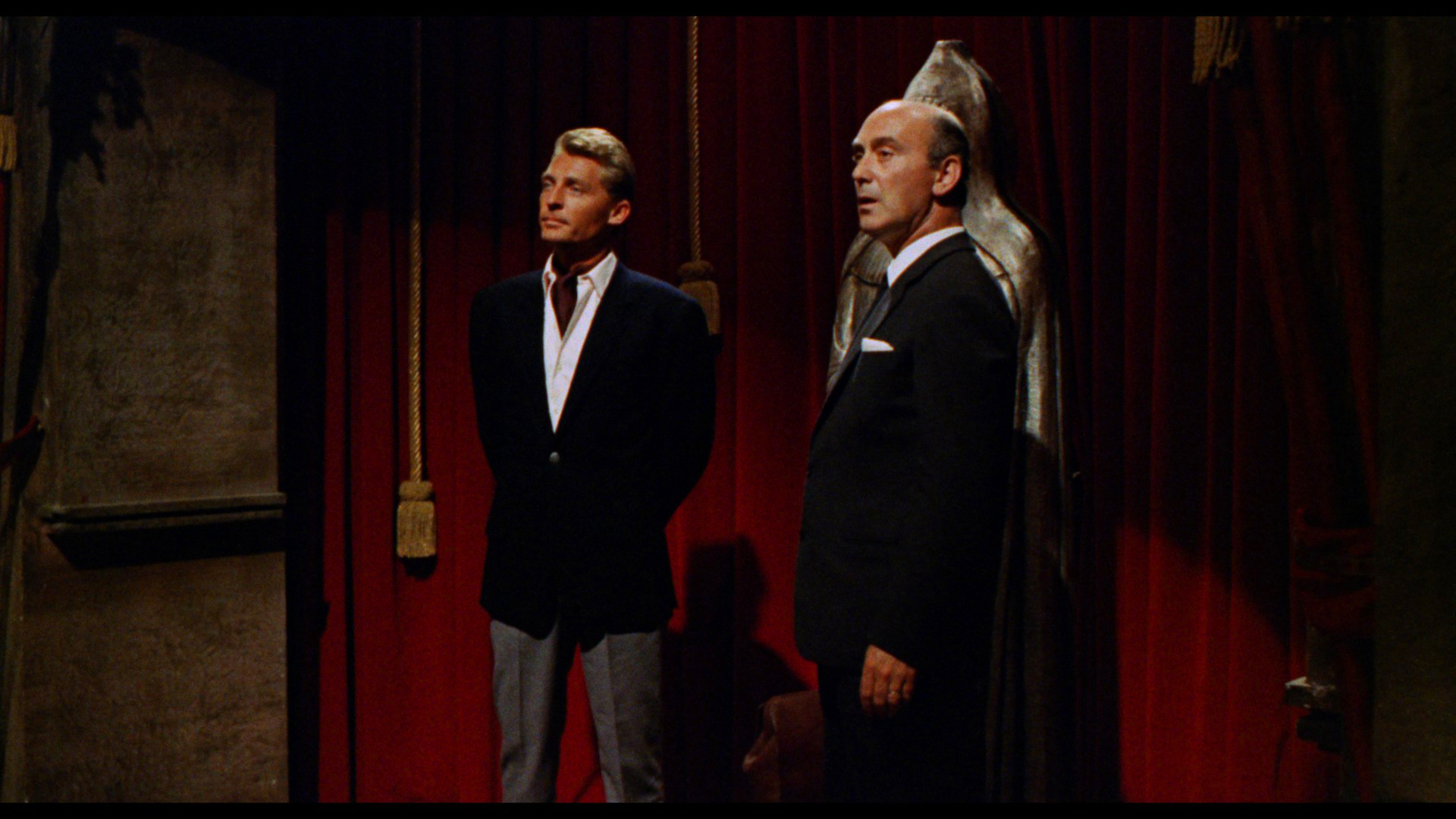
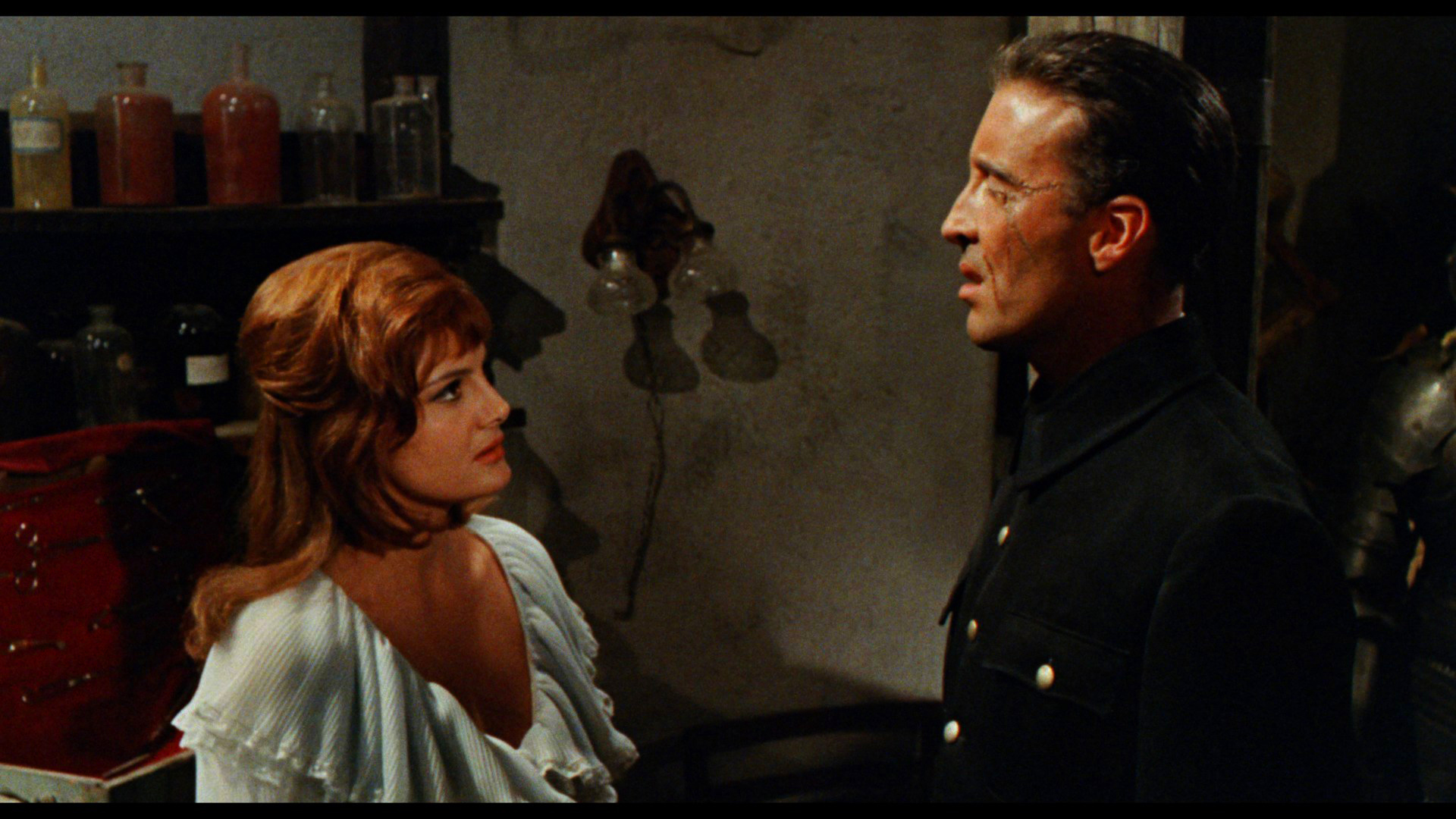
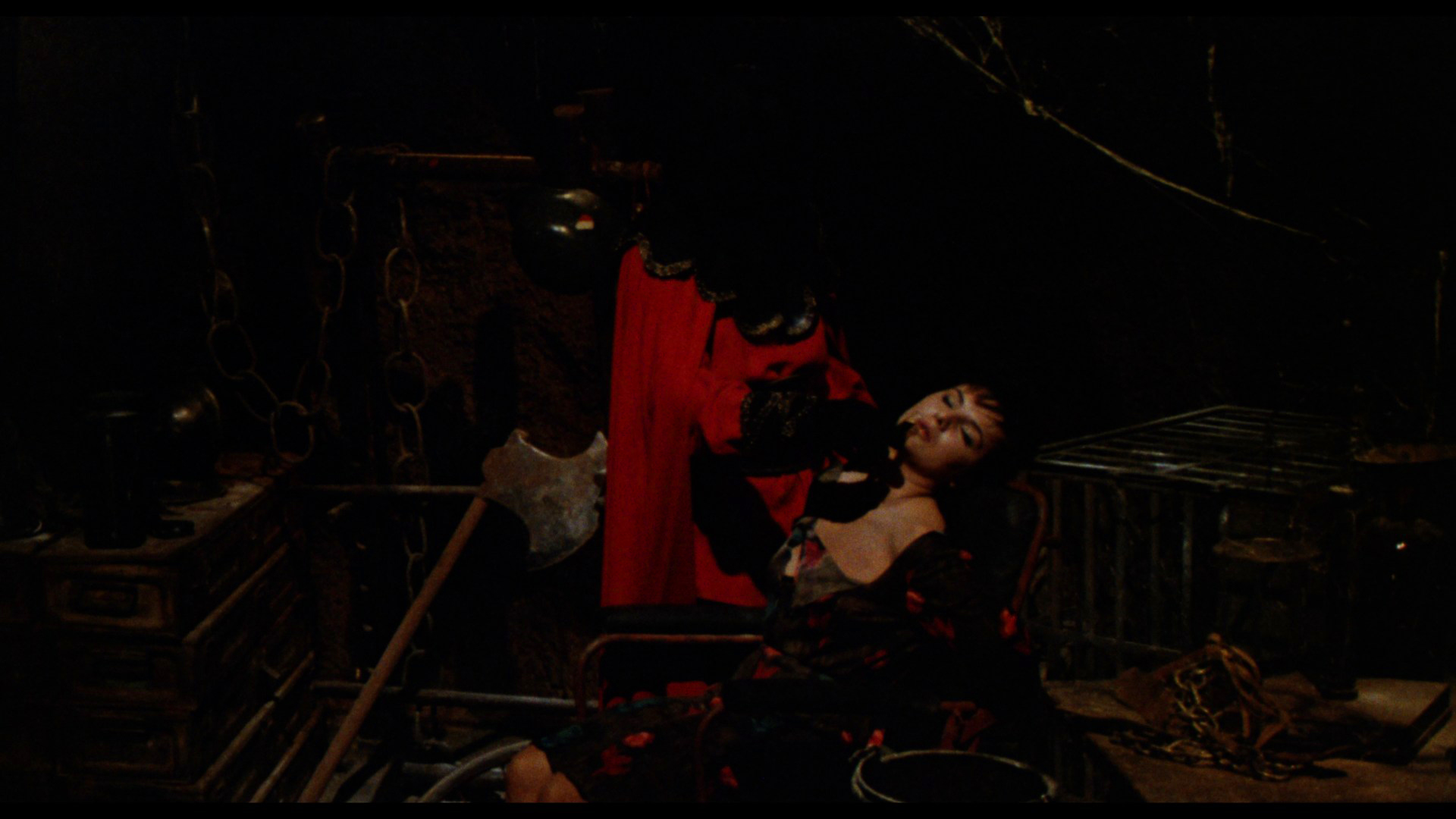
THE VIRGIN OF NUREMBERG: Severin Films (Blu-ray)
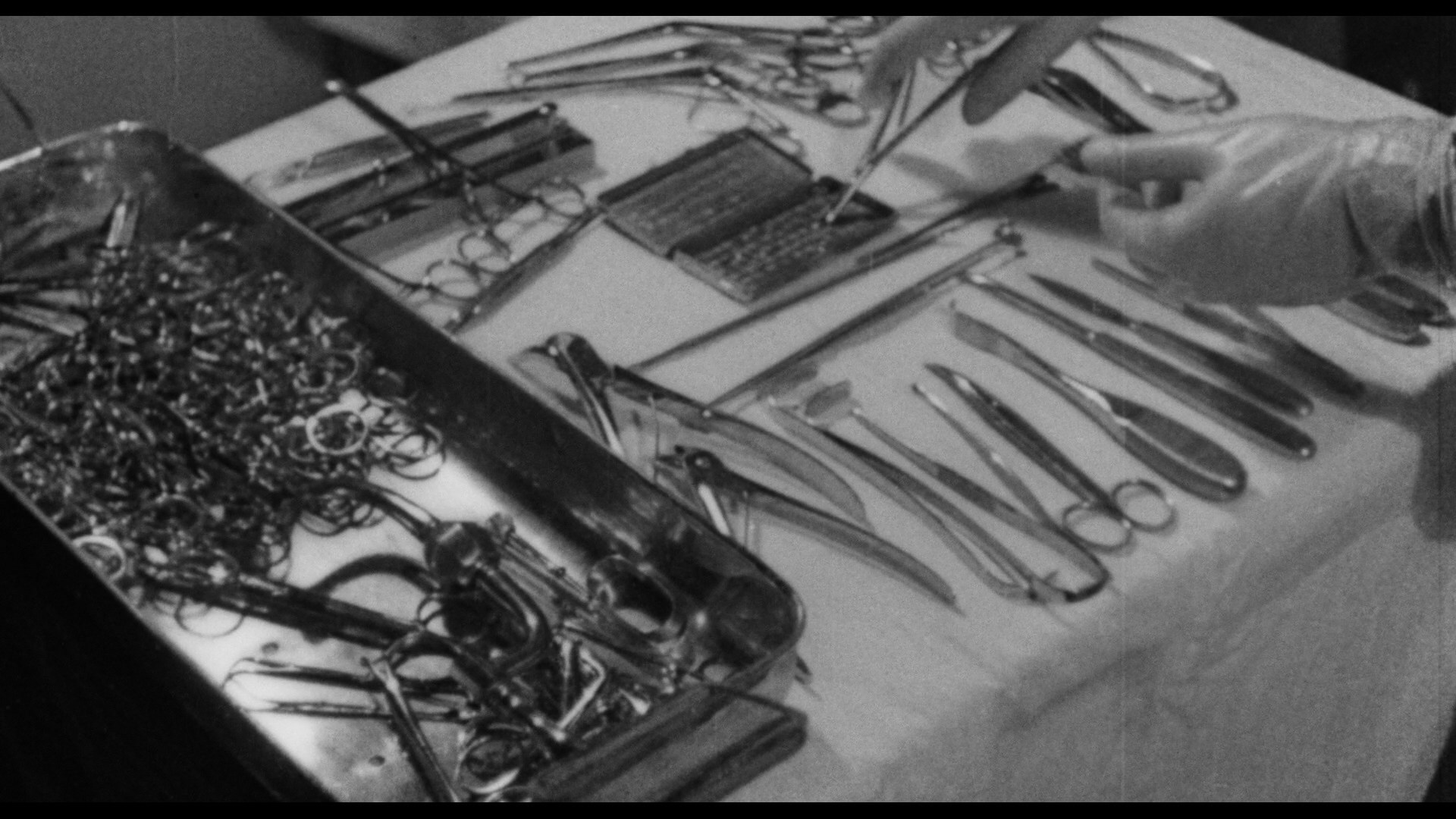
THE VIRGIN OF NUREMBERG: Media Blasters (DVD)
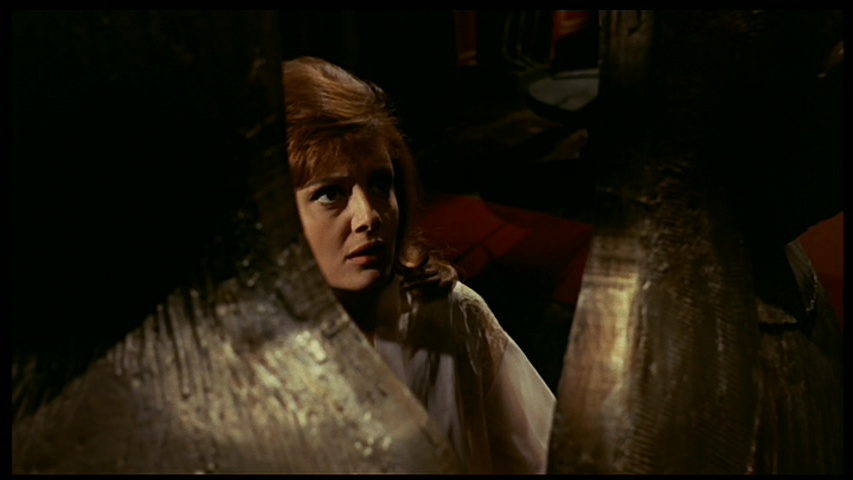
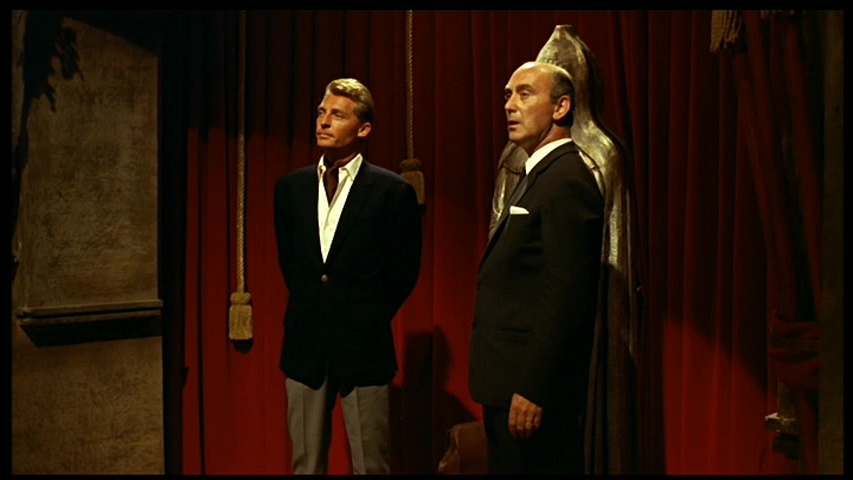
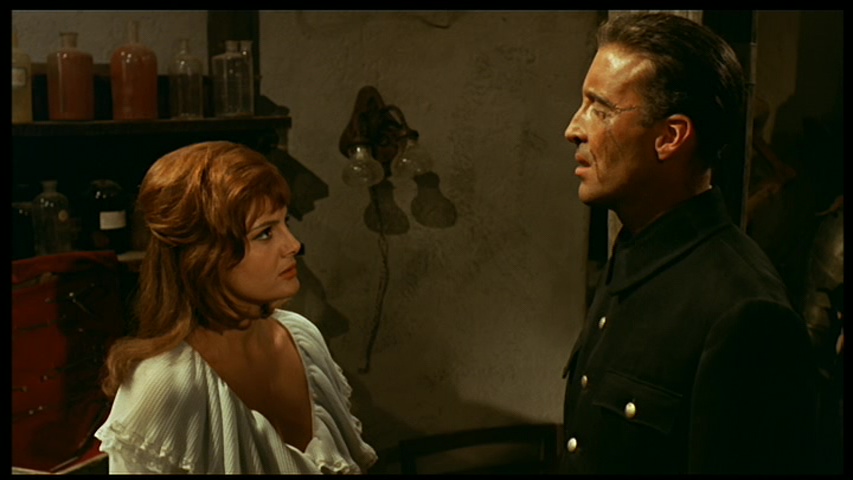
ARABIAN ADVENTURE: Severin Films
ARABIAN ADVENTURE: Kino Lorber
Reviewed on April 2, 2026
